
Business meeting featuring laptops, notes, and teamwork around a white table
This guide focuses on reliable, long-term methods: understanding where visitors come from, creating content people search for, improving SEO basics, and using other channels to bring people back.
Step 1: Measure Where You Are Now
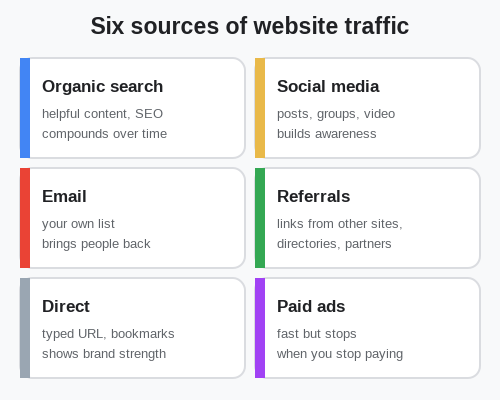
Visitors arrive from several channels
Set up free tools before changing anything:
- A web analytics tool such as Google Analytics shows how many people visit, where they come from, and which pages they read.
- Google Search Console (and Bing Webmaster Tools) shows which search terms bring visitors and flags technical problems.
- Note your baseline: monthly visitors, top pages, and main traffic sources. Then you can see what your changes achieve.
Step 2: Create Content People Search For
Search engines are often the largest long-term source of traffic for small sites, and they reward pages that genuinely help people.
1
Find Real Questions
List questions customers ask you, check search suggestions and "People also ask" boxes, and browse forums. Specific questions like "how to stop a bathroom fan from being noisy" are often easier to rank for than broad terms like "bathroom fans."
2
Write the Best Answer
Answer the question clearly near the top, then go deeper with steps, examples, and images. Use your real experience; first-hand detail makes content more useful and trustworthy.
3
Publish Consistently and Update
A steady schedule, even one article a fortnight, builds results over months. Revisit older articles to refresh facts and improve weak sections.
Step 3: Get the On-Page SEO Basics Right
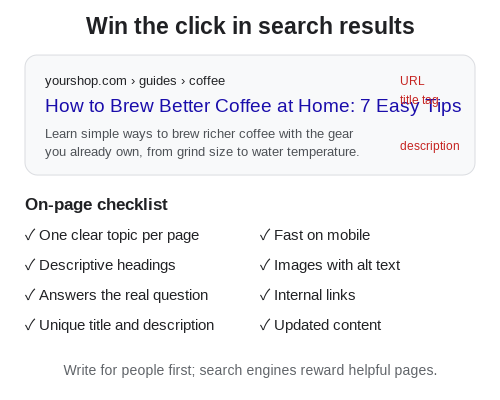
Titles and descriptions earn the click
- Title tag: a unique, descriptive title, ideally under about 60 characters, including the main topic.
- Meta description: a one- or two-sentence summary that encourages clicks.
- Headings: one main heading (H1) and clear subheadings that structure the page.
- Images: compressed for speed, with descriptive alt text.
- Internal links: link related pages together so visitors and search engines find more of your content.
- Readable URLs: short and descriptive, like /how-to-repot-a-plant.
Step 4: Fix Technical Problems
- Speed: slow pages lose visitors. Compress images, avoid heavy plugins, and test with free page-speed tools.
- Mobile-friendly design: most visits now come from phones.
- Secure connection (HTTPS) is expected by browsers and visitors.
- A sitemap submitted in Search Console helps search engines find all your pages.
- No broken links or missing pages; fix or redirect them.
Step 5: Bring Visitors From Other Channels
- Social media: share each new article with a short summary or tip, adapted to the platform.
- Email: send subscribers your best new content; it's one of the most reliable ways to bring people back. See our guide on email marketing.
- Communities: answer questions helpfully in forums and groups, linking only when your page truly helps and the rules allow it.
- Partnerships and guest content: collaborate with related businesses, podcasts, or blogs to reach new audiences.
- Earn links naturally: original data, useful tools, and genuinely helpful guides attract links from other sites. Avoid buying links or joining link schemes, which search engines penalise.
Be patient
SEO usually takes months, not days, to show results. Paid ads bring traffic faster but stop when you stop paying. Most businesses do best with a mix, building long-term organic traffic while testing small paid campaigns.
A 90-Day Traffic Plan
- Month 1: set up analytics and Search Console, fix technical problems, improve titles and descriptions on your 10 most important pages.
- Month 2: publish four to six genuinely helpful articles answering real customer questions, and link them to related pages.
- Month 3: share each article on social media and in your newsletter, reach out to two partners for collaborations, and review which pages gained the most visitors.
After 90 days, double down on the topics and channels that brought engaged visitors, and refresh pages that are getting impressions in search but few clicks.
Earn Links and Mentions the Right Way
When other trustworthy websites link to your pages, search engines see it as a sign that your content is useful. Links also bring direct visitors. The key is to earn them honestly.
- Create resources people want to share: original research, useful checklists, free templates, clear guides, and local information are naturally linked to.
- Build relationships: connect with bloggers, journalists, and businesses in your field. Comment helpfully, share their work, and collaborate on content.
- Get listed in relevant directories: local business listings, industry associations, and chamber of commerce directories are legitimate sources of links.
- Offer expert comments: journalists often look for expert quotes. Responding with useful insights can earn mentions and links.
- Fix broken links: if you find broken links on other sites that point to content similar to yours, politely suggest your page as a replacement.
Avoid buying links, joining link exchanges, or using automated link-building tools. Search engines treat these as manipulation, and they can damage your rankings for a long time.
Internal links matter too. Link related articles on your own site together with descriptive anchor text, so visitors can keep exploring and search engines can understand your site structure. Every new article you publish is a chance to link to older, relevant pages, and to update older pages with links to your new content.
Track which pages earn links and traffic, and create more content on similar topics. Over time, a library of genuinely useful pages becomes your strongest traffic source.
Be patient with results. Search traffic usually grows slowly over months, not days. Keep publishing helpful content on a regular schedule, improve pages that already rank on the second page of results, and measure progress monthly rather than daily. Steady, consistent effort is what separates sites that grow from those that give up too early.
Final Thoughts
Lasting website traffic comes from helpful content, solid SEO basics, a fast mobile-friendly site, and steady promotion through social media, email, and partnerships. Measure first, improve one thing at a time, and focus on visitors who actually need what you offer.