
A person typing on a laptop in a bright, modern office setting
This guide covers how to build a list with permission, write emails people actually want to open, automate a welcome sequence, stay within the law, and measure results.
Step 1: Choose an Email Platform
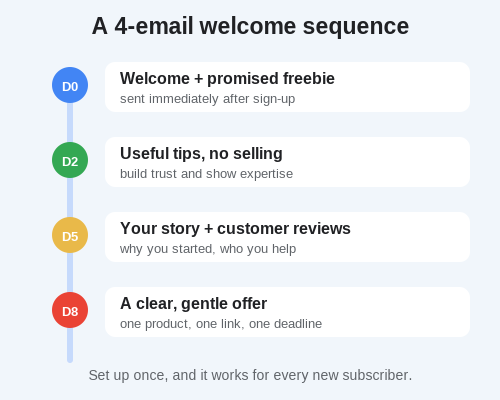
A simple automated welcome series
Use a dedicated email marketing service rather than your normal inbox. These tools manage sign-up forms, unsubscribes, templates, automation, and reporting, and they help your emails reach inboxes instead of spam folders. Many have free plans for small lists. Look for:
- Easy sign-up forms for your website
- Automation for welcome and follow-up emails
- Mobile-friendly templates
- Clear reporting on opens, clicks, and unsubscribes
Also set up email authentication (records often called SPF, DKIM, and DMARC) for your domain, following your provider's instructions. It improves deliverability and is now expected by major inbox providers.
Step 2: Grow Your List the Right Way
Only email people who have clearly agreed to hear from you. Never buy email lists: it often breaks the law, damages your sender reputation, and the people on them didn't ask for your emails.
- Offer something useful in exchange: a checklist, guide, discount, or early access.
- Place sign-up forms on your homepage, blog posts, and checkout (with an unticked consent box where required).
- Collect emails in person at events or in-store, with clear consent.
- Say what they'll get and how often, for example "one helpful email every two weeks."
Step 3: Set Up a Welcome Sequence
New subscribers are most interested right after signing up. An automated welcome sequence makes the most of that moment:
- Email 1 (immediately): thank them, deliver what you promised, and set expectations.
- Email 2 (a couple of days later): share your most useful tips or content.
- Email 3: tell your story and share customer reviews.
- Email 4: make a clear, relevant offer.
After the sequence, subscribers move onto your regular newsletter.
Step 4: Write Emails People Open and Read
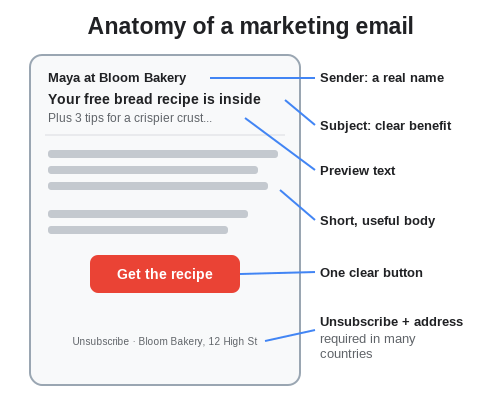
Every element has a purpose
- Sender name: use a real person's name with your business name.
- Subject line: clear and specific about the benefit; avoid misleading subjects or all-caps hype.
- Preview text: the short line after the subject in many inboxes; use it to add detail.
- One main purpose per email and one clear call-to-action button.
- Short paragraphs that read well on phones.
- A useful-to-promotional balance: many businesses aim for mostly helpful content with occasional offers.
Step 5: Follow Email Laws
Email marketing is regulated in many countries, for example by CAN-SPAM in the US, GDPR and related rules in the UK and EU, and CASL in Canada. Requirements vary, but common rules include:
- Get proper consent before sending marketing emails, where the law requires it
- Include a clear, working unsubscribe link in every marketing email and honour requests promptly
- Identify your business and include a valid postal address
- Don't use misleading subject lines or sender details
- Store subscriber data securely and explain how you use it in your privacy policy
Step 6: Measure and Improve
- Click rate: the share of recipients who click a link; often the most useful engagement measure.
- Conversions: sales or sign-ups from each email.
- Unsubscribe and spam complaint rates: rising numbers mean your content or frequency needs adjusting.
- Open rate: useful as a rough guide, but privacy features in some email apps make it less precise than before.
Test one thing at a time, such as two subject lines, and remove subscribers who haven't engaged for a long time to keep your list healthy.
Writing Better Subject Lines
- Be specific: "3 ways to keep bread fresh for a week" beats "Our latest newsletter."
- Lead with the benefit to the reader, not the company.
- Keep it short so it isn't cut off on phones.
- Use curiosity honestly: the email must deliver what the subject promises.
- Personalise thoughtfully: a first name can help, but relevance matters more.
- Avoid spam triggers: all capitals, many exclamation marks, and misleading "Re:" or "Fwd:" prefixes.
Test two subject lines on a small part of your list, then send the better-performing one to everyone else. Over time you'll learn what your audience responds to.
Segment and Personalise Your Emails
Sending the same email to everyone is simple, but sending the right email to the right people usually brings far better results. Segmentation means dividing your list into groups based on what they want or how they behave.
- By interest: ask subscribers what topics they want when they sign up, and send content that matches.
- By behaviour: new subscribers, regular customers, and people who haven't opened emails for months need different messages.
- By purchase history: recommend related products or useful guides for items they've already bought.
- By location: useful for local events, delivery offers, or time-zone-friendly sending times.
Personalisation goes beyond adding a first name. Mention relevant products, local events, or a reminder about something the subscriber showed interest in. Keep it helpful rather than intrusive.
Clean your list regularly. Remove or re-engage subscribers who haven't opened an email in six months or more. A smaller, engaged list improves deliverability, which means more of your emails reach inboxes rather than spam folders.
Finally, always test before you send. Email a copy to yourself and a colleague, open it on a phone and a computer, click every link, and check that images load and the unsubscribe link works. A two-minute check prevents embarrassing mistakes reaching your whole list and protects the trust you've built with subscribers.
Final Thoughts
Effective email marketing is built on permission and usefulness. Use a proper platform, grow your list honestly, welcome new subscribers with an automated sequence, write clear and helpful emails, follow the law, and track clicks and conversions. Done consistently, email becomes one of your most dependable sources of sales.