
A smartphone screen displaying popular social media applications like Instagram and
This guide gives you a practical order of priorities, so you build a solid foundation first and add paid promotion only when it makes sense.
Step 1: Define Your Customer and Message
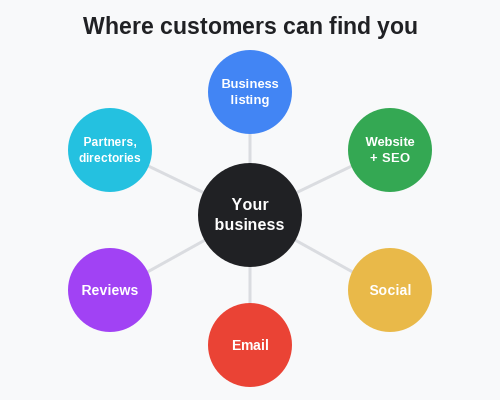
The main online channels for small businesses
Before choosing channels, be clear about two things:
- Who you're trying to reach: for example, "homeowners within 10 km who need a reliable plumber quickly."
- Why they should choose you: one clear message, such as "same-day callouts, fixed prices, no surprises."
Use the same message everywhere: your listing, website, social profiles, and adverts. Consistency builds recognition and trust.
Step 2: Claim Your Free Business Listings
For any business that serves local customers, a free listing on major search and map services, such as Google Business Profile and Bing Places, is often the single most valuable step. It can make you appear in map results when people search for "bakery near me."
- Use your exact business name, address, phone number, and opening hours, and keep them identical everywhere online.
- Choose the most accurate category and add your services.
- Upload real photos of your work, premises, and team.
- Post updates and offers regularly so the profile looks active.
- Also list your business in relevant local and industry directories.
Step 3: Build a Simple, Useful Website
Your website is the one online space you fully control. It doesn't need to be large, but it should load quickly on phones and answer customers' main questions:
- What you offer, where, and roughly what it costs
- Why customers should trust you: reviews, examples, qualifications
- How to contact or book, with a clear button on every page
- A separate page for each main service, which helps you appear in search results for each one
To attract visitors over time, add helpful articles that answer common customer questions. Our guide on increasing website traffic explains the basics of SEO.
Step 4: Use Social Media Wisely
- Pick one or two platforms where your customers actually spend time, rather than trying to be everywhere.
- Show, don't just sell: behind-the-scenes photos, before-and-after results, quick tips, and customer stories perform better than constant adverts.
- Post consistently: two or three good posts a week is better than daily posting for a month and then silence.
- Engage: reply to comments and messages quickly; social media is a conversation.
- Join local or industry groups and contribute helpfully rather than spamming links.
Step 5: Collect Reviews and Build Trust
Reviews strongly influence buying decisions. Ask every satisfied customer for one, ideally soon after a good experience, and make it easy with a direct link or QR code. Reply politely to all reviews, including negative ones; a calm, helpful response can impress future customers. Never buy or fake reviews: it breaks platform rules, may be illegal in some countries, and destroys trust if discovered.
Step 6: Add Email, Ads, and Tracking
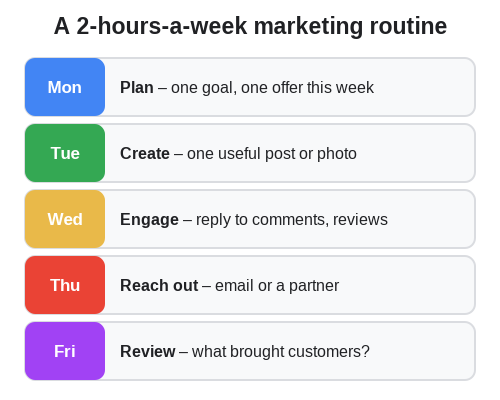
A little every week beats bursts
- Start an email list with customers' permission. Email brings people back at very low cost. See our guide on email marketing.
- Test small paid ads with a fixed budget once you know your best customers and offer. Our guide to social media ads walks through setup.
- Track where customers come from: ask new customers how they found you, and use free website analytics.
- Do more of what works and drop channels that bring no customers after a fair test.
A Simple Weekly Marketing Routine
- Monday: choose one goal and one offer for the week.
- Tuesday: create one useful post, photo, or short video.
- Wednesday: reply to comments, messages, and reviews.
- Thursday: send an email to your list or reach out to one partner business.
- Friday: check what brought customers this week and note one improvement.
Around two hours a week, done consistently, usually beats occasional bursts of activity. Consistency builds recognition, and recognition builds trust.
Promote Your Business on a Small Budget
You don't need a big marketing budget to be found online. Many of the most effective tactics cost time rather than money.
- Partner with nearby businesses: a café and a bookshop, or a gym and a healthy food shop, can promote each other's offers to their customers.
- Share behind-the-scenes content: photos and short videos of how you make products, prepare for events, or help customers show the people behind the business.
- Join local online communities: neighbourhood groups and local forums are great places to share helpful advice, as long as you follow group rules on promotion.
- Run a referral scheme: reward existing customers who recommend friends, with a discount or small gift.
- Host or join events: workshops, open days, and markets generate online buzz, photos, and reviews. See our guide on finding community events.
- Reuse your content: turn one helpful blog post into social media posts, an email, and a short video.
Track simple numbers each month: website visitors, enquiries, reviews, and sales. Ask new customers how they heard about you. Over time, you'll see which channels work best and can focus your time and any budget there.
Above all, be consistent. Posting regularly, replying to messages quickly, and keeping your listings accurate builds trust steadily. Small, regular efforts usually outperform big bursts of activity followed by long silences.
As results grow, you can add paid advertising with a clear budget and goal, building on what you've learned works organically.
Final Thoughts
Online promotion works best as a steady routine: an accurate business listing, a clear website, helpful social posts, genuine reviews, and an email list, all saying the same simple message. Start with the free foundations, measure what brings customers, and grow from there.