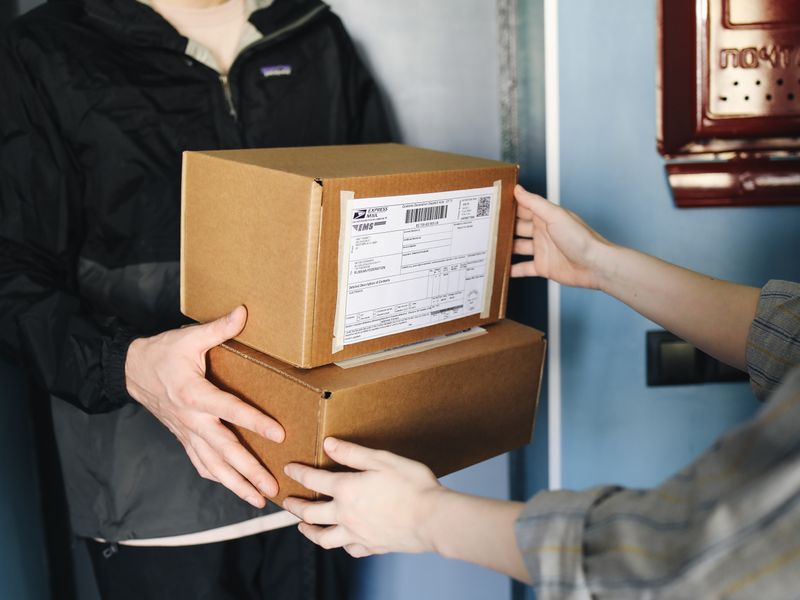
Close-up of hands exchanging cardboard boxes indoors
It's often promoted as easy money, but in reality it's a competitive business with thin margins. This guide gives an honest picture and practical steps to do it properly.
Is Dropshipping Right for You?
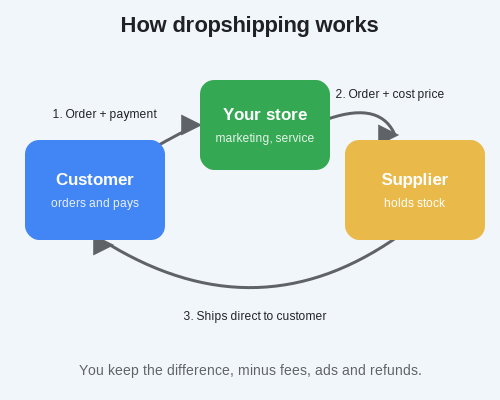
You sell; the supplier ships
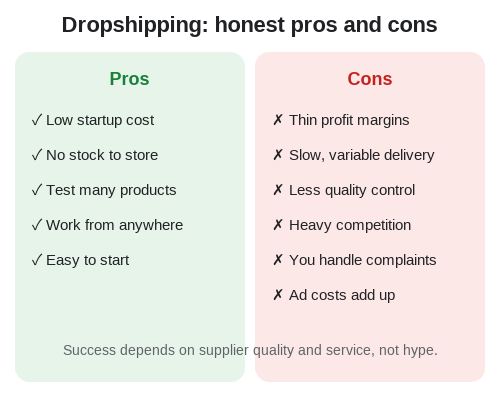
Know the trade-offs before you start
Dropshipping suits people willing to learn marketing, test carefully, and offer genuinely good customer service. It's not a passive income scheme.
Step 1: Choose a Focused Niche
- Pick a specific audience, such as home bakers, cyclists, or pet owners, rather than a general store of random products.
- Look for products that solve problems or serve hobbies, and that aren't easily found in local shops.
- Avoid fragile, heavy, or highly regulated items, such as electronics with safety certification needs, cosmetics, supplements, or children's toys, unless you understand the rules.
- Check demand with search trends and competitor reviews. Our guide on validating a business idea explains how.
Step 2: Find and Vet Reliable Suppliers
Your supplier is your most important partner; their mistakes become your bad reviews.
- Order samples to check quality, packaging, and real delivery time to your customers' location.
- Check reviews, ratings, and how long the supplier has operated.
- Ask about processing times, shipping methods, tracking, and returns.
- Prefer suppliers closer to your customers where possible; faster delivery means happier customers and fewer refunds.
- Have a backup supplier for your best-selling products.
Step 3: Calculate Your Real Margins
List every cost per order: the supplier's product and shipping price, payment fees, platform subscription, apps, advertising per sale, refunds, and taxes. Many dropshippers find advertising is their biggest cost. If a product costs 12 delivered and sells for 25, the 13 difference can shrink to just a few units of currency after ads and fees, so test prices and ad costs carefully before scaling.
Step 4: Build a Trustworthy Store
- Use a professional store platform. See our guide on setting up a Shopify store.
- Write original product descriptions and use honest photos, ideally your own from samples.
- State real delivery times clearly on product pages and at checkout.
- Publish clear shipping, returns, and contact pages with a real way to reach you.
Step 5: Stay Legal and Look After Customers
- Register your business and handle taxes correctly, including sales tax or VAT and import duties where relevant.
- Follow consumer protection law: you're the seller, so customers' refund and delivery rights apply to you, whatever your supplier does.
- Product safety: make sure products meet safety standards in the countries you sell to.
- Never sell counterfeit or trademark-infringing products, and don't use other brands' images without permission.
- Avoid misleading marketing, such as fake discounts, fake countdown timers, or fake reviews.
- Respond quickly to customers, track every order, and refund promptly when something goes wrong.
Beware of "get rich" courses
Be cautious with expensive courses or mentors promising guaranteed income from dropshipping. Most of the core knowledge is available free from platforms' official guides, and no honest seller can guarantee results.
Delivering Great Customer Service
- Send tracking details as soon as orders ship, and update customers about any delay before they have to ask.
- Reply within one business day, using friendly templates for common questions.
- Make refunds and replacements easy for genuine problems; quick fixes protect your reviews.
- Keep records of complaints and which supplier or product they relate to.
- Drop problem products and suppliers quickly if issues keep repeating.
In dropshipping, service is one of the few things you fully control, and it is often what separates stores that last from those that disappear.
Market Your Store Without Wasting Money
Many dropshipping stores fail not because of the products, but because owners spend too much on advertising before they know what works. Start small and learn as you go.
- Start with organic content: short videos showing the product in use, helpful blog posts, and social media posts cost time rather than money and help you learn what interests your audience.
- Test ads with small budgets: run a few ads at a low daily budget, then increase spending only on those that bring sales at a profit.
- Know your numbers: calculate the maximum you can spend to win one customer while still making a profit. Stop or change ads that cost more than this.
- Build an email list: offer helpful content or a small discount for signing up. Email marketing is cheap and lets you reach customers again.
- Be honest in your marketing: show realistic delivery times, real product photos, and accurate descriptions. Exaggerated claims lead to refunds, chargebacks, and poor reviews.
Watch your refund rate and customer complaints closely. If a product generates many returns, stop selling it, even if it sells well; the costs and damage to your reputation outweigh the sales.
As your store grows, consider building a more distinctive brand: custom packaging, private-label products, or bundles that competitors don't offer. These make your store harder to copy and give customers a reason to choose you over identical stores selling the same items. Some successful dropshippers eventually move to holding their own stock for best-selling items, which gives more control over quality and delivery times.
Keep learning from your data and your customers. Our guide on creating social media ads explains how to set up and test campaigns step by step.
Final Thoughts
Dropshipping can be a low-cost way to start selling online, but success depends on a focused niche, carefully vetted suppliers, realistic margins, honest marketing, and excellent customer service. Treat it as a real business, test before scaling, and stay within consumer and tax rules.