
A couple is reviewing and calculating their household bills together at home
Programme names, rules, and amounts vary widely between and even within countries. This guide explains the general process that applies almost everywhere, so you can find what you're entitled to and apply with confidence.
Step 1: Find Out What Support Exists
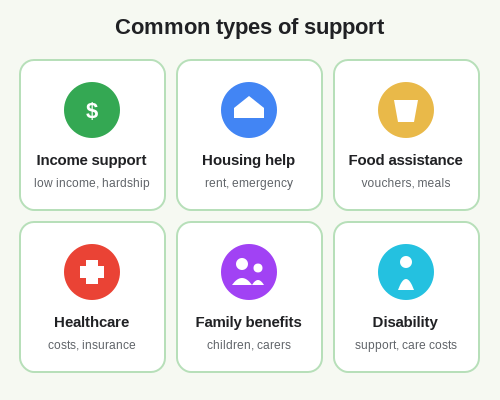
Support is often split into several separate programmes
Common types of government assistance include:
- Income support for people on low incomes or facing hardship
- Housing help, such as rent assistance, social housing, or emergency accommodation
- Food assistance, such as vouchers, cards, or school meals
- Healthcare support with medical costs, insurance, or prescriptions
- Family and child benefits, including support for carers
- Disability support for living costs, equipment, or care
- Emergency or crisis payments after disasters or sudden hardship
The best starting point is your national government portal, which usually has a benefits section or an official eligibility checker. Local authorities and municipalities often run extra schemes, so check their websites too. Free advice services and charities in many areas can also help you find programmes you'd otherwise miss.
Step 2: Check Your Eligibility
Each programme sets its own rules. Typical factors include:
- Household income and, for some programmes, savings or assets
- Residency or immigration status
- Age, health, or disability
- Number of children or dependants in your household
- Work status or hours worked
Don't rule yourself out too early
Many people assume they earn too much or that support is only for the unemployed. Some programmes help working families and people with modest savings. If an official checker says you may qualify, it's usually worth applying.
Step 3: Gather Your Evidence
- Identity documents for you and, often, your household members
- Proof of address, such as a tenancy agreement or utility bill
- Proof of income: payslips, pension statements, or other benefit letters
- Bank statements, if savings are assessed
- Housing costs, such as rent or mortgage statements
- Medical evidence for disability or health-related support
- Your national ID, social security, or tax number
Use our guide on checking application documents before you submit.
Step 4: Apply Through Official Channels
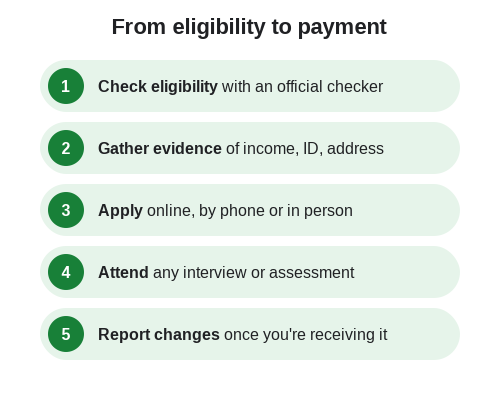
The process is similar for most programmes
- Apply as soon as you think you're eligible; many programmes pay from the date you apply, not the date you became eligible.
- Answer every question honestly. Wrong information can lead to repayments, penalties, or fraud charges.
- Attend any interview or assessment, and ask for adjustments if you have a disability or need an interpreter.
- Keep copies of your application, letters, and reference numbers.
Applying is free
Government benefit applications don't require an upfront fee. Anyone who asks you to pay to "unlock" a grant or speed up a benefit is almost certainly a scammer. See our guide on avoiding government service scams.
After a Decision: Changes and Appeals
- If you're approved, read the decision letter to understand how much you'll receive, when, and what conditions apply.
- Report changes promptly, such as a new job, a change in income, moving home, or someone joining or leaving your household. Not reporting can lead to overpayments you must repay.
- If you're refused, check the reasons. Most systems let you ask for a review or appeal within a set time limit.
- Get free help with appeals from advice services or legal aid organisations, where available.
Many refusals are overturned when people provide missing evidence or explain their situation more fully, so don't give up after a first refusal if you believe you qualify.
Manage Money While You Wait
Applications for government aid can take weeks to process. Planning for this gap helps you avoid falling further behind on bills.
- Prioritise essential bills: housing, energy, and council or local taxes usually have the most serious consequences if unpaid.
- Contact creditors early: explain your situation to landlords, lenders, and utility companies. Many offer payment plans or temporary breaks.
- Ask about advance payments: some benefit systems offer advances or emergency payments while your claim is processed.
- Use local support: food banks, community kitchens, charities, and local welfare schemes can help in the short term.
- Get free debt advice: independent advice services can help you prioritise debts and negotiate with creditors.
- Avoid high-cost borrowing: payday loans and unregulated lenders can trap you in debt.
Keep a simple budget of your income and essential spending. Our guide on tracking expenses explains easy ways to do this.
Look after your wellbeing too. Money worries are stressful, and it's normal to feel anxious. Talk to someone you trust, and remember that asking for support is a sensible step, not a failure.
Remember that government support exists for exactly these situations. Applying for help you are entitled to is a practical, responsible step that protects you and your family while you get back on your feet. Free advice services can help you check what you qualify for, complete forms correctly, and challenge decisions you believe are wrong.
Final Thoughts
Government aid exists to help people through difficult times, and claiming support you're entitled to is nothing to be ashamed of. Find programmes through official sources, check eligibility, gather evidence, apply early and honestly, report changes, and challenge decisions you think are wrong.
Disclaimer
Waysily is an independent information website. We are not a government agency, we are not affiliated with any government, and we do not process applications or charge fees for any service. This guide gives general information only and is not legal, immigration, or tax advice. Rules, fees, and processing times differ between countries and change often, so always confirm requirements on your government's official website or with a qualified professional before you apply.