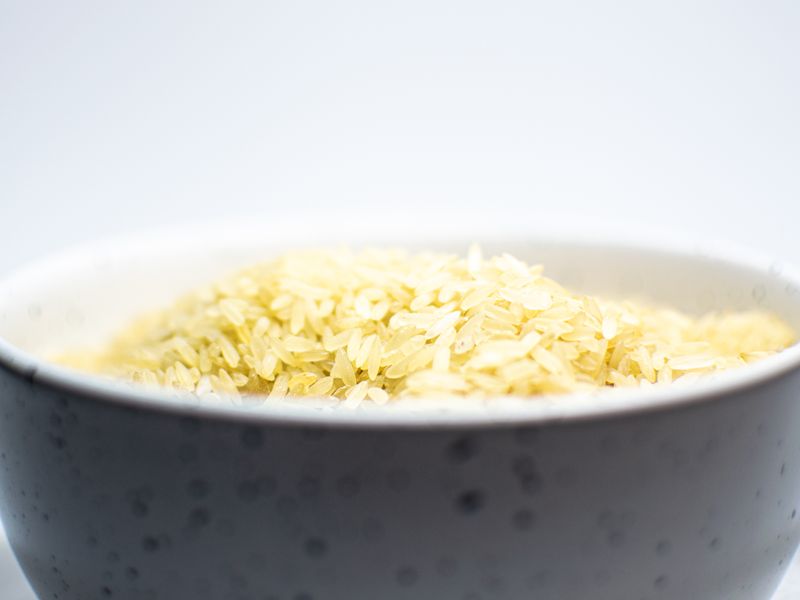
A close-up view of uncooked white rice in a speckled ceramic bowl on a light background
This guide uses the absorption method, where rice cooks in a measured amount of water that it absorbs completely. It's the most common method for long-grain rice such as basmati and jasmine, and once you master it, you won't need a rice cooker, although they work well too.
Step 1: Know Your Rice
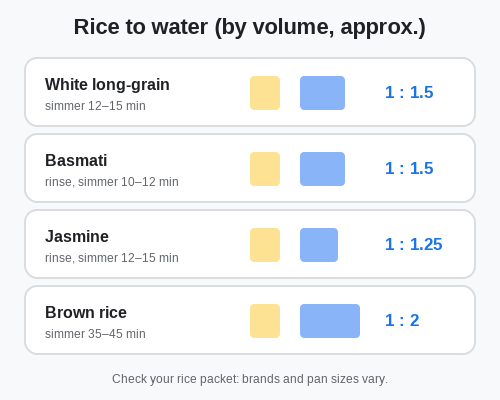
Different rices need different amounts of water
Different types of rice behave differently, so the first step is knowing what you have:
- Long-grain white rice and basmati: cook into separate, fluffy grains. Basmati is fragrant and long, ideal for curries and pilafs.
- Jasmine rice: slightly softer and a little sticky, with a floral aroma, common in Thai and Southeast Asian dishes.
- Medium and short-grain rice: such as sushi rice, risotto rice, and pudding rice, are meant to be creamy or sticky. They need different methods.
- Brown rice: has its bran layer, so it's chewier, more nutritious, and needs more water and a longer cooking time.
Always check the packet instructions too; brands vary, and some rice is "parboiled" or "easy cook," which needs different timing.
Step 2: Rinse (and Sometimes Soak) the Rice
Rinsing removes surface starch that makes rice gummy and clumpy. Put the rice in a bowl or sieve, cover with cold water, swirl it with your hand, and pour the cloudy water away. Repeat two to four times until the water is much clearer. It doesn't need to run perfectly clear.
Soaking basmati for 20 to 30 minutes before cooking helps the grains cook evenly and become longer and more separate. If you soak, reduce the cooking water slightly. Jasmine rice is usually just rinsed, not soaked. Some fortified rice is coated with vitamins; check the packet, as rinsing it removes some of them.
Step 3: Use the Right Water Ratio
Measure rice and water with the same cup. As a general guide, by volume:
- Long-grain white or basmati: about 1 cup rice to 1½ cups water
- Jasmine: about 1 cup rice to 1¼ cups water
- Brown rice: about 1 cup rice to 2 cups water
One cup of uncooked rice makes around three cups cooked, enough for two to three people as a side. Use a heavy-bottomed pan with a tight-fitting lid, sized so the rice sits a few centimetres deep. Very large pans let too much water evaporate; very small ones cook unevenly.
The finger method
Many cooks level the rice in the pan, then add water until it reaches the first knuckle of an index finger resting on top of the rice. It's a traditional method that works well for white rice in a medium pan, whatever the quantity.
Step 4: Simmer, Rest and Fluff
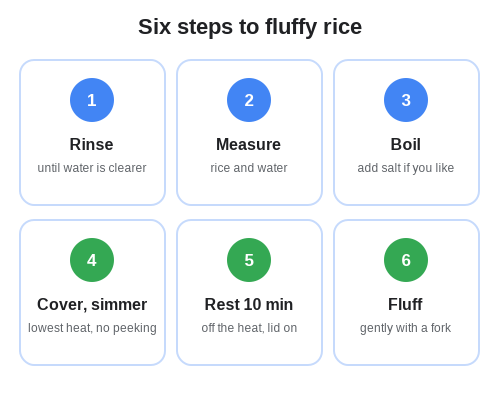
The resting step is the one most people skip
- Cover and turn the heat to the lowest setting as soon as it boils.
- Simmer without lifting the lid: about 10 to 12 minutes for basmati, 12 to 15 for long-grain white and jasmine, and 35 to 45 for brown rice. Lifting the lid lets steam escape and can leave rice undercooked.
- Rest off the heat: keep the lid on and leave the pan for 10 minutes. The remaining steam finishes cooking the rice evenly and firms up the grains.
- Fluff with a fork: gently lift and separate the grains rather than stirring, which can crush them.
For extra flavour, cook rice in stock instead of water, or fry it briefly in a little oil or butter with spices like cumin seeds, cardamom, or a bay leaf before adding the water.
How to Fix Common Rice Problems
- Mushy or sticky: too much water, not rinsed, or stirred during cooking. Next time, reduce water slightly and rinse well. To rescue it, spread on a tray to steam off, or use it in fried rice once chilled.
- Crunchy or undercooked: too little water or the lid was lifted. Sprinkle in two to three tablespoons of hot water, cover, and cook on very low heat for five more minutes.
- Burnt at the bottom: the heat was too high or the pan too thin. Don't scrape the burnt layer; spoon out the good rice above it.
- Watery at the end: drain any excess, then return to very low heat with the lid on for a few minutes.
Store and Reheat Rice Safely
Cooked rice needs careful handling. Uncooked rice can contain spores of a bacterium called Bacillus cereus, which can survive cooking. If cooked rice is left at room temperature, the spores can grow and produce toxins that reheating won't destroy.
- Cool leftover rice quickly, ideally within an hour, by spreading it out in a shallow container.
- Refrigerate and eat within about a day, or freeze it in portions.
- Reheat only once, until it's steaming hot all the way through.
Don't leave rice out
Never leave cooked rice sitting at room temperature for hours, for example in a rice cooker on "warm" overnight or on the counter after dinner. If in doubt, throw it out.
Cold, day-old rice is ideal for fried rice; see our guide on cooking a quick dinner for ideas.
Like any basic skill, rice improves with repetition. Use the same pan, the same cup, and the same hob setting each time, and note any changes you make. After a few attempts you will know exactly how your kitchen behaves and get consistent results without measuring anxiety.
Final Thoughts
Fluffy rice follows a simple routine: choose the right rice, rinse it, measure the water carefully, bring it to the boil, cover and simmer on low heat without peeking, rest for ten minutes, and fluff with a fork. Practise a few times with the same pan, and perfect rice will become second nature.