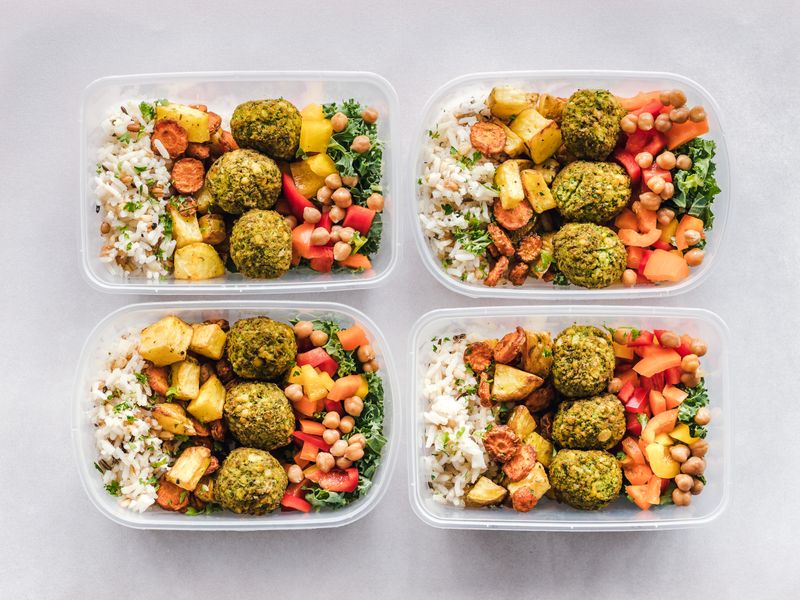
Colorful meal prep containers with falafel, chickpeas, rice, and vegetables for a healthy
You don't need special apps or hours of preparation. A basic plan takes about 30 minutes a week once you get into the habit. This guide walks you through a simple, flexible system that works for individuals, couples, and families.
Why Meal Planning Works
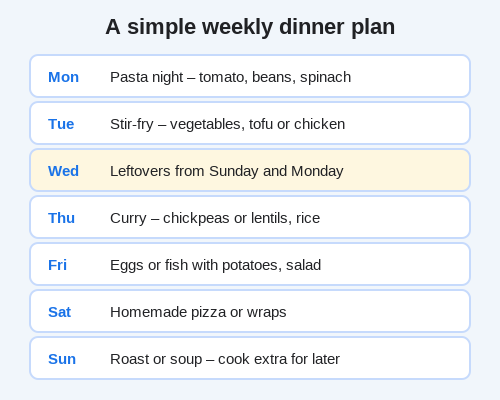
Theme nights make planning quick
- Saves money: you buy only what you need, use what you already have, and avoid last-minute takeaways.
- Reduces food waste: ingredients are bought with a purpose, so less ends up in the bin.
- Saves time: fewer shopping trips and less daily decision-making.
- Supports healthier eating: it's easier to include vegetables, whole grains, and balanced meals when you plan them rather than deciding when you're hungry and tired.
Step 1: Check What You Already Have
Before planning, look through your fridge, freezer, and cupboards. Note anything that needs using soon, such as vegetables, opened sauces, or meat near its use-by date, and build the first meals of the week around them. Check your calendar too: evenings with late work, sports, or social plans need quick meals or leftovers, while quieter evenings can handle more cooking.
Think about how many people you're feeding each night and whether anyone needs packed lunches. Planning for real life, not an ideal week, is what makes a plan stick.
Step 2: Choose Your Meals
Start with dinners, as they're usually the biggest challenge. Breakfasts and lunches can follow simple routines.
- Use theme nights: for example, pasta Monday, stir-fry Tuesday, leftovers Wednesday, curry Thursday, and homemade pizza Saturday. Themes narrow your choices without making meals repetitive.
- Plan for leftovers: cook double portions of a stew, chilli, or roast and use them for another dinner or for lunches.
- Share ingredients across meals: a bag of spinach can go into pasta, a curry, and an omelette, so nothing is wasted.
- Balance the week: include a few meat-free meals, fish once or twice if you eat it, and plenty of vegetables.
- Keep one flexible night for eating out, using up odds and ends, or when plans change.
Build a family favourites list
Keep a running list of meals your household enjoys, grouped by type: quick, batch-cook, vegetarian, weekend. Planning becomes a matter of picking from the list, and you can add one new recipe each week to keep things interesting.
Step 3: Write a Smart Shopping List
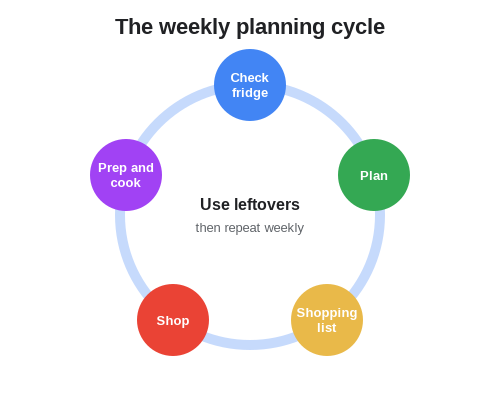
Plan, shop, cook, use leftovers, repeat
- Check quantities: how many onions, tins, or portions of meat you need across all meals.
- Add breakfast, lunch, and snack basics that are running low.
- Stick to the list in the shop, and avoid shopping when hungry.
- Compare unit prices (price per kilo or litre) rather than pack prices.
- Consider online grocery shopping, which makes it easier to stick to the list and see your total as you go.
Step 4: Prep and Batch Cook
A short prep session after shopping makes weeknights much faster. In an hour or two, you can:
- Wash and chop vegetables for the first few days.
- Cook a big pot of rice, grains, or pasta for several meals.
- Make a batch of sauce, soup, or chilli and freeze some in portions.
- Marinate meat or tofu for the next day's dinner.
- Prepare breakfasts and lunches, such as overnight oats or salad jars.
If you don't have time for a big session, even 15 minutes chopping onions and peppers will help. For fast weekday ideas, see our guide on cooking a quick dinner.
Step 5: Use Leftovers and Review the Week
Plan to eat leftovers rather than hoping you'll remember them. Label containers with the date, keep cooked food in the fridge for up to about three days, and freeze anything you won't eat in time. Leftover roast vegetables can become a frittata or pasta sauce, extra rice can become fried rice, and soft fruit can go into smoothies.
At the end of the week, take a minute to review. Which meals did everyone enjoy? What went to waste? Did you plan too many meals or too few? Small adjustments each week make the next plan easier and more accurate.
Store batch-cooked food safely
Cool cooked food quickly, ideally within an hour or two, by dividing it into shallow containers, then refrigerate or freeze it. Defrost frozen meals in the fridge, and reheat until steaming hot all the way through. Reheat leftovers only once.
Meal planning can be shared too. In a family or shared home, ask everyone to suggest one meal for the week, rotate who plans or cooks on certain nights, and keep the plan somewhere visible, such as a whiteboard on the fridge or a shared note on your phones. Children who help choose and prepare meals are often more willing to try them. If you live alone, plan smaller batches, freeze single portions, and choose recipes that use the same fresh ingredients in two or three different ways, so nothing goes to waste. Whatever your household, keep the plan flexible: swapping two nights around is fine, as long as the ingredients still get used before they spoil.
Final Thoughts
Weekly meal planning is a simple habit with big benefits: check what you have, choose meals using themes and leftovers, write a grouped shopping list, do a little prep, and review what worked. Start by planning just four dinners next week. Within a month, it will feel natural, and you'll notice the difference in your budget, your bin, and your evenings. For nutrition guidance on individual meals, see our guide on planning a healthy meal.