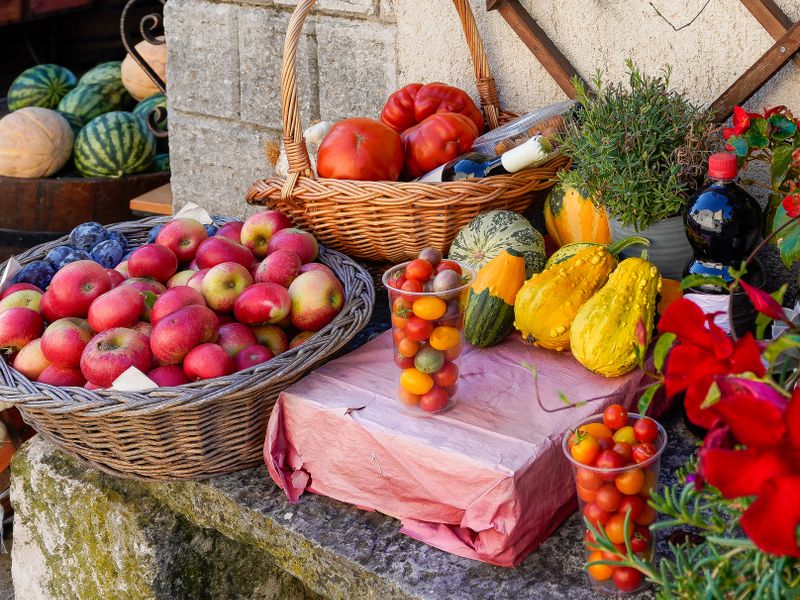
A variety of fresh fruits and vegetables displayed at an outdoor farmer's market
Different fruits and vegetables have different needs. Some last longest in the cold fridge, others lose flavour or texture there, and some release a gas that makes nearby produce ripen and spoil faster. This guide explains the simple rules so your produce stays fresh, tastes better, and lasts longer.
What to Keep in the Fridge
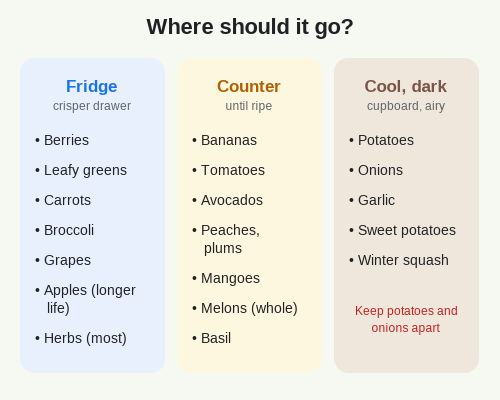
The fridge isn't always the best place
Most vegetables and many fruits last longest in the fridge, ideally at 5°C (41°F) or below. The crisper drawers help by keeping humidity higher and protecting delicate produce.
- Leafy greens and salad: wrap loosely in a slightly damp paper towel and store in a bag or container to stop them drying out.
- Berries and grapes: keep unwashed in their container, and remove any mouldy fruit quickly so it doesn't spread.
- Carrots, celery, broccoli, cabbage, peppers, and courgettes: keep in the crisper drawer. Remove leafy carrot tops, which draw moisture from the roots.
- Apples: fine on the counter for a few days, but last weeks longer in the fridge.
- Mushrooms: store in a paper bag, not sealed plastic, so they don't turn slimy.
- Cut fruit and vegetables: always refrigerate in a covered container once cut.
What to Keep on the Counter
Some produce is damaged by cold or ripens properly only at room temperature:
- Bananas: keep at room temperature. Once ripe, they can go in the fridge; the skin turns brown but the fruit inside stays good for a few more days.
- Tomatoes: taste best kept at room temperature, out of direct sunlight. Refrigerate only very ripe tomatoes you can't eat soon.
- Avocados, peaches, plums, nectarines, mangoes, pears, and kiwis: ripen on the counter, then move to the fridge to slow further ripening.
- Whole melons and pineapples: keep at room temperature until cut, then refrigerate.
- Citrus fruit: fine on the counter for about a week, or longer in the fridge.
- Basil: stands in a glass of water on the counter like flowers; it blackens in the fridge.
What to Keep in a Cool, Dark Place
Potatoes, sweet potatoes, onions, garlic, and winter squash keep best somewhere cool, dark, dry, and airy, such as a cupboard, pantry, or cellar, rather than the fridge.
- Potatoes: store in a paper or breathable bag away from light, which turns them green. Cut away any green parts and sprouts before cooking, and throw away potatoes that are very green or shrivelled.
- Onions and garlic: keep whole and dry, with air around them. Once cut, store in the fridge in a sealed container.
- Keep potatoes and onions apart: onions release moisture and gases that can make potatoes sprout faster.
Wash just before eating
Moisture encourages mould and rot, so most produce is best washed just before you eat or cook it, not when you put it away. If you do wash produce in advance, dry it thoroughly first.
Understand Ethylene: Keep Some Produce Apart
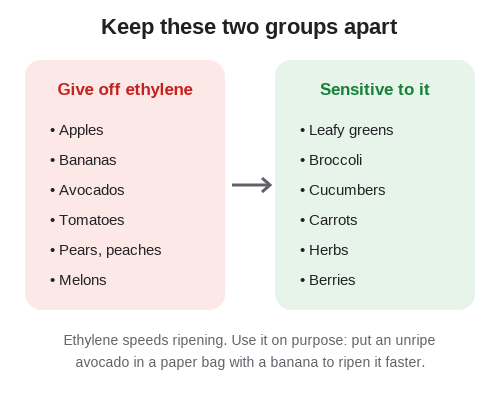
Some fruits make their neighbours ripen faster
Keep these groups in separate drawers or areas. You can also use ethylene to your advantage: to ripen a hard avocado or peach faster, put it in a paper bag with a ripe banana or apple for a day or two.
Extra Tips to Make Produce Last
- Herbs: treat soft herbs like parsley and coriander like flowers, in a glass of water in the fridge with a loose bag over the top. Wrap hardy herbs like rosemary and thyme in a damp paper towel.
- Revive limp vegetables: soak wilted lettuce, celery, or carrots in iced water for 15 to 30 minutes to crisp them up.
- Check regularly: look through your produce every few days and move anything ripening fast to the front, to use first.
- Freeze before it spoils: overripe bananas, berries, and chopped vegetables freeze well for smoothies, baking, soups, and stir-fries. Many vegetables freeze best if blanched briefly in boiling water first.
- Don't overbuy: plan meals and buy delicate produce, like berries and salad, in smaller amounts more often. Our guide on planning weekly meals can help.
Know When to Throw It Out
Some imperfections are harmless: a soft spot on an apple or a slightly wrinkled pepper can simply be cut away, and the rest used in cooking. But throw produce away if it's slimy, has an off smell, or shows mould on soft fruits and vegetables like berries, tomatoes, or cucumbers, since mould can spread through soft foods beyond what you see. On firm vegetables such as carrots or cabbage, small mould spots can be cut off generously, with at least 2–3 cm around them.
Keep produce away from raw meat
Store fruit and vegetables away from raw meat, poultry, and fish, and never let their juices drip onto produce, especially items you'll eat raw. Keep raw meat sealed on the bottom shelf of the fridge.
It also helps to organise your fridge so you can see what you have. Keep older produce at the front and newer purchases at the back, use clear containers where possible, and keep a short list on the fridge door of anything that needs using soon. These small habits prevent forgotten vegetables from spoiling at the back of the drawer.
Final Thoughts
Storing produce well comes down to a few rules: refrigerate most vegetables, berries, and cut fruit; keep bananas, tomatoes, and unripe stone fruit on the counter; store potatoes, onions, and garlic in a cool, dark place; and keep ethylene producers away from sensitive produce. Follow these and you'll throw away less, save money, and enjoy fresher-tasting food.