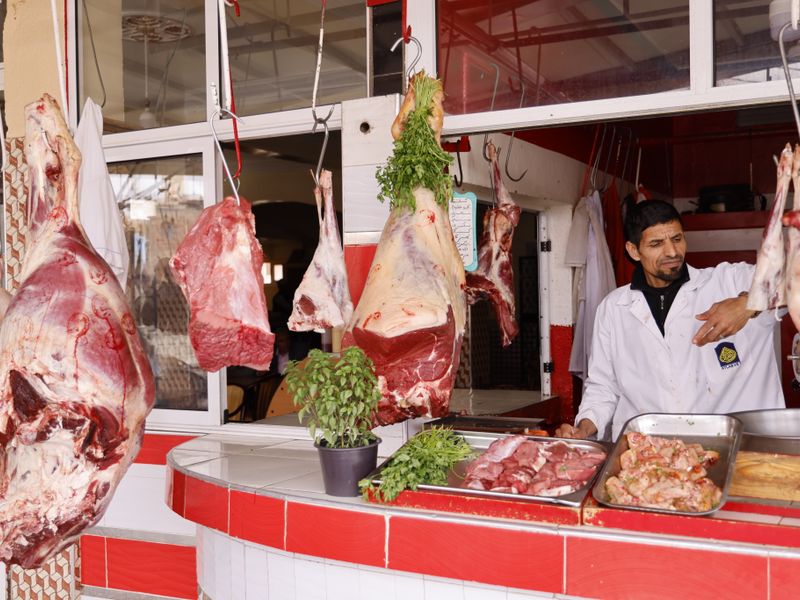
A butcher working at an outdoor market stall with various cuts of beef hanging
Whether you buy from a supermarket, a butcher, or a market, the same basic checks apply. This guide covers what to look for, how to read labels and dates, and how to get meat home and stored safely.
Step 1: Check the Colour
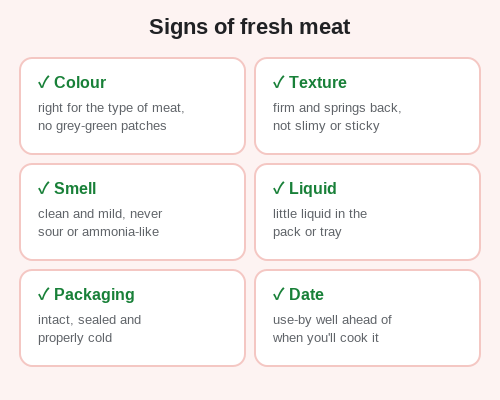
Use your eyes, nose and hands, plus the label
Colour depends on the type of meat, the animal's diet, and how the meat is packaged, so it's a guide rather than a strict rule:
- Beef: usually bright cherry-red on the surface. Vacuum-packed beef may look purplish because it hasn't been exposed to oxygen; it typically turns red after opening. Some browning inside mince is normal.
- Lamb: pinkish-red to light red, with firm white fat.
- Pork: pale pink to light red, with white fat.
- Chicken and turkey: pink to pale flesh with no grey or green patches. Skin colour varies from white to yellow depending on the bird's diet.
Avoid meat with grey-green, dull brown, or iridescent patches across the surface, or with discoloured, dried-out edges, which suggest it's old or has been stored poorly.
Step 2: Check Texture, Smell and Packaging
- Texture: fresh meat is firm and springs back when pressed through the packaging. Avoid meat that feels slimy, sticky, or mushy.
- Smell: fresh meat has a mild, clean smell. A sour, sulphur-like, or ammonia smell means it's spoiling. You may only be able to check this once you open the pack at home.
- Liquid: a little liquid is normal, but a pool of cloudy liquid can mean the meat is older or has been frozen and thawed.
- Packaging: should be intact, sealed, and cold to the touch, with no tears, holes, or swelling. Bulging packs can signal bacterial growth.
- Display: meat should be kept in a properly chilled cabinet, not stacked above the fill line or left at room temperature.
Step 3: Read Dates and Labels
- Use-by date: the important date for safety on fresh meat in many countries. Don't eat meat after its use-by date, even if it looks and smells fine, unless you froze it before that date.
- Sell-by or display-until dates: used by shops for stock control; check the use-by date too.
- Choose packs with the latest date if you're not cooking straight away.
- Check the country of origin, farming method, and any certification that matters to you, such as free-range, organic, grass-fed, or religious certification.
- Read the ingredients on processed or marinated meats, which may contain added salt, sugar, or allergens.
Ask the butcher
A good butcher can tell you where meat comes from, recommend the best cut for your recipe and budget, trim fat, mince meat fresh, and cut portions to the size you need. Don't be afraid to ask questions.
Step 4: Choose the Right Cut
Matching the cut to the cooking method makes a big difference to results and value:
- Quick cooking (grilling, frying): tender cuts like steaks, chops, chicken breasts, and fillets. These are usually more expensive.
- Slow cooking (stews, braises, slow roasts): tougher, cheaper cuts like beef chuck, brisket, lamb shoulder, pork shoulder, and chicken thighs. Long, gentle cooking turns them tender and flavourful.
- Mince: check the fat percentage on the label. Leaner mince suits sauces; mince with more fat stays juicier in burgers and meatballs.
- Marbling: fine streaks of fat through red meat add flavour and juiciness, especially in steaks.
Step 5: Get It Home and Store It Safely
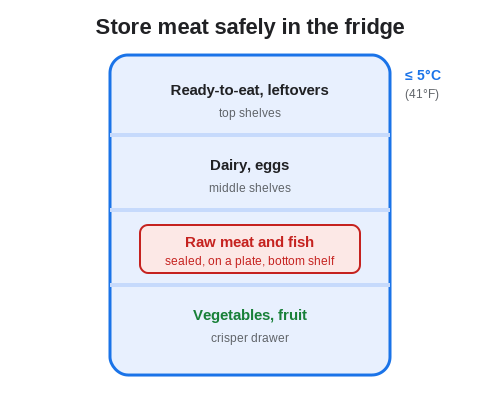
Raw meat belongs on the bottom shelf
- Refrigerate meat as soon as you get home, with the fridge at 5°C (41°F) or below.
- Store raw meat sealed, on a plate or in a container, on the bottom shelf, so juices can't drip onto other foods.
- Cook or freeze mince and poultry within a day or two, and other fresh cuts by their use-by date.
- Freeze meat in flat, labelled portions, dated, and use within a few months for best quality.
- Thaw frozen meat in the fridge, not on the counter, and cook it within a day or so of thawing.
Don't wash raw chicken
Washing raw poultry doesn't remove harmful bacteria; it splashes them onto sinks, worktops, and nearby food. Cooking thoroughly kills bacteria. Wash your hands, boards, and knives with hot soapy water after handling any raw meat, and use separate boards for raw meat and ready-to-eat foods.
Cook Meat Thoroughly
Poultry, pork, mince, sausages, and burgers should be cooked until steaming hot all the way through, with no pink meat and clear juices. A food thermometer is the most reliable test; many food safety agencies recommend a core temperature of about 75°C (165°F) for poultry and minced meats, held briefly. Whole cuts of beef and lamb, such as steaks, can be served rarer because bacteria are mainly on the surface, which is seared during cooking. If you're unsure, follow your local food safety authority's guidance.
For more on keeping your fridge organised, see our guide on storing fruits and vegetables.
Buying meat well also means buying the right amount. Plan how many meals you need, buy family packs only if you will freeze the extra portions on the day you shop, and consider cheaper slow-cooking cuts or adding beans and lentils to stretch meat further. This saves money and means less meat sits in the fridge close to its use-by date.
Final Thoughts
Choosing fresh meat is about checking colour, texture, smell, packaging, and dates, then matching the cut to how you'll cook it. Just as important is what happens next: keep it cold, store it on the bottom shelf, cook or freeze it on time, and cook it thoroughly. These habits give you better meals and keep everyone safe.