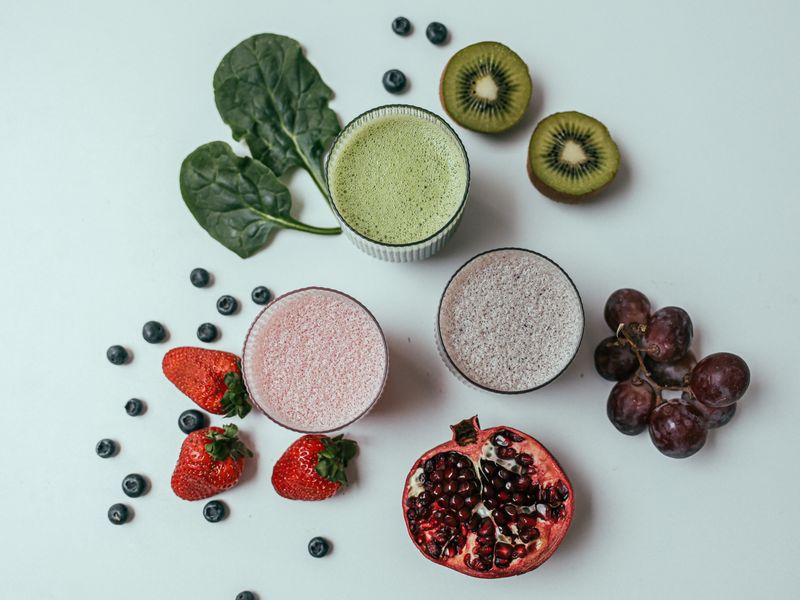
Vibrant flatlay featuring fresh fruits, leafy greens, and smoothies for a healthy
The difference comes down to balance. A smoothie made mostly from fruit juice and sweet fruit is very different from one that combines whole fruit with vegetables, protein, and fibre. This guide gives you a simple formula, practical tips for texture and taste, and three combinations to start with.
Step 1: Follow a Simple Smoothie Formula
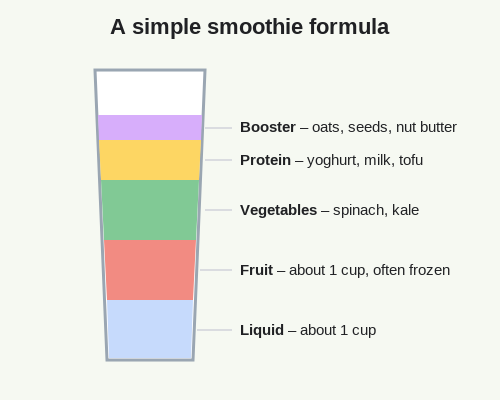
Five building blocks for a balanced smoothie
For one large serving, combine:
- Liquid (about 1 cup or 250 ml): milk, a fortified plant milk, water, or a mix. Water and unsweetened milks keep sugar low; fruit juice adds a lot of sugar without fibre.
- Fruit (about 1 cup): one banana, a handful of berries, mango, or pineapple. Frozen fruit makes the smoothie cold and thick without ice.
- Vegetables (a handful): spinach is almost tasteless in a fruity smoothie. Kale, cucumber, cooked beetroot, or a little avocado also work.
- Protein: plain yoghurt, Greek yoghurt, milk, silken tofu, or a spoonful of nut butter. Protein helps you feel full for longer.
- A booster (optional): oats, chia or flax seeds, nuts, or a spoonful of cocoa or cinnamon for flavour and extra fibre.
This formula keeps fruit as one ingredient among several rather than the whole drink. It also makes it easy to use whatever you have in the fridge or freezer.
Step 2: Keep the Sugar in Check
Fruit is healthy, but blending it breaks down its structure, so the natural sugars in a smoothie count as "free sugars" in many dietary guidelines, the type most people are advised to limit. That doesn't mean you should avoid smoothies; it means it helps to be sensible about portions and ingredients.
- Use whole fruit instead of juice, and aim for about one cup of fruit per serving.
- Avoid adding honey, syrups, or sweetened yoghurts. Ripe bananas and mango add plenty of sweetness.
- Add vegetables, yoghurt, oats, or seeds to make the smoothie more filling without adding much sugar.
- Drink one glass as part of a meal or snack rather than sipping several throughout the day, which is kinder to your teeth.
Our guide on reducing sugar intake explains more about hidden sugars in everyday foods and drinks.
Step 3: Blend for a Smooth Texture
- Add ingredients in the right order: liquid first, then soft ingredients like yoghurt and leafy greens, then fruit, and finally frozen items and ice. This helps the blades move freely.
- Start slowly, then increase the speed. Blend for 45 to 60 seconds until completely smooth, especially when using leafy greens or seeds.
- Adjust thickness: add more liquid if it's too thick, or more frozen fruit, oats, or yoghurt if it's too thin.
- Taste and adjust: a squeeze of lemon or lime brightens green smoothies, and a pinch of cinnamon or a little vanilla adds flavour without sugar.
No high-powered blender?
Basic blenders work well if you chop ingredients smaller, use softer fruit, soak oats or seeds in the liquid for ten minutes first, and blend a little longer. Baby spinach blends more easily than tougher greens.
Three Healthy Smoothies to Try
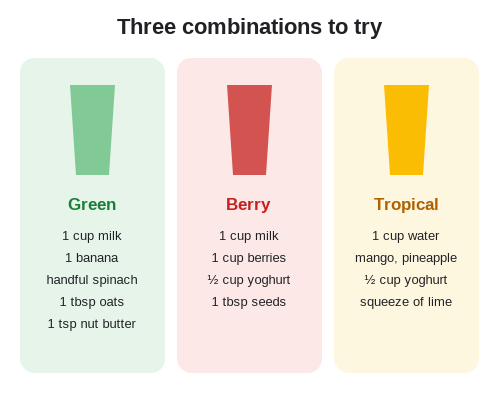
Start with these, then experiment
- Green breakfast smoothie: 1 cup milk or plant milk, 1 banana, a large handful of spinach, 1 tablespoon oats, and 1 teaspoon peanut butter. Filling and mild, even for people unsure about greens.
- Berry protein smoothie: 1 cup milk, 1 cup frozen mixed berries, half a cup of plain Greek yoghurt, and 1 tablespoon chia or flax seeds. Rich in protein and fibre.
- Tropical smoothie: 1 cup water or coconut water, frozen mango and pineapple chunks, half a cup of plain yoghurt, and a squeeze of lime. Refreshing on hot days.
Step 4: Save Time With Smoothie Packs
If mornings are rushed, prepare freezer packs ahead of time. Put the fruit, vegetables, oats, and seeds for one smoothie into a freezer bag or container, label it, and freeze. In the morning, tip the contents into the blender, add your liquid and yoghurt, and blend. Freezing is also a good way to use ripe bananas and greens before they spoil.
Smoothies are best drunk fresh, but you can keep one in a sealed bottle in the fridge for up to 24 hours. Shake well before drinking, as it will separate. For more fast morning ideas, see our guide on preparing breakfast fast.
Make Smoothies Work for You
Smoothies can fit many goals. If you want a meal replacement, include enough protein and some healthy fat, such as yoghurt and nut butter, so it keeps you full. If you're having one after exercise, a mix of fruit and protein supports recovery. For children, smoothies can be a fun way to introduce vegetables, as long as portions are sensible and they don't replace whole fruit and meals entirely.
It also helps to remember that smoothies are a complement to whole foods, not a replacement for them. Chewing whole fruit and vegetables keeps you fuller and is good for your teeth and digestion, so enjoy smoothies alongside regular meals rather than relying on them for most of your fruit and vegetables.
Check for allergies and medications
Common smoothie ingredients such as nuts, milk, and soya are allergens. Some greens are high in vitamin K, which can affect certain blood-thinning medicines, and grapefruit interacts with several medications. If you take regular medication, check with a pharmacist or doctor before making large changes.
Final Thoughts
A healthy smoothie is about balance: a low-sugar liquid, a sensible portion of whole fruit, a handful of vegetables, some protein, and a fibre-rich booster. Blend well, adjust the texture to your taste, and use freezer packs to save time. Made this way, smoothies become a genuinely nourishing part of your day rather than a sugary treat.