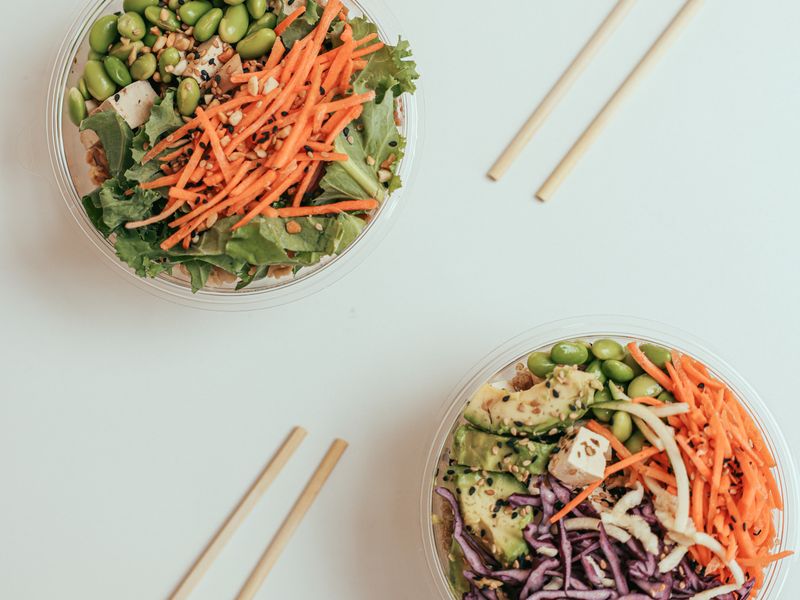
Two vibrant salad bowls with vegetables on a white background
Major dietetic organisations generally agree that a well-planned vegan diet can be healthy at all stages of life. The important words are "well planned". A vegan diet built mainly on chips, white bread, and processed snacks isn't healthy, and a few nutrients need deliberate attention. This guide explains how to make the switch in a practical, balanced way.
Step 1: Transition at a Pace That Suits You
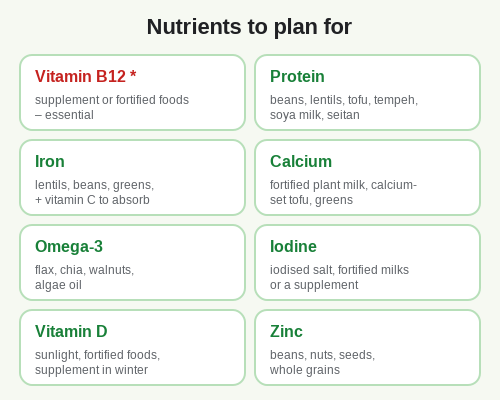
A little planning covers the key nutrients
Some people go vegan overnight; many find it easier to change gradually. A gradual approach gives you time to learn new recipes, find products you enjoy, and adjust your shopping.
- Start with familiar meals: many dishes are already vegan or easy to adapt, such as bean chilli, vegetable curry, pasta with tomato sauce, stir-fries, and lentil soup.
- Change one meal at a time: make breakfasts vegan for a week or two, then lunches, then dinners.
- Swap one product at a time: for example, dairy milk for fortified soya milk, or minced meat for lentils or plant-based mince.
- Learn to read labels: watch for milk powder, whey, casein, egg, gelatine, and some additives derived from animals.
Be patient with yourself. If your goal is to eat more plants, every plant-based meal counts, and you can decide over time how strict you want to be.
Step 2: Cover the Key Nutrients
A varied vegan diet provides plenty of fibre, vitamin C, folate, and many protective plant compounds. But some nutrients are found mainly in animal foods or are harder to absorb from plants:
- Vitamin B12: not reliably available from unfortified plant foods. Vegans need fortified foods such as some plant milks, cereals, and nutritional yeast, or a B12 supplement. This is essential: long-term deficiency can cause anaemia and nerve damage.
- Protein: beans, lentils, chickpeas, tofu, tempeh, edamame, seitan, soya milk, nuts, and seeds. Eat a variety across the day.
- Iron: lentils, beans, tofu, fortified cereals, dark leafy greens, and dried fruit. Eat them with vitamin C, such as peppers, citrus, or tomatoes, to improve absorption, and avoid tea or coffee with meals.
- Calcium: fortified plant milks and yoghurts, calcium-set tofu, kale, bok choy, and almonds.
- Omega-3 fats: ground flaxseed, chia seeds, walnuts, and hemp seeds. Some people use an algae-based omega-3 supplement.
- Iodine: found mostly in fish and dairy, so use iodised salt in moderation, choose iodine-fortified plant milks, or discuss a supplement with a health professional.
- Vitamin D: from sunlight, fortified foods, or a supplement, especially in winter or if you get little sun. Check that it's vegan-friendly (D2 or plant-derived D3).
- Zinc and selenium: whole grains, beans, nuts, and seeds. A couple of Brazil nuts provide selenium.
Check what's fortified
Not all plant milks, yoghurts, and cereals are fortified, and organic versions often aren't. Check labels for calcium, B12, vitamin D, and iodine, and choose fortified options for everyday use.
Step 3: Build Balanced Vegan Meals
A simple way to build a vegan meal is to include a protein source, a whole grain or starchy food, plenty of vegetables, and a little healthy fat. For example:
- Breakfast: porridge made with fortified soya milk, topped with berries, ground flaxseed, and peanut butter.
- Lunch: a wholemeal wrap with hummus, falafel, salad, and grated carrot, plus a piece of fruit.
- Dinner: lentil and vegetable curry with brown rice and spinach, or a tofu stir-fry with noodles and mixed vegetables.
- Snacks: fruit, nuts, roasted chickpeas, soya yoghurt, or wholegrain toast with nut butter.
Beans and lentils are the backbone of many vegan diets. Tinned versions are quick and cheap; rinse them to reduce salt. If you're not used to eating many beans, increase them gradually to give your digestion time to adjust.
Step 4: Use Simple Swaps
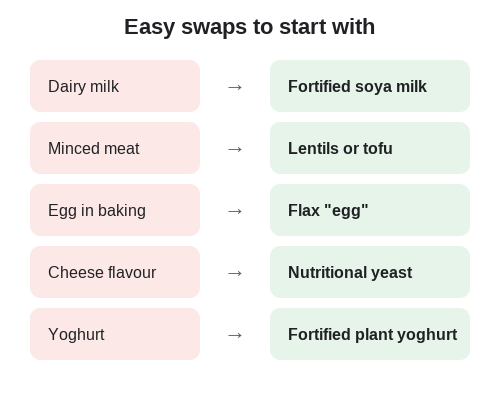
Swaps make familiar recipes vegan
- Fortified soya or oat milk instead of dairy milk
- Lentils, beans, tofu, or plant-based mince instead of meat
- A "flax egg" (1 tablespoon ground flaxseed mixed with 3 tablespoons water) instead of an egg in many baking recipes
- Nutritional yeast for a savoury, cheese-like flavour in sauces
- Olive oil or plant spreads instead of butter
Plant-based meat and cheese alternatives are convenient, but many are highly processed and can be high in salt. Enjoy them, but build most meals around whole foods like beans, grains, vegetables, nuts, and seeds.
Step 5: Shop Smart and Eat Out With Confidence
- Buy staples in bulk: dried beans, lentils, rice, oats, and pasta are among the cheapest foods available.
- Use frozen fruit and vegetables: nutritious, affordable, and long-lasting.
- Cook in batches: chillies, curries, soups, and stews freeze well.
- Eating out: check menus online first, look for vegan symbols, and ask staff about ingredients like butter, cheese, or fish sauce. Many cuisines, such as Indian, Middle Eastern, Ethiopian, and East Asian, have naturally vegan dishes.
Our guide on planning weekly meals can help you organise vegan meals and shopping for the week.
Check In on Your Health
Pay attention to how you feel during the first months. Tiredness, feeling cold, or unusual weakness can have many causes, including low iron or B12. If you have concerns, a doctor can arrange simple blood tests. People with greater nutritional needs, such as children, teenagers, pregnant or breastfeeding women, older adults, and athletes, can thrive on a vegan diet but benefit most from careful planning and, ideally, advice from a registered dietitian.
Don't skip B12
Vitamin B12 deficiency can develop slowly and cause lasting harm. Anyone following a fully vegan diet should take a B12 supplement or eat B12-fortified foods regularly, even if they feel well.
Final Thoughts
Following a vegan diet the healthy way means more than removing animal products. Transition at your own pace, plan for B12, iron, calcium, iodine, vitamin D, and omega-3, build meals around beans, whole grains, vegetables, nuts, and seeds, and use simple swaps for familiar dishes. With a bit of planning, a vegan diet can be varied, affordable, and nourishing.
Nutrition Note
This guide offers general nutrition information and is not medical or dietary advice. If you have diabetes, a food allergy, a medical condition, are pregnant or breastfeeding, or are planning big changes for a child, talk to a doctor or registered dietitian before changing your diet.