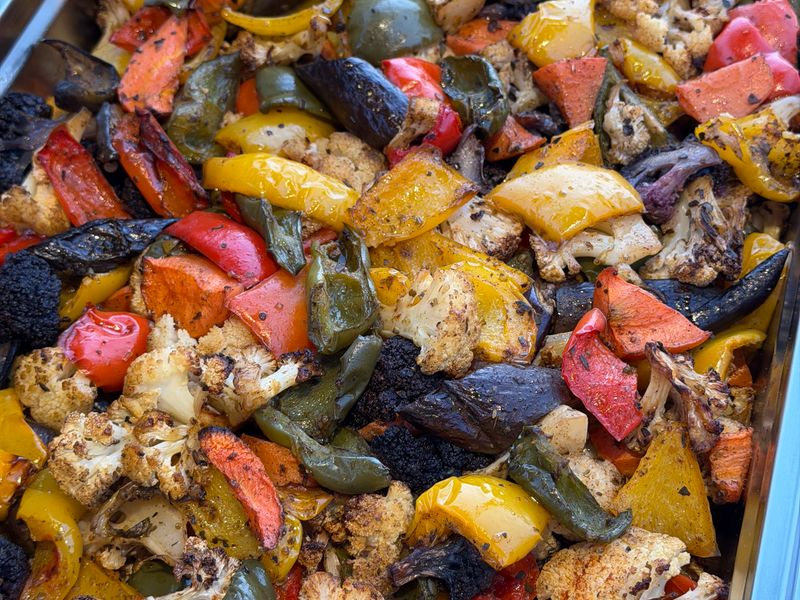
A vibrant tray of assorted roasted vegetables including cauliflower, peppers, and eggplant
But roasting has a few rules. Too low a temperature, too much crowding, or uneven pieces and you'll get pale, soggy vegetables instead of crisp, browned ones. This guide explains each step, with timings for common vegetables and ideas for flavour.
Step 1: Use a Hot Oven
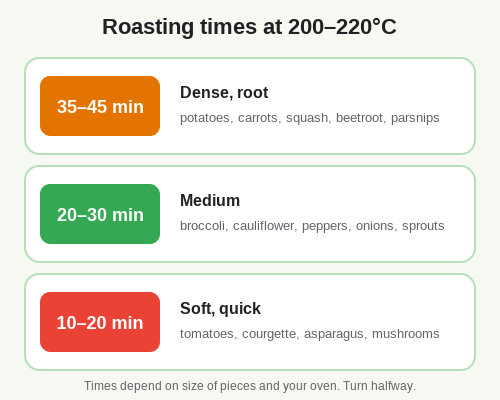
Group vegetables by how long they take
Most vegetables roast best at 200 to 220°C (180 to 200°C fan, 400 to 425°F, gas mark 6 to 7). High heat browns the outside before the inside turns mushy. Always preheat the oven fully before the tray goes in.
For extra crispness, put the empty baking tray in the oven while it heats. When you tip the oiled vegetables onto the hot tray, they start sizzling immediately, which helps them brown rather than stick. Use a large, sturdy metal baking tray; thin trays can buckle at high heat, and dark trays brown food faster than light ones.
Step 2: Cut Evenly and Group by Cooking Time
Cut vegetables into similar-sized pieces so they cook at the same rate, usually about 2–4 cm. Smaller pieces cook faster and get crispier; larger ones stay softer inside. Cutting with flat sides gives more surface contact with the tray, and therefore more browning.
- Dense vegetables (35–45 minutes): potatoes, sweet potatoes, carrots, parsnips, beetroot, and butternut squash.
- Medium vegetables (20–30 minutes): broccoli, cauliflower, Brussels sprouts, peppers, red onions, and fennel.
- Soft vegetables (10–20 minutes): cherry tomatoes, courgettes, asparagus, mushrooms, and green beans.
If you're roasting a mix, either cut dense vegetables smaller, or start them first and add faster-cooking vegetables to the tray partway through.
Step 3: Oil and Season Well
- Dry the vegetables after washing. Surface water creates steam and prevents browning.
- Use enough oil to coat lightly: roughly one to two tablespoons per tray. Olive oil works well; for very high heat, oils such as rapeseed (canola) or sunflower are also good choices.
- Toss in a bowl rather than drizzling on the tray, so every piece is evenly coated.
- Season generously with salt and pepper before roasting.
- Add robust spices before roasting, such as paprika, cumin, chilli flakes, or dried herbs. Add delicate fresh herbs, lemon juice, or grated cheese after roasting so they don't burn.
Garlic timing
Chopped garlic burns quickly at high heat and turns bitter. Add it for the last 10 minutes, or roast whole cloves still in their skins and squeeze out the soft, sweet garlic at the end.
Step 4: Give Them Space and Turn Halfway
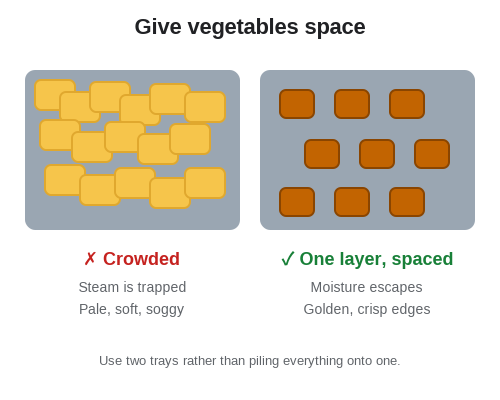
Space is the secret to crispness
- Spread vegetables in a single layer with a little space between pieces.
- Use two trays if necessary, and swap their positions halfway through.
- Place cut sides down for the best browning.
- Turn or shake the vegetables once, about halfway through the cooking time.
- They're ready when they're tender when pierced with a knife and browned at the edges.
Flavour Combinations to Try
- Mediterranean: peppers, courgettes, red onion, and cherry tomatoes with olive oil, oregano, and a squeeze of lemon. Finish with crumbled feta.
- Middle Eastern: cauliflower and chickpeas with cumin, smoked paprika, and a yoghurt-tahini drizzle.
- Sweet and sticky roots: carrots and parsnips with a little honey or maple syrup and thyme, added for the last 10 minutes so it doesn't burn.
- Crispy potatoes: parboil chunks for 8 minutes, drain, shake in the colander to rough up the edges, then roast in hot oil with rosemary.
- Asian-style greens: broccoli and green beans with sesame oil, garlic, and a splash of soy sauce after roasting.
Use Roast Vegetables All Week
Roasting a big batch saves time on busy days. Store cooled roast vegetables in a sealed container in the fridge for three to four days. Reheat them in a hot oven or frying pan, rather than a microwave, to bring back some of their crispness.
Use leftovers in grain bowls, pasta, wraps, frittatas, and salads, or blend them with stock into a quick soup. They also work as a base for a sheet-pan dinner: add sausages, chicken thighs, chickpeas, or tofu to the tray for a complete meal. Our guide on planning weekly meals shows how to build batch cooking into your week.
Avoid burnt, very dark edges
Golden-brown is ideal. Very dark or burnt starchy vegetables, especially potatoes, can contain higher levels of a compound called acrylamide, so food safety agencies in several countries advise aiming for golden rather than dark brown. Always use oven gloves when handling hot trays and oil.
Roasting is also one of the most forgiving ways to cook for a crowd or for the week ahead. Once the tray is in the oven, it needs little attention apart from a quick turn halfway through, leaving you free to prepare the rest of the meal. Choosing vegetables that are in season makes roasting cheaper and tastier too: root vegetables, squash, and Brussels sprouts in colder months, and peppers, courgettes, aubergines, and tomatoes in warmer months. Frozen vegetables can be roasted as well; spread them straight from frozen on a hot, oiled tray, roast at the higher end of the temperature range, and expect them to be slightly softer than fresh. If you have an air fryer, it works on the same principle as a small, very hot oven, so the same rules about dry vegetables, a light coating of oil, and not overcrowding the basket apply.
Final Thoughts
Great roast vegetables follow a simple pattern: a hot oven, evenly cut pieces, dry vegetables lightly coated with oil and seasoning, plenty of space on the tray, and a turn halfway through. Master that, then experiment with spices and finishes to make vegetables the highlight of the meal.