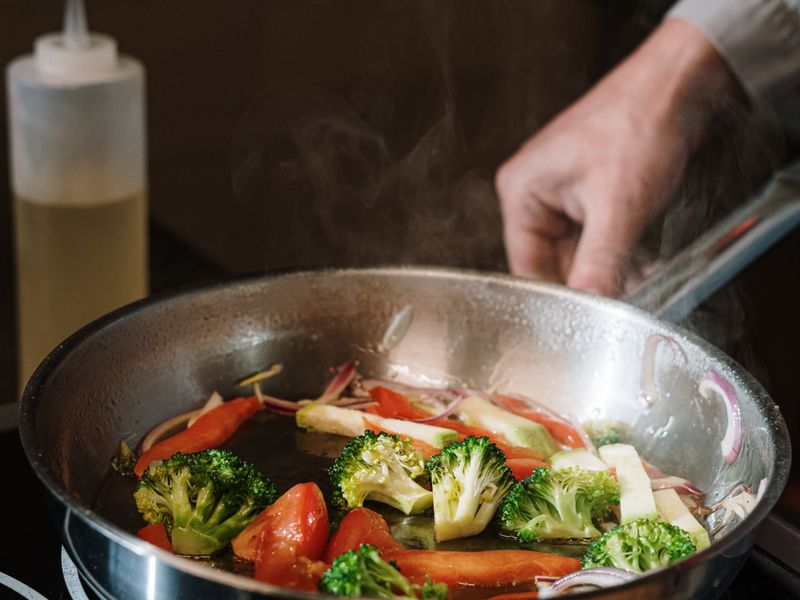
Close-up of sautéing broccoli and bell peppers in a pan on a stove
The good news is that a satisfying, balanced dinner can take 20 minutes or less. The secret isn't fancy recipes. It's a well-stocked kitchen, a simple formula for building a meal, and a few cooking habits that save time. This guide shows you how to put them together so quick dinners become normal rather than a lucky exception.
Step 1: Stock a Quick-Dinner Kitchen
Fast cooking starts with shopping. If you always have a handful of versatile basics, you can make dinner without a special trip to the shop. Aim to keep these on hand:
- Fast-cooking carbohydrates: pasta, noodles, couscous, quick-cook rice, wraps, and good bread. Couscous is ready in five minutes with just boiling water.
- Quick proteins: eggs, tinned beans and chickpeas, tinned fish, tofu, chicken thighs or mince, and frozen prawns.
- Frozen vegetables: peas, spinach, mixed stir-fry vegetables, and green beans. They're frozen soon after harvest, keep for months, and need no chopping.
- Flavour builders: onions, garlic, tinned tomatoes, stock cubes, soy sauce, curry paste, pesto, lemons, chilli flakes, and dried herbs and spices.
- Finishing touches: grated cheese, yoghurt, nuts or seeds, and fresh herbs if you use them often.
With these basics, you can turn almost any fresh ingredient you buy into a complete meal in minutes.
Step 2: Use a Simple Meal Formula
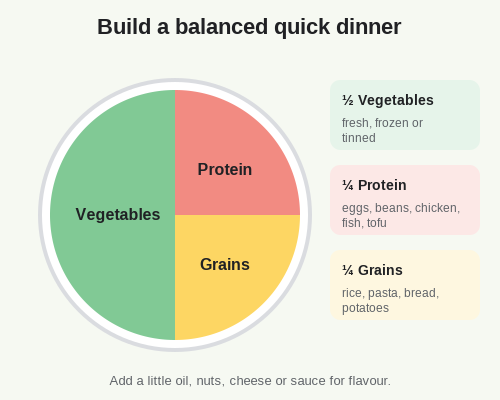
Half vegetables, a quarter protein, a quarter grains
This formula works across cuisines. Pasta with tomatoes, spinach, and white beans follows it. So does a stir-fry with tofu, frozen vegetables, and noodles, or a wrap with eggs, salad, and cheese. Once you think in parts rather than recipes, you can swap ingredients based on what's in your fridge and what you feel like eating.
Keep a short list of go-to meals
Write down five to eight dinners your household likes that take under 25 minutes, and stick the list on the fridge. When you're tired, choosing from a list is far easier than inventing something new.
Step 3: Cook in Parallel to Save Time
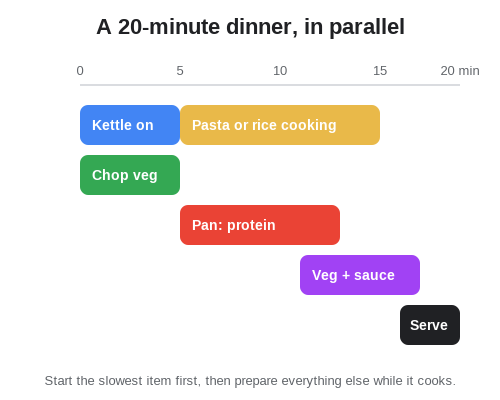
Start the slowest part first
- Boil water in a kettle before pouring it into the pan; it's usually faster than heating it on the hob.
- Read the whole recipe first and get out everything you need before you start.
- Cut ingredients smaller: thin slices and small pieces cook much faster.
- Use high heat and a large pan for stir-fries and sautéing, so food browns quickly instead of steaming.
- Use one-pan or one-pot methods, like a sheet-pan dinner or pasta cooked in its sauce, to cut both cooking and washing-up time.
- Clean as you go while things simmer, so the kitchen is tidy when you sit down.
Five Quick Dinners to Start With
- Tomato and bean pasta (15 minutes): cook pasta; meanwhile, soften garlic in olive oil, add tinned tomatoes and drained beans, simmer, stir in spinach, then toss with pasta and cheese.
- Vegetable fried rice (15 minutes): use leftover cooked rice, fry with frozen vegetables and beaten eggs, and season with soy sauce and spring onions.
- Chickpea curry (20 minutes): fry onion and curry paste, add chickpeas, tinned tomatoes or coconut milk, and spinach. Serve with rice or flatbread.
- Loaded omelette or frittata (10 minutes): cook eggs with whatever vegetables and cheese you have, then serve with salad and bread.
- Sheet-pan chicken and vegetables (25 minutes): toss chicken thighs and chopped vegetables with oil and spices, and roast in a hot oven on one tray.
Each of these can be adapted endlessly: change the vegetables, swap the protein, or use a different sauce or spice blend to keep things interesting through the week.
Step 4: Plan Ahead a Little
You don't need hours of meal prep to make weeknights easier. Small steps go a long way:
- Decide on three or four dinners for the week before you shop.
- Cook extra rice, grains, or roast vegetables once and use them in two meals.
- Wash and chop a few vegetables when you unpack your shopping.
- Make a double batch of sauce, soup, or chilli and freeze half for a busy night.
- Move frozen meat to the fridge the night before so it's ready to cook.
Our guide on planning weekly meals explains how to build a simple plan that saves money and time.
Cook Fast, But Cook Safely
Speed should never come at the cost of food safety. Make sure meat, poultry, and eggs are cooked through; chicken should have no pink in the middle and its juices should run clear, and a food thermometer is the most reliable check. Keep raw meat away from ready-to-eat foods, and wash your hands and boards after handling it.
Cool leftovers quickly, refrigerate them within about two hours, and eat them within a couple of days or freeze them. If you reheat rice, make sure it's piping hot all the way through, and only reheat it once.
Watch the hot oil
When cooking quickly over high heat, never leave pans unattended, keep pan handles turned inward, and dry wet food before adding it to hot oil to prevent spitting. Never put water on an oil fire; turn off the heat and cover the pan with a lid.
Final Thoughts
Quick dinners don't depend on complicated recipes. They depend on a well-stocked kitchen, a simple vegetable-protein-starch formula, cooking several things at once, and a short list of meals you can make without thinking. Start with one or two of the ideas above this week, and within a few weeks fast, home-cooked dinners will feel easy.