Brown sugar cubes arranged on a pastel pink surface with a spoon in the center
Eating too much sugar is linked to tooth decay, weight gain, and a higher risk of type 2 diabetes and other conditions. The good news is that you don't need to cut it out completely or rely on willpower alone. Gradual, practical changes work best, and your taste buds adjust surprisingly quickly.
Step 1: Understand Which Sugars Matter
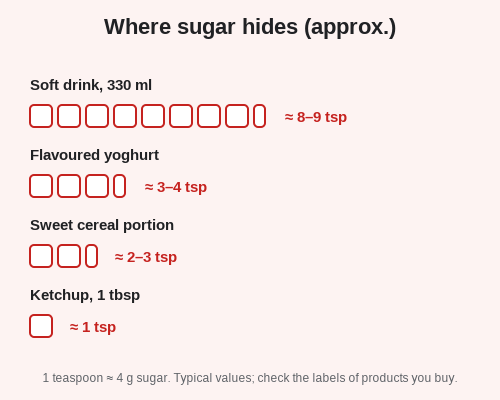
Much of our sugar comes from drinks and processed foods
Not all sugar is treated the same way in dietary guidance:
- Free sugars: sugars added to food and drinks by manufacturers, cooks, or you, plus sugars naturally present in honey, syrups, fruit juices, and smoothies. These are the ones to limit.
- Sugars in whole fruit and vegetables: these come packaged with fibre, water, and nutrients, and are not something most people need to cut back on.
- Sugars in plain milk and plain yoghurt: naturally present lactose is not counted as free sugar.
So the goal isn't to avoid fruit; it's to reduce sugary drinks, sweets, desserts, and foods with added sugar, while keeping whole fruit as part of a balanced diet.
Step 2: Find Hidden Sugar on Labels
Reading labels is the most useful skill for cutting sugar. Check the "of which sugars" or "total sugars" line on the nutrition panel. In many countries, products with more than about 22.5 g of total sugar per 100 g are considered high, and 5 g or less per 100 g is low. Some labels, such as those in the United States, also show "added sugars" separately, which is even more helpful.
Also read the ingredients list. Sugar appears under many names, including glucose, fructose, sucrose, dextrose, maltose, corn syrup, high-fructose corn syrup, invert sugar, cane sugar, molasses, agave, honey, fruit juice concentrate, and many types of syrup. Ingredients are listed by weight, so if sugar or several types of sugar appear near the top, the product is likely high in sugar. Our guide on reading nutrition labels explains this in more detail.
Step 3: Start With Drinks
Sugary drinks are one of the biggest sources of free sugar for many people, and they don't make you feel full. A single regular can of soft drink can contain around eight or nine teaspoons of sugar, more than the recommended daily limit for many adults.
- Swap soft drinks for water, sparkling water, or water with lemon, lime, cucumber, or mint.
- Limit fruit juice and smoothies to one small glass (about 150 ml) a day, ideally with a meal.
- Reduce sugar in tea and coffee gradually: from two teaspoons to one, then half, then none.
- Watch out for flavoured coffees, iced teas, energy drinks, and sports drinks, which are often very sweet.
- If you choose diet or no-added-sugar drinks as a stepping stone, that can help reduce sugar, but aim to move towards water and unsweetened drinks over time.
Step 4: Make Simple Food Swaps
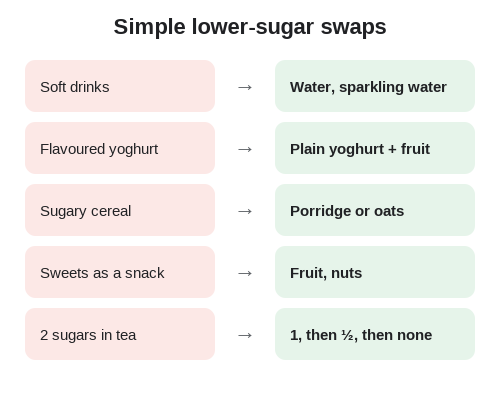
Small swaps add up over a week
- Breakfast: choose plain porridge, wholegrain toast, or low-sugar cereals instead of frosted or chocolate cereals. Add fruit for sweetness.
- Yoghurt: buy plain yoghurt and add berries or a little chopped fruit, rather than flavoured yoghurts.
- Snacks: fruit, nuts, cheese, vegetables with hummus, or plain popcorn instead of biscuits and sweets.
- Sauces: use herbs, spices, garlic, and lemon for flavour, and use ketchup, sweet chilli, and barbecue sauces sparingly.
- Baking at home: many recipes still work with a quarter to a third less sugar; add cinnamon, vanilla, or mashed banana for flavour.
- Desserts: keep sweet treats for occasions, and choose smaller portions or share them.
Step 5: Retrain Your Taste and Manage Cravings
Your sense of sweetness adapts. After a few weeks of eating less sugar, foods you used to enjoy may taste too sweet, and fruit can taste sweeter. Cut down gradually so the change doesn't feel like deprivation.
- Eat regular, balanced meals: meals with protein, fibre, and healthy fats keep blood sugar steadier and reduce cravings.
- Don't keep large stocks of sweets at home: it's easier to resist in the shop than in your kitchen.
- Notice your triggers: tiredness, stress, boredom, and habits like dessert after every meal. Find alternatives, such as a walk, a cup of tea, or a piece of fruit.
- Get enough sleep: poor sleep tends to increase cravings for sugary foods.
- Allow occasional treats: a strict all-or-nothing approach often leads to bingeing. Enjoy a treat mindfully and move on.
Helping Children Eat Less Sugar
Children's sugar limits are lower than adults', and habits formed early often last. Offer water and milk as everyday drinks, keep sweets and sugary drinks for occasional treats rather than rewards, and involve children in choosing and preparing fruit-based snacks. Avoid labelling foods as "good" or "bad"; instead, talk about "everyday" foods and "sometimes" foods.
If you have diabetes
If you have diabetes or take medication that lowers blood sugar, talk to your doctor or diabetes team before making major diet changes, and always keep fast-acting sugar available for treating low blood sugar as advised.
Tracking your intake for a few days can be eye-opening. Write down everything you eat and drink, or use a food diary app, and look at which foods and drinks contribute the most sugar. Most people find two or three main sources, often drinks, breakfast cereal, and snacks. Focusing on those first gives you the biggest results for the least effort.
Final Thoughts
Reducing sugar is about steady, realistic changes: understand which sugars matter, read labels, start with sugary drinks, make simple swaps, and give your taste buds time to adjust. You don't need to give up sweet foods forever; just make them an occasional pleasure rather than an everyday habit.
Nutrition Note
This guide offers general nutrition information and is not medical or dietary advice. If you have diabetes, a food allergy, a medical condition, are pregnant or breastfeeding, or are planning big changes for a child, talk to a doctor or registered dietitian before changing your diet.