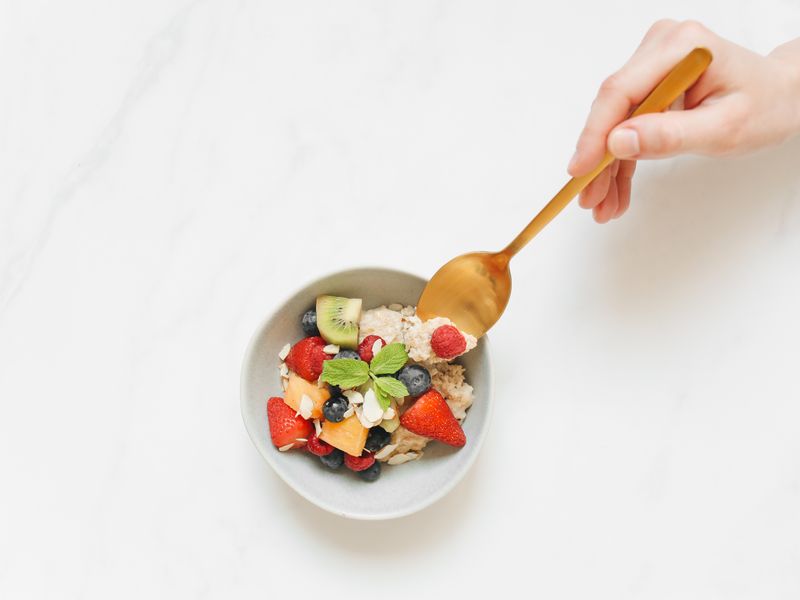
Top view of a colorful fruit and oatmeal breakfast bowl with a hand holding a spoon
The key to a fast breakfast is planning, not speed in the kitchen. With a few staple ingredients, some make-ahead options, and a simple routine, you can have a balanced breakfast ready in two to ten minutes. Here's how.
Step 1: Know What Makes a Good Breakfast
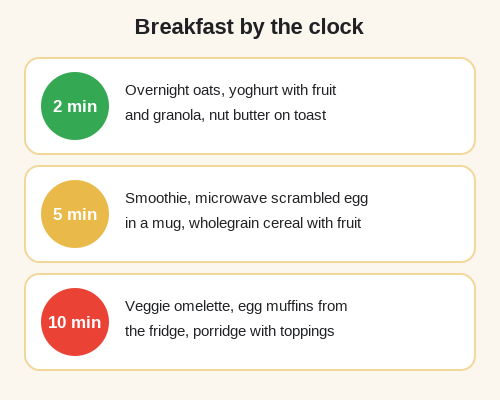
There's a good option for any amount of time
A breakfast that keeps you full until lunch usually combines three things:
- Protein: eggs, yoghurt, milk, cheese, nut butter, beans, or tofu. Protein slows digestion and helps you feel satisfied.
- Fibre-rich carbohydrates: oats, wholegrain bread, wholegrain cereal, or fruit. These give steady energy rather than a quick spike.
- Fruit or vegetables: a banana, berries, an apple, tomatoes, or spinach add vitamins and extra fibre.
Many popular breakfast foods, such as sugary cereals, pastries, and flavoured yoghurts, are high in sugar and low in protein, which can leave you hungry again soon. You don't need to give them up entirely, but pairing them with protein and fruit, or swapping for less sweetened versions, makes a real difference.
Breakfasts Ready in Two Minutes
- Overnight oats: mix half a cup of oats with milk or yoghurt and a little fruit in a jar the night before. In the morning, add toppings and eat cold, or warm it briefly.
- Yoghurt bowl: plain or Greek yoghurt topped with berries, a sprinkle of nuts or seeds, and a spoonful of oats or low-sugar granola.
- Nut butter toast: wholegrain toast with peanut or almond butter and sliced banana.
- Grab-and-go box: a hard-boiled egg made earlier, a piece of fruit, and some cheese or nuts.
Breakfasts Ready in Five to Ten Minutes
- Microwave scrambled eggs: whisk two eggs with a splash of milk in a microwave-safe mug, cook for 30 seconds, stir, and cook in 15 to 20 second bursts until just set. Serve with toast.
- Smoothie: blend milk, frozen fruit, a handful of spinach, and yoghurt or oats. Our guide on making healthy smoothies has a simple formula.
- Quick porridge: cook oats with milk or water on the hob for four to five minutes, or in the microwave, then top with fruit, cinnamon, and seeds.
- Veggie omelette: whisk eggs, pour into a hot oiled pan, add spinach, tomatoes, or leftover vegetables and a little cheese, then fold.
- Breakfast wrap: fill a tortilla with scrambled egg, beans, cheese, and salsa. Wraps can also be made ahead and frozen.
Set up the night before
Put out bowls, mugs, and the pan you'll use, fill the kettle, and place non-perishable ingredients on the counter before bed. Removing small decisions and tasks in the morning saves more time than you might expect.
Step 2: Make Breakfast Ahead for the Week
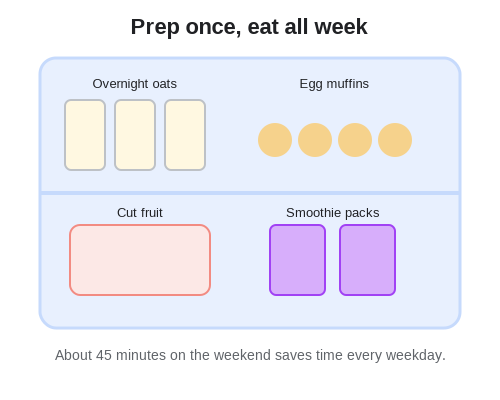
A little weekend prep pays off all week
- Overnight oats in jars: make three or four at once. They keep well in the fridge for several days.
- Egg muffins: whisk eggs with chopped vegetables and cheese, pour into a muffin tin, and bake for about 20 minutes. Reheat in the microwave in under a minute.
- Chopped fruit: wash and cut fruit such as melon, pineapple, or grapes and store in containers.
- Smoothie freezer packs: portion fruit, greens, and oats into bags ready to blend.
- Hard-boiled eggs: boil a batch and keep them in their shells in the fridge for up to a week.
- Homemade granola or muffins: bake once and enjoy all week, keeping the sugar lower than many shop-bought versions.
Our guide on boiling eggs perfectly explains timings for the texture you like.
Step 3: Keep Breakfast Staples Stocked
Having the right basics means you never have to think about what to eat. Useful staples include oats, wholegrain bread, eggs, plain yoghurt, milk or fortified plant milk, nut butter, bananas, frozen berries, seeds, and a wholegrain cereal you enjoy. Bread freezes well and can be toasted straight from frozen, so it never goes stale. Frozen fruit is often cheaper than fresh and lasts for months.
Keep a short shopping list of these staples on your phone and check it before each weekly shop. Running out of oats or eggs on a Tuesday is usually what sends people back to skipping breakfast or buying something less healthy on the way to work. Buying larger packs of long-lasting basics, such as oats, seeds, and frozen fruit, is usually cheaper per portion too, and they keep for weeks or months.
If you're feeding a family, a "breakfast shelf" in the cupboard and a breakfast section in the fridge make it easier for everyone, including older children, to help themselves quickly.
When You Have to Eat on the Go
Some mornings you'll leave without eating. Keep a few portable options ready: a banana or apple, a small pot of yoghurt, overnight oats in a jar with a lid, a homemade muffin, or a handful of nuts. If you buy breakfast on the way, look for options with protein and fibre, such as plain porridge, yoghurt with fruit, or an egg sandwich on wholegrain bread, rather than pastries alone.
Store prepared food safely
Keep make-ahead breakfasts in sealed containers in the fridge and eat egg dishes within three to four days. Reheat cooked eggs until piping hot, and don't leave yoghurt or dairy-based breakfasts out of the fridge for more than about two hours.
Final Thoughts
Preparing breakfast fast comes down to a few habits: aim for protein, fibre, and fruit; keep simple staples on hand; prepare the night before; and use a short weekend session to make overnight oats, egg muffins, and smoothie packs. With these in place, a good breakfast takes minutes, even on the busiest mornings.