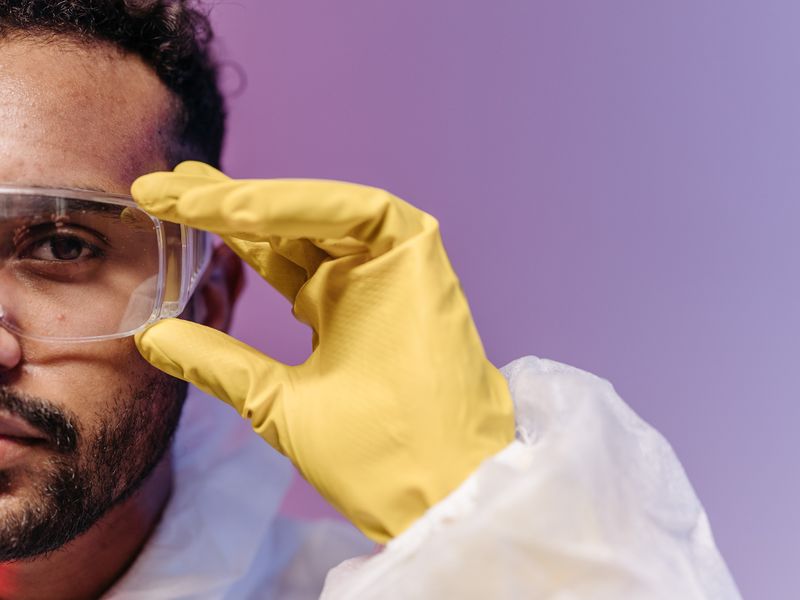
Protective gear is the first rule of chemistry
Professional chemists follow strict safety rules, and students and home experimenters should too. This guide covers the essential habits for safe chemistry, whether you're in a school lab or doing simple kitchen science with household ingredients.
Step 1: Wear Protective Equipment
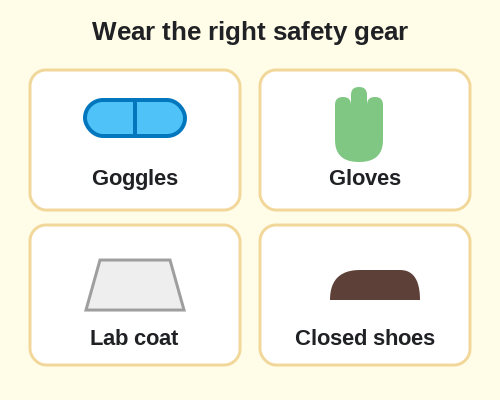
Four essentials before you start
- Safety goggles protect your eyes from splashes and should be worn throughout the experiment, not just at "risky" moments.
- Gloves suitable for the chemicals you're using; check instructions, as different gloves resist different substances.
- A lab coat or apron protects your skin and clothes.
- Closed shoes protect your feet from spills and dropped glassware.
- Tie back long hair and avoid loose clothing or dangling jewellery, especially near flames.
Step 2: Read Labels and Hazard Symbols
Before using any chemical, read its label and, in labs, its safety data sheet. Many countries use the international GHS hazard pictograms, red-bordered diamonds that warn of dangers such as flammable, corrosive, toxic, irritant, oxidising, or harmful to the environment. Understand what each symbol means and what precautions it requires.
- Check the name and concentration on every container before you use it.
- Never use chemicals from unlabelled containers.
- Follow written instructions exactly, and ask your teacher or supervisor if anything is unclear.
Step 3: Handle Chemicals Correctly
- Never taste chemicals, and don't eat or drink in the lab or work area.
- Smell by wafting: gently waft vapours towards your nose with your hand rather than sniffing directly.
- Add acid to water, never water to concentrated acid, to avoid violent splashing.
- Never mix chemicals randomly. Some household products, such as bleach with ammonia or acidic cleaners, release toxic gases.
- Use small quantities, only what the experiment needs.
- Point test tubes away from yourself and others when heating.
- Work in a well-ventilated area, or use a fume cupboard in a lab for anything that produces fumes.
Safe kitchen science ideas
Many great experiments use safe household ingredients: baking soda and vinegar reactions, red cabbage indicator to test acids and bases, growing sugar or salt crystals, and making slime with suitable, child-safe ingredients. Adults should still supervise and read instructions carefully.
Step 4: Use Heat and Glassware Carefully
- Never leave a flame or hot plate unattended.
- Keep flammable substances well away from heat sources.
- Check glassware for cracks or chips before use; damaged glass can shatter when heated.
- Use tongs or heat-resistant gloves for hot items, and remember that hot glass looks exactly like cold glass.
- Know where fire extinguishers, fire blankets, and eyewash stations are in a lab.
Step 5: Clean Up and Dispose of Waste Properly
Follow instructions for disposing of each chemical; never pour unknown substances down the sink. Labs have specific waste containers. At home, small amounts of household ingredients like vinegar and baking soda can usually go down the drain with plenty of water, but check product labels for anything else. Wash glassware, wipe surfaces, and wash your hands thoroughly after every experiment, even if you wore gloves.
Know What to Do in an Emergency
- Chemicals in the eye: rinse immediately with plenty of clean running water for at least 15 minutes and get medical help.
- Chemicals on skin: remove contaminated clothing and rinse the area with water.
- Small fires: use a fire blanket or appropriate extinguisher if trained; otherwise leave and call for help.
- Swallowing or breathing in chemicals: contact emergency services or a poison information centre straight away.
- Report every accident, however small, to your teacher or supervisor.
Planning your experiment carefully helps prevent accidents; see our guide on conducting a science experiment.
Store Chemicals Safely
Safe storage prevents accidents before they happen. In a lab, chemicals are stored according to their hazards: flammable liquids in special cabinets, acids and bases kept apart, and oxidisers away from flammable materials. Containers are always closed and clearly labelled with their contents, concentration, and date.
At home, store cleaning products and any chemistry kit ingredients in their original containers, with lids tightly closed, out of reach of children and pets, and away from food and drink. Never transfer chemicals into drinking bottles or food containers, as this is a common cause of accidental poisoning. Keep products upright in a cool, dry place away from heat and direct sunlight, and dispose of anything old, unlabelled, or damaged according to local guidance.
Chemistry sets designed for children are made with safer substances and come with age guidance and instructions. Choose kits from reputable brands, check the age recommendation, read the safety information together before starting, and keep the kit stored safely between sessions. Even with safer kits, an adult should supervise, and the same rules about goggles, no tasting, and hand washing still apply.
Finally, make a habit of planning before every experiment. Read the whole method, gather all equipment and protective gear, clear your workspace, and think about what could go wrong and how you would respond. Many school laboratories call this a risk assessment. Taking five minutes to plan is one of the most effective ways to keep chemistry safe and enjoyable.
Teachers, lab technicians, and science clubs are excellent sources of advice on safe experiments for different ages. When in doubt about a substance or method, ask first; experienced experimenters always do.
Building these safety habits early also prepares students for future science courses and careers, where the same rules apply in professional laboratories.
Final Thoughts
Safe chemistry comes down to good habits: wear goggles, gloves, and suitable clothing, read labels and hazard symbols, handle chemicals and heat carefully, never mix unknown substances, clean up properly, and know what to do in an emergency. Follow these rules every time, and chemistry experiments stay fascinating rather than dangerous.
Safety Notice
This guide is for general educational purposes. Always follow your school, lab, or product safety instructions, wear suitable protective equipment, and have children supervised by a responsible adult. Never mix unknown chemicals, taste or smell substances directly, or carry out experiments involving fire, strong acids, or electricity without proper training and supervision.