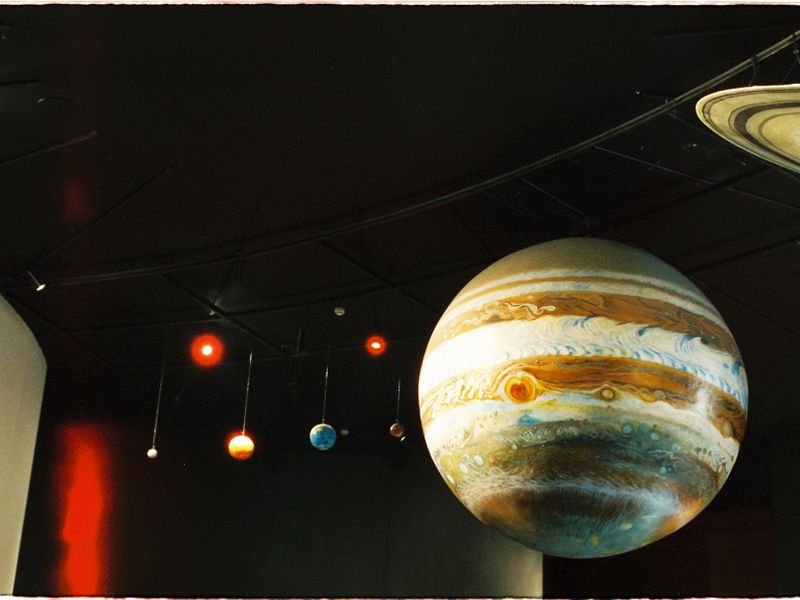
Each planet in our solar system is a unique world
Learning about planets is easier and more exciting than ever, thanks to free resources from space agencies, stunning spacecraft images, and apps that show where planets are in your night sky. This guide gives you a clear starting point, whether you're a student, a parent, or simply curious.
Step 1: Learn the Basics of the Solar System
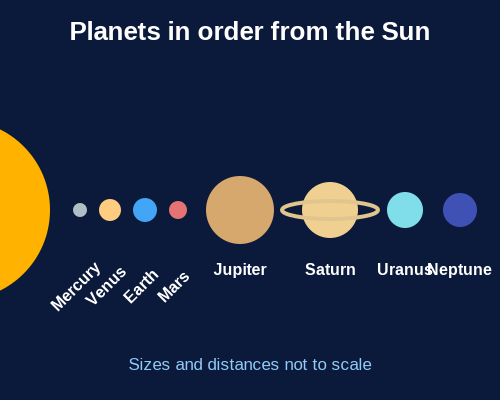
The eight planets in order (not to scale)
Our solar system has eight planets orbiting the Sun. A popular memory aid for their order is "My Very Educated Mother Just Served Us Noodles": Mercury, Venus, Earth, Mars, Jupiter, Saturn, Uranus, and Neptune.
- Rocky (terrestrial) planets: Mercury, Venus, Earth, and Mars are small, dense, and have solid surfaces.
- Gas giants: Jupiter and Saturn are huge and made mostly of hydrogen and helium.
- Ice giants: Uranus and Neptune contain more water, ammonia, and methane ices.
- Dwarf planets: such as Pluto and Ceres, which are smaller bodies that don't meet all the criteria to be classed as planets.
Step 2: Explore Each Planet's Key Features
- Mercury: closest to the Sun, with extreme temperature swings between day and night.
- Venus: the hottest planet, with a thick carbon dioxide atmosphere that traps heat.
- Earth: the only planet known to support life, with liquid water on its surface.
- Mars: the "red planet", with the largest volcano in the solar system and evidence of ancient water.
- Jupiter: the largest planet, with the Great Red Spot storm and dozens of moons.
- Saturn: famous for its spectacular rings made of ice and rock.
- Uranus: tilted on its side, so it rolls around the Sun.
- Neptune: the farthest planet, with the fastest winds measured in the solar system.
Step 3: See Planets in Your Own Sky
Five planets are easy to see without a telescope: Mercury, Venus, Mars, Jupiter, and Saturn. They look like bright stars but usually shine with a steadier light. Venus is often the brightest object after the Moon, visible shortly after sunset or before sunrise. Free sky apps show which planets are up tonight and where to look. With binoculars you can spot Jupiter's four largest moons, and a small telescope reveals Saturn's rings. Our guide on viewing stars at night has tips for getting started.
Step 4: Use Free, Reliable Resources
- Space agency websites: NASA, ESA, and other agencies publish free articles, images, videos, and interactive tools, including 3D models of planets and spacecraft.
- Planetarium and museum sites: offer shows, lessons, and activities for all ages.
- Online courses: many universities offer free introductory astronomy courses through online learning platforms.
- Books and documentaries: look for recent editions, as planetary science changes quickly with new missions.
- Citizen science projects: volunteers help scientists classify craters, track weather on other planets, or search for exoplanets in real data.
Check the date of what you read
Facts about planets, such as the number of known moons, change as new discoveries are made. Prefer recent sources from space agencies and reputable science publications.
Step 5: Follow Missions and Exoplanet Discoveries
Robotic spacecraft have visited every planet in our solar system. Rovers explore the surface of Mars, orbiters map Jupiter and its moons, and space telescopes study the atmospheres of planets around other stars. Following current missions through space agency websites and social media lets you see new images and discoveries as they happen. Exoplanet catalogues list thousands of confirmed worlds, some of which lie in their star's "habitable zone", where liquid water could exist.
Make Learning Fun
Build a scale model of the solar system in a park to understand the huge distances between planets, make planet fact cards, keep a sky journal of planets you've spotted, or visit a planetarium. For children, drawing planets, playing space quiz games, or watching a launch live online can spark lasting curiosity. Learning about planets connects naturally with other sciences, such as chemistry, geology, and biology; see our guide on learning biology online.
Teaching Children About Planets
Children are often fascinated by space, and planets are a wonderful way to introduce science. Start with simple, memorable facts: the Sun is a star, Earth is the planet we live on, Jupiter is the biggest planet, and Saturn has beautiful rings. Use colourful books, posters, and short videos from space agencies designed for younger audiences.
Hands-on activities make learning stick. Children can paint polystyrene balls to make a model solar system, act out planets orbiting the Sun in the garden, or keep a simple diary of the Moon's changing shape over a month. Spotting a bright planet like Venus or Jupiter together in the evening sky turns abstract facts into something real and exciting.
Encourage questions, even ones you cannot answer straight away. Looking up answers together on trusted websites models good research habits and shows that science is about curiosity and discovery. Planetariums, science museums, and astronomy club open nights are excellent family outings that bring the wonder of the planets to life.
For adults and older students, deeper study might include orbital mechanics, planetary geology, or the search for life on moons such as Europa and Enceladus, which may hide oceans beneath their icy surfaces. Free university courses and space agency lectures cover these fascinating topics at an accessible level.
Whatever your age, keep asking questions. Every answer about the planets tends to raise new ones, and that curiosity is what drives both personal learning and real scientific discovery.
Final Thoughts
Learning about planets starts with the basics: the eight planets, what makes each one special, and how to spot several of them in your own night sky. Use free resources from space agencies and planetariums, follow current missions and exoplanet discoveries, and make learning hands-on. The more you explore, the more remarkable our place in the universe becomes.