Small daily habits save thousands of litres a year
You don't need to sacrifice comfort to save water. Most savings come from simple habits, fixing leaks, and choosing efficient fittings and appliances. This guide covers the most effective ways to save water in the bathroom, kitchen, laundry, and garden.
Step 1: Save Water in the Bathroom
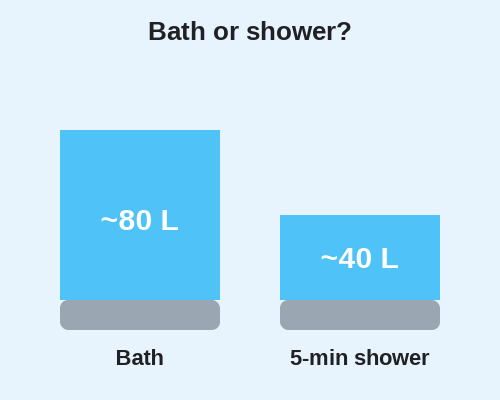
Showers usually use less water than baths
- Take shorter showers: aim for around five minutes. A shower timer or a short playlist helps.
- Choose showers over baths: a typical bath uses roughly twice as much water as a short shower.
- Fit a water-efficient shower head that reduces flow while keeping good pressure.
- Turn off the tap while brushing teeth or shaving; a running tap can waste several litres a minute.
- Use a dual-flush toilet or a cistern displacement device in older toilets to reduce water per flush.
Step 2: Find and Fix Leaks
Leaks waste a surprising amount of water. A dripping tap can waste thousands of litres a year, and a leaking toilet can waste even more without anyone noticing.
- Check taps and shower heads for drips and replace worn washers or cartridges. Our guide on fixing a leaky faucet explains how.
- Test your toilet: put a few drops of food colouring in the cistern and wait 15 minutes without flushing. If colour appears in the bowl, there's a leak.
- Read your water meter at night and again in the morning when no water has been used; if it has changed, you may have a hidden leak.
- Check outdoor taps and hoses for drips and damaged fittings.
Step 3: Save Water in the Kitchen and Laundry
- Run full loads in the dishwasher and washing machine; modern dishwashers often use less water than washing by hand.
- Don't pre-rinse dishes under running water; scrape food into the bin instead.
- Use a bowl to wash fruit and vegetables, then reuse the water on plants.
- Keep a jug of water in the fridge rather than running the tap until it's cold.
- Choose eco programmes and efficient appliances with good water ratings when replacing them.
Save energy too
Washing clothes at 30°C instead of higher temperatures, and using less hot water overall, reduces your energy bill and your carbon footprint as well as your water use.
Step 4: Water the Garden Wisely
- Water early in the morning or in the evening, when less water evaporates.
- Water roots, not leaves, using a watering can or drip irrigation rather than sprinklers.
- Collect rainwater in a water butt or barrel for watering plants.
- Use mulch such as bark or compost to keep soil moist for longer.
- Choose drought-tolerant plants suited to your climate, and let lawns go golden in dry spells; they usually recover.
- Use a bucket, not a hose, to wash the car.
Step 5: Track Your Water Use
If you have a water meter, read it regularly or check your bills to see how your usage changes. Many water companies offer free water-saving devices, such as shower timers and tap aerators, and online calculators to compare your use with similar households. Setting a family goal and checking progress each month can make saving water a shared, motivating challenge, especially for children.
During Droughts and Water Restrictions
In dry periods, water companies or authorities may introduce restrictions, such as bans on hosepipes or filling pools. Follow them carefully, as they protect supplies for drinking and essential uses. Reuse "grey water" from baths, washing up, or rinsing vegetables to water plants, as long as it doesn't contain harsh chemicals. Water saving is one part of living more sustainably; see our guide on reducing your carbon footprint for more ideas.
Get the Whole Household Involved
Saving water works best when everyone in the home takes part. Talk about why water matters, agree on a few simple rules, and make it fun. Children can time showers with a song, check taps are turned off properly, and help collect rainwater for the garden. Putting a small reminder sticker near sinks and showers helps build new habits.
Visitors and guests may not know your water-saving habits, so a friendly note in the bathroom can help. If you rent your home, ask your landlord about fixing leaks promptly or fitting water-efficient devices, which also lower bills. Over time, these habits become automatic, and you may find your household uses far less water without anyone feeling they are missing out.
Saving water also protects rivers, lakes, and wildlife, because less water needs to be taken from natural sources during dry periods. Many water companies publish tips, free devices, and seasonal advice, so it is worth checking your local supplier's website for extra support. In some places, households that reduce their use can even qualify for lower bills or rebates on efficient appliances and rainwater tanks. Every litre saved also means less energy spent treating and pumping water, so these habits benefit the climate as well as your wallet.
Start with one or two habits this week.
For example, you could begin by timing your showers and checking for a leaking toilet. Once those become routine, add another change, such as collecting rainwater or running only full loads in the washing machine. Building habits gradually makes them far more likely to last, and the savings on your water and energy bills will show up within a few months.
Final Thoughts
Saving water comes down to a few simple habits: shorter showers, turning off taps, fixing leaks, running full loads, and watering the garden wisely. Add efficient fittings and appliances when you can, and track your progress. Each small change saves water, energy, and money, and helps protect a vital resource for everyone.