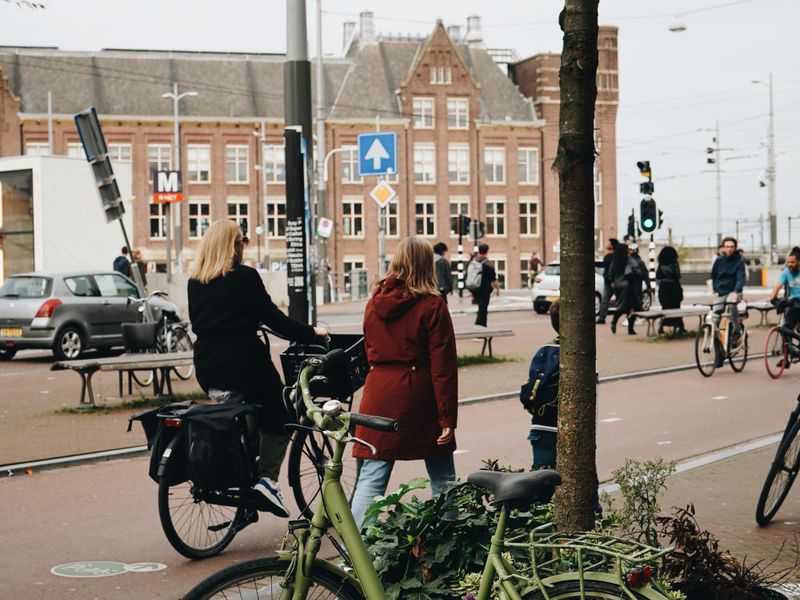
Everyday choices add up to a big difference
Individual action alone can't solve climate change, but households are responsible for a large share of emissions, and personal choices influence businesses and governments too. The good news is that many lower-carbon choices also save money, improve health, and make homes more comfortable. This guide focuses on the changes that make the biggest difference.
Step 1: Measure Your Footprint
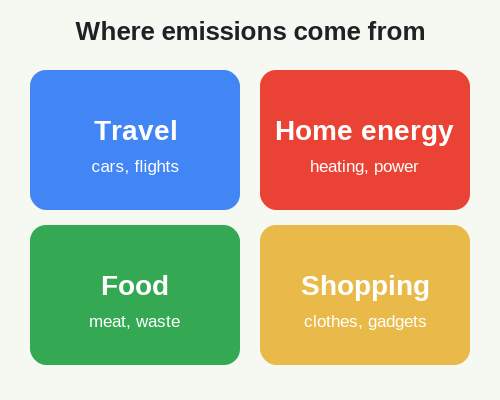
Four areas make up most household emissions
Knowing your biggest sources helps you focus on the changes that matter most, rather than worrying about small things.
Step 2: Travel Smarter
- Walk or cycle short trips: many car journeys are under a few kilometres.
- Use public transport for commuting and city trips; see our guide on using metro or bus systems.
- Fly less: a single long-haul return flight can produce more emissions than months of driving. Choose trains for shorter journeys where possible, and take fewer, longer trips.
- Drive efficiently: keep tyres inflated, remove roof racks when not needed, avoid harsh acceleration, and share lifts.
- Consider your next vehicle: smaller, more efficient, hybrid, or electric cars produce fewer emissions over their lifetime, especially where electricity is generated cleanly.
- Work from home some days if your job allows.
Step 3: Cut Energy Use at Home
- Heat and cool wisely: lowering your thermostat by just one degree in winter saves noticeable energy, and so does raising it slightly in summer.
- Insulate and draught-proof: sealing gaps around doors and windows and insulating lofts and walls reduce heat loss.
- Switch to LED bulbs and turn off lights and devices you're not using.
- Wash clothes at lower temperatures and air-dry them when possible.
- Choose efficient appliances when replacing old ones; check energy labels.
- Choose renewable electricity: where available, switch to a green tariff or consider solar panels.
Check for support schemes
Many governments and energy companies offer grants, discounts, or free advice for insulation, heat pumps, and solar panels. Check official energy-saving websites in your country before paying full price.
Step 4: Eat a Lower-Carbon Diet
- Eat more plant-based meals: beef and lamb have a much higher footprint than chicken, fish, beans, or vegetables. Even a few meat-free days a week help.
- Waste less food: plan meals, store food properly, and use leftovers. Our guide on planning weekly meals can help.
- Choose seasonal produce and avoid air-freighted fruit and vegetables where possible.
- Compost food scraps if your area collects them or you have a garden.
Step 5: Buy Less, Buy Better
- Repair, borrow, rent, or buy second-hand before buying new.
- Choose durable products that last, rather than cheap items you'll replace often.
- Keep phones and laptops for longer; manufacturing electronics creates most of their footprint.
- Buy fewer, better-quality clothes and avoid fast fashion.
- Recycle correctly what you can't reuse; see our guide on recycling at home.
Go Beyond Your Own Home
Some of the most powerful actions extend beyond your own household. Talk to friends and family about the changes you've made, support local climate initiatives, ask your workplace or school about energy and travel policies, choose banks and pension funds with strong climate commitments, and engage with local and national decision-makers. Carbon offsets can play a small role, but they're no substitute for cutting emissions directly; if you use them, choose verified projects from reputable providers.
Where to Start: A Simple Action Plan
With so many possible changes, it can be hard to know where to begin. A practical approach is to pick one change from each area and commit to it for a month. For example, you might walk or cycle for trips under three kilometres, lower your thermostat by one degree, have two meat-free days a week, and avoid buying any new clothes for a month. Once these feel normal, add another change.
Track your progress using the same carbon calculator you started with, and repeat it every few months. Seeing your footprint fall is motivating and helps you decide where to focus next. Many changes also save money, which you can note alongside the carbon savings to keep your household on board.
Remember that progress, not perfection, is the goal. Nobody has a zero footprint, and feeling guilty about every choice is not helpful. Focus on the biggest, most practical changes for your situation, celebrate improvements, and encourage others by sharing what has worked for you. Children often enjoy being "energy detectives" who switch off lights and spot draughts, making climate action a positive family project.
Finally, think about the long term. Bigger decisions, such as where you live, how you heat your home, what car you drive, and how often you fly, have the largest effect on your footprint over the years. When these decisions come up, factor in emissions alongside cost and convenience, and look for official advice and support schemes that make lower-carbon choices more affordable.
Small changes multiplied across families, schools, and workplaces add up quickly. Whatever you choose to do, share your experience, because seeing others make practical changes is one of the most effective ways to encourage more people to act.
Final Thoughts
Reducing your carbon footprint starts with knowing where your emissions come from, then tackling the biggest areas first: travel, home energy, food, and the things you buy. Choose a few changes you can stick with, build on them over time, and share what you learn. Together, millions of everyday decisions make a real difference.