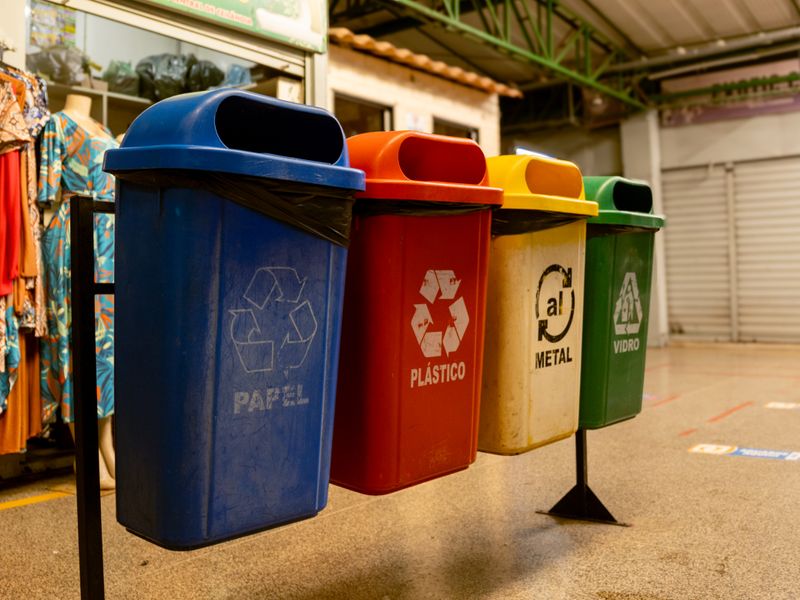
Clean, sorted recycling is far more likely to be reused
Many well-meaning people put the wrong things in their recycling, which can contaminate whole loads and send them to landfill. Rules also vary between countries, cities, and even neighbourhoods. This guide explains the general principles that apply almost everywhere, and how to check your local rules.
Step 1: Check Your Local Rules
Recycling systems depend on local collection services and processing facilities. Your council, municipality, or waste company's website explains what's accepted in each bin, collection days, and where to take items they don't collect. Many have searchable "what goes where" tools or apps. Keep a printed list on your fridge or near the bins so everyone in the household knows the rules.
Look for recycling symbols on packaging too, but remember that a symbol doesn't always mean your local service accepts that item. Some labels show the type of plastic rather than whether it's recyclable where you live.
Step 2: Know What Usually Goes Where
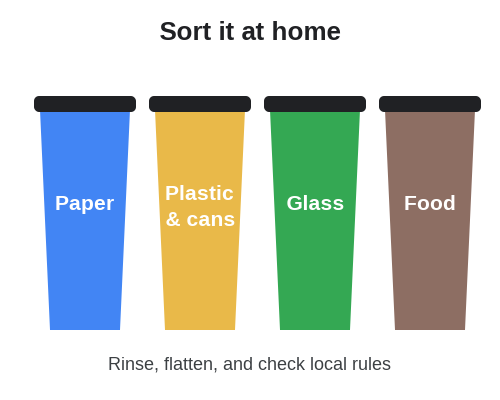
Common recycling streams at home
- Paper and cardboard: newspapers, magazines, office paper, envelopes, cereal boxes, and flattened delivery boxes. Keep them dry.
- Plastics: bottles, many food trays, and pots and tubs are widely accepted. Soft plastics like bags and wrapping often need separate drop-off points.
- Metal: drinks cans, food tins, and clean aluminium foil and trays.
- Glass: bottles and jars. Drinking glasses, window glass, and ovenware are usually not accepted, as they melt at different temperatures.
- Food waste: many areas collect it separately for composting or energy generation.
Step 3: Prepare Items Properly
- Empty and rinse containers; they don't need to be spotless, but food residue can spoil other materials, especially paper.
- Flatten boxes to save space in bins and collection trucks.
- Keep items loose: don't put recycling inside plastic bags unless your service asks for it; bags can jam sorting machines.
- Leave lids on or off according to local instructions.
- Separate mixed materials where possible, such as removing plastic windows from envelopes or film from trays.
If in doubt, find out
"Wishcycling", putting items in the recycling hoping they can be recycled, often causes contamination. If you're not sure, check your local guide; if you can't find an answer, put it in general waste.
Step 4: Avoid Common Recycling Mistakes
- Greasy pizza boxes and used tissues (check local rules; many places say no)
- Disposable coffee cups, which often have a plastic lining
- Nappies, textiles, and garden hoses
- Batteries and electronics in household bins; they can cause fires in collection trucks
- Broken ceramics, mirrors, and light bulbs in glass recycling
Dispose of hazardous items safely
Batteries, electronics, paint, chemicals, medicines, and fluorescent bulbs need special disposal. Take them to recycling centres, shops with take-back schemes, or pharmacies, as your local authority advises. Never put lithium batteries in household bins.
Step 5: Set Up an Easy Home System
- Put a recycling bin next to the kitchen bin, so recycling is as easy as throwing away.
- Use labelled containers or stacking bins if you need to sort several materials.
- Keep a small box for batteries and small electronics to take to collection points.
- Make a home compost bin or caddy for food scraps if your area supports it.
- Teach children what goes where; colour-coded labels and pictures help.
Reduce and Reuse First
Recycling is important, but reducing and reusing come first because they save even more energy and resources. Carry reusable bags, bottles, and coffee cups, choose products with less packaging, buy loose fruit and vegetables, repair items before replacing them, and donate clothes and furniture you no longer need. Every item you avoid buying or reuse is one less item to recycle or throw away. Recycling is also one part of a wider lower-carbon lifestyle; see our guide on reducing your carbon footprint.
Recycling Beyond the Household Bins
Many items cannot go in household recycling bins but can still be recycled through other routes. Supermarkets often collect soft plastics such as carrier bags and food wrapping. Electrical shops and recycling centres accept old phones, cables, and small appliances, which contain valuable metals. Charity shops and textile banks take clothes, shoes, and household fabrics, even worn items that can be turned into new materials.
Some brands and organisations run take-back schemes for products like printer cartridges, contact lens packaging, coffee pods, and toothpaste tubes. Local community groups and online platforms let you give away furniture, toys, and household goods for free so they can be reused rather than thrown away. Before throwing anything bulky or unusual away, it is worth checking whether someone nearby could use it.
Composting is another form of recycling. Fruit and vegetable peelings, coffee grounds, tea leaves, and garden waste can be turned into rich compost for plants in a garden compost bin or, in smaller spaces, a wormery. Composting reduces the amount of waste going to landfill, where food waste produces methane, a powerful greenhouse gas.
Keep a simple list of local drop-off points for these special items, such as the nearest battery bank, electronics collection, textile bank, and soft-plastics point, so it is easy to take things along when you are already going to the shops. Small routines like this make recycling far more complete without much extra effort.
Finally, keep up to date. Recycling rules change as facilities improve and new materials appear, so check your local guidance at least once a year and update the list on your fridge.
Final Thoughts
Recycling at home works best when you know your local rules, sort materials correctly, prepare them cleanly, avoid wishcycling, and handle hazardous items separately. Make the system easy for everyone in your home, and remember to reduce and reuse first. Done right, recycling turns everyday waste into valuable resources.