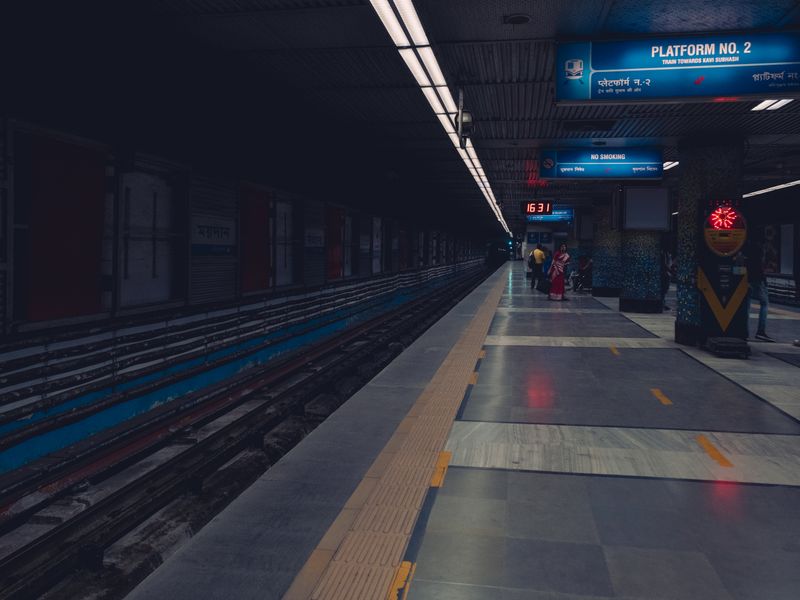
A dimly lit metro station platform with passengers waiting
Once you understand how to plan a route, pay, and read the signs, you can use public transport confidently almost anywhere.
Step 1: Plan Your Route
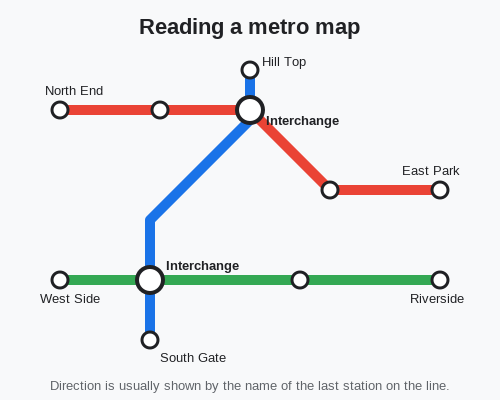
Lines, stations and interchanges
- Use a journey planner: map apps and official transit apps show routes, times, transfers, and walking sections.
- Check the official transit website for maps, service hours, and planned closures, especially at weekends and late at night.
- Note the line number or colour, the direction (usually the final stop's name), and where you change.
- Save maps offline or take a screenshot in case you lose signal underground.
Step 2: Read the Map and Signs
Metro maps are usually simplified diagrams rather than accurate geographic maps. Each line has a colour or number, dots show stations, and larger symbols show interchanges where you can change lines.
- Platforms are usually signed by the line and the final destination in each direction, so check which way you're going before boarding.
- Some lines split into branches; check that the train's destination matches your stop.
- For buses, check the route number and the destination shown on the front of the bus. Stops often list the routes that serve them.
- Express or limited-stop services may skip your station, so check before boarding.
Step 3: Pay the Right Fare
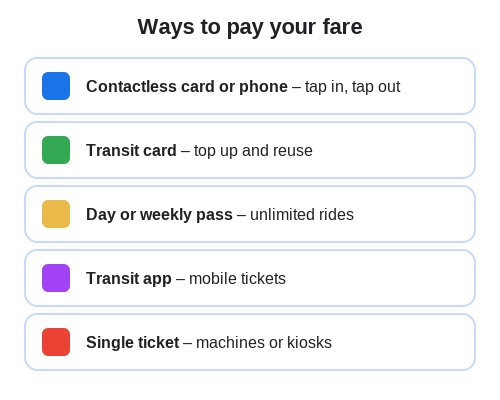
The cheapest option depends on how often you ride
- Check whether fares are flat or distance-based, and whether you need to tap out at the end.
- Consider day or weekly passes if you'll take several trips a day.
- Use one card per person when tapping in; sharing one card can cause wrong charges.
- Validate paper tickets in the machines where required. Inspectors may fine passengers with unvalidated tickets.
- Check for discounts for children, students, and seniors.
Foreign card fees
If you pay with a foreign bank card, your bank may charge a fee per transaction. A local transit card or a card with no foreign transaction fees may work out cheaper on longer trips.
Step 4: Ride Safely and Politely
- Stand behind the platform line and let passengers off before boarding.
- Move inside the carriage and take off large backpacks in busy times.
- Offer priority seats to older, pregnant, or disabled passengers.
- Keep phones and wallets secure, especially in crowds, as pickpockets target busy stations.
- At night, stay in well-lit areas and carriages with other passengers, and know when the last services run.
- Follow local rules on eating, drinking, and talking on phones.
Step 5: Handle Delays and Getting Lost
- Check the transit app or station screens for service updates and suggested alternatives.
- If you miss your stop, get off at the next station and take a train back in the other direction; it usually doesn't cost extra if you don't exit.
- Ask staff at information desks; they're usually the quickest help.
- Keep a backup plan, such as a taxi app, for late nights or major disruptions. Our guide on booking local taxis explains how to do this safely.
Travelling With Children, Luggage, or Accessibility Needs
Public transport can be easy for everyone with a little planning. If you're travelling with children, heavy luggage, a pushchair, or a disability, these tips help.
- Check step-free access: transport websites and apps usually show which stations have lifts, ramps, or level boarding. Plan your route around them.
- Check lift status: lifts are sometimes out of service. Many operators publish live updates online.
- Ask for assistance: some systems offer free help from staff to board trains or buses. Book ahead where required, or speak to staff at the station.
- Use priority seating: seats near doors are reserved for people with disabilities, older passengers, pregnant passengers, and people with young children. Ask politely if you need one.
- Travel outside rush hour: carriages are calmer and there's more space for luggage and pushchairs.
- Know child fare rules: young children often travel free or at reduced fares. Check the age limits and whether they need their own ticket.
With luggage, stand to one side on escalators, keep bags close to you, and avoid blocking doors. Some airport rail and bus services have dedicated luggage racks. If you're carrying several bags, a taxi for the final short stretch might be easier than climbing many stairs.
Assistance dogs are welcome on most public transport systems. If you have a hidden disability, some regions offer lanyards or cards that let staff know you may need extra help or time, without needing to explain.
Save Money on Public Transport
Regular passengers can save a significant amount by choosing the right ticket. Look into these options:
- Daily, weekly, and monthly passes: if you travel often, a pass can cost much less than buying single tickets.
- Fare capping: some contactless systems automatically stop charging once you reach the daily or weekly cap.
- Off-peak fares: travelling outside rush hours is cheaper on many networks.
- Concessions: students, older people, people with disabilities, and job seekers may qualify for reduced fares. Check official eligibility rules and apply through the transport authority.
- Tourist cards: many cities sell visitor passes combining transport with discounts on attractions. Compare the price with how much you'll actually use.
Always touch in and out correctly with contactless cards or travel cards; forgetting can result in the maximum fare being charged.
Final Thoughts
Using metro and bus systems gets easy quickly: plan with a journey app, read lines by colour and final destination, pay the cheapest way for your trip, travel with care, and check updates when things change. After a few rides you'll move around a new city like a local.