Illuminated car dealership lot
Following a clear process protects you. Here's how to buy a used car the careful way, whether from a dealer or a private seller.
Step 1: Set a Realistic Budget
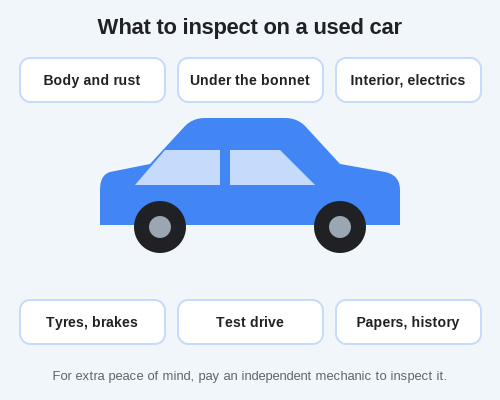
Six areas to check before you buy
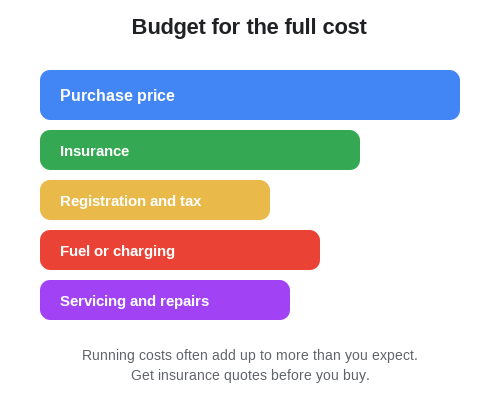
The price tag is only part of the cost
- Get insurance quotes for the models you're considering before you buy; costs vary widely by model.
- If you need finance, compare loan offers before visiting dealers, and look at the total amount repayable, not just the monthly payment.
- Keep some money aside for a first service and any small fixes.
Step 2: Research Models and Prices
- Choose models known for reliability using owner reviews and reliability surveys.
- Check common faults for the model and year you want, so you know what to look for.
- Compare prices for similar age, mileage, and condition on several listing sites to understand fair market value.
- Consider running costs such as fuel economy, parts prices, and service intervals.
Dealers usually charge more than private sellers but may offer a warranty and stronger consumer rights in many countries. Private sales are often cheaper but give you less protection, so careful checks matter even more.
Step 3: Check the History and Paperwork
- Vehicle history check: many countries have official or reputable services that show whether a car is stolen, written off, has outstanding finance, or has had mileage changed.
- Registration document: make sure the seller's name and address match, and the vehicle identification number (VIN) matches the car itself.
- Service history: receipts or stamps showing regular maintenance are a good sign.
- Inspection or roadworthiness certificates, where your country requires them, and any outstanding safety recalls.
Walk away from these warning signs
A seller who won't let you see documents, wants to meet somewhere other than their home or business, pressures you to decide quickly, or asks for a deposit before you've seen the car is a red flag. So is a price far below similar cars.
Step 4: Inspect and Test Drive
View the car in daylight and dry weather, when faults are easier to see.
- Bodywork: uneven panel gaps, mismatched paint, or rust can signal accident repairs or neglect.
- Tyres: check tread depth and look for uneven wear, which can mean alignment or suspension problems.
- Under the bonnet: look for leaks, and check oil and coolant levels. Ask to start the engine from cold.
- Inside: test windows, lights, air conditioning, locks, and dashboard warning lights.
- Test drive for at least 15 to 20 minutes on different roads. Check brakes, steering, gear changes, and listen for unusual noises.
If you're not confident, pay for an independent inspection by a mechanic or motoring organisation. It's money well spent on any significant purchase.
Step 5: Negotiate and Pay Safely
- Negotiate politely using what you've found, such as worn tyres, a missing service, or market prices for similar cars.
- Get everything in writing, including the price, any promised repairs, and a receipt that names the car, the VIN, both parties, and the date.
- Pay safely. Bank transfers are common, but only pay once you have the car, keys, and documents. Avoid carrying large amounts of cash.
- Complete the ownership transfer with your country's vehicle registration authority, and arrange insurance before driving away.
After buying, keep up with maintenance. Our guide on renewing car insurance helps you keep running costs down.
Plan for Running Costs After You Buy
The purchase price is only the start. Before you commit, add up what the car will cost you every month, because a cheap car with expensive running costs can turn out to be poor value. Two cars with the same price can differ by hundreds a year once insurance, fuel, and repairs are counted.
- Insurance: get quotes for the exact make, model, engine size, and year before you buy. Sporty models, high-powered engines, and some popular models with high theft rates cost much more to insure, especially for young or new drivers.
- Fuel economy: check the official consumption figures and real-world owner reviews. Estimate your yearly mileage and multiply it out so you know the true fuel bill.
- Road tax and registration: in many countries these depend on engine size or emissions. Look up the yearly charge on your government's official website.
- Servicing and parts: ask a local garage what a typical service costs for that model, and how easy parts are to find. Rare or imported cars can mean long waits and higher bills.
- Tyres, brakes, and batteries: check their condition during inspection. If they will need replacing soon, use that in your negotiation.
- Emergency fund: set aside a small amount each month for unexpected repairs. Older cars almost always need something sooner or later.
Once you own the car, keep every receipt and service record in one folder. A full service history protects the car's value and makes it much easier to sell later. Read the owner's manual for the service schedule, check oil, coolant, and tyre pressures monthly, and deal with small warning signs early rather than waiting for a breakdown. Small, regular care is far cheaper than big, sudden repairs.
Finally, complete the paperwork promptly. Make sure the registration is transferred into your name according to your country's process, keep the receipt and sale agreement, and arrange insurance to start from the moment you drive away. Driving even a short distance uninsured can lead to fines and serious problems if anything happens.
Final Thoughts
Buying a used car well comes down to patience and checks: set a full budget, research reliable models, verify the history and paperwork, inspect and test drive properly, and negotiate with facts. If anything feels wrong, walk away. There's always another car.