
A busy city street with red taxis at night
With a few simple habits, you can get a safe ride at a fair price almost anywhere.
Step 1: Know Your Options
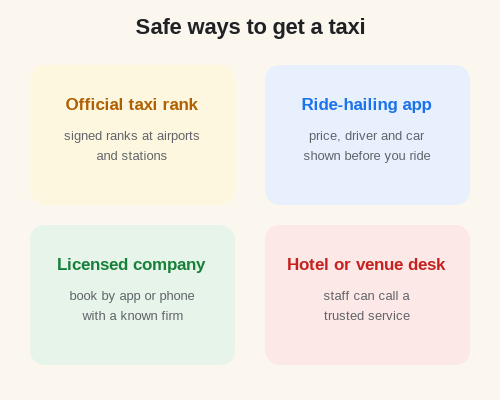
Use official ranks, licensed firms or trusted apps
- Official taxi ranks: marked queues at airports, train stations, and city centres, usually with licensed vehicles and regulated fares.
- Ride-hailing apps: show the driver, car, route, and an estimated or fixed price before you ride, with cashless payment and trip tracking.
- Local taxi company apps or phone booking: useful where ride-hailing isn't available or for pre-booked trips such as early airport runs.
- Hotel or venue desks: staff can call a trusted service and often know typical fares.
Before you travel, find out which apps and taxi companies operate in your destination, as popular apps differ between countries.
Step 2: Book the Smart Way
- Set an accurate pickup point on the app map, and add notes like "outside main entrance" if needed.
- Compare app prices if several services operate, especially during busy times when surge pricing applies.
- Pre-book early-morning, late-night, or airport journeys with a licensed company.
- At ranks, check how fares work. Many airports display official fares or fixed rates to the city centre.
Step 3: Check the Car and Driver
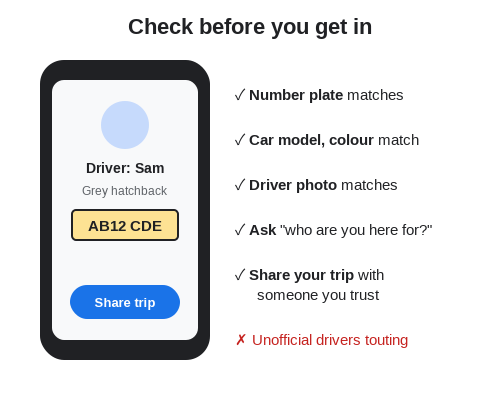
A few seconds of checking protects you
- For street taxis, look for an official licence, a meter, and the taxi company's markings.
- Sit in the back, and use seatbelts.
- Share your trip with someone you trust using the app's share feature.
- Avoid drivers who approach you inside terminals offering rides; they're often unlicensed.
Step 4: Agree the Fare and Pay Safely
- Make sure the meter is on at the start of the trip in metered taxis, or agree the price before you set off where fixed fares are normal.
- Follow the route on your own map app, so you notice big detours.
- Know about extra charges, such as airport, night, toll, or luggage fees, which are often legal and listed in the taxi.
- Ask for a receipt, which helps if you leave something behind or need to complain.
- Carry small notes if paying cash, and count change carefully.
Common taxi scams
Watch for broken or "forgotten" meters, unnecessarily long routes, drivers claiming your hotel is closed and suggesting another, fake police or officials stopping the car, and card machines that swap your card. If something feels wrong, ask to stop in a busy, well-lit place and get out.
If Something Goes Wrong
- Use the in-app help or emergency button if you feel unsafe; call local emergency services if needed.
- Report overcharging or bad behaviour through the app or the local taxi licensing authority, with the receipt or taxi number.
- Contact the app or taxi company quickly about lost items.
For longer stays, public transport is often cheaper; see our guide on using metro or bus systems.
Using Taxis Abroad and at Night
Taxi systems vary widely between countries. A little research before you travel makes it much easier to get around safely and fairly.
- Learn the local system: some cities use metered street taxis, others rely on ride-hailing apps, and some have fixed zone fares. Tourist information websites and official airport websites usually explain the options.
- Use official taxi ranks at airports and stations: avoid drivers who approach you inside the terminal offering rides. Follow signs to the official queue or app pickup point.
- Know typical fares: look up the approximate cost from the airport to your hotel before you land. If a quote is far higher, decline politely.
- Carry the address in the local language: write down or screenshot your destination in the local script, especially in countries where you don't speak the language.
- Keep small notes and coins: drivers may not have change for large notes, and card machines aren't always available.
- Learn tipping customs: tipping is expected in some countries and unusual in others. A quick search avoids awkward moments.
At night, take a few extra precautions. Book through an app or a licensed company rather than accepting a ride from someone who approaches you. Before getting in, check that the number plate, car model, and driver's name match the booking. Sit in the back seat, share your trip with a friend using the app's share feature, and keep your phone charged. If anything feels wrong, ask the driver to stop in a busy, well-lit place and get out.
If you've been drinking, plan your ride home before you go out, and travel with friends where possible. Never get into an unlicensed vehicle because it seems quicker or cheaper than waiting.
Taxis can also be a good option for people with mobility needs. Many cities have wheelchair-accessible taxis, and some apps let you request an accessible vehicle. Book these in advance where possible, as fewer are available. Tell the company if you have a guide dog or assistance animal; in many countries licensed taxis must accept them.
If you use taxis often, keep the numbers of one or two reliable local companies saved in your phone. When apps are busy or prices surge, a trusted local firm can be a faster and cheaper alternative.
Finally, keep your receipt or app record after every journey, in case you leave something behind or need to report a problem.
Final Thoughts
Booking local taxis safely is about using official ranks, licensed companies, or trusted apps, checking the car and driver, understanding fares before you go, and paying carefully. With these habits, taxis become a convenient and safe part of getting around any city.