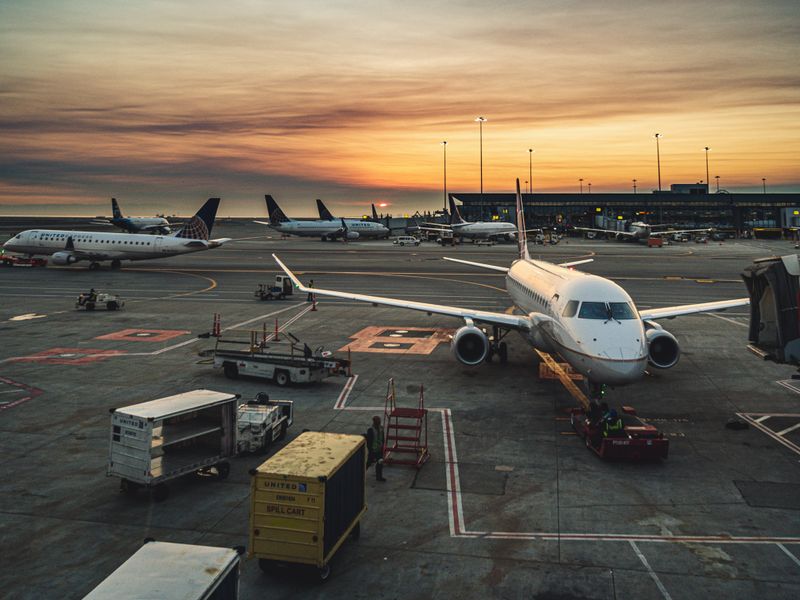
Airplanes parked at a busy airport terminal during sunset
It's also useful when you're collecting someone, so you arrive when they actually land rather than when the original schedule said.
Step 1: Know Where to Check
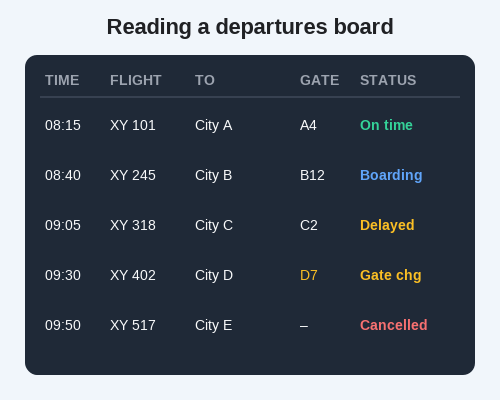
Status can change many times on the day
- The airline's app or website: the most reliable source for your own booking. Enter your booking reference or flight number to see times, gate, and any changes.
- The airport's website: live departures and arrivals boards, plus terminal information.
- Flight tracking apps and sites: show the aircraft's live position and often where it's coming from, which helps you spot likely delays early.
- Search engines: typing the flight number into a search engine often shows a quick status summary.
If sources disagree, trust the airline's information for your booking, as it controls boarding and rebooking.
Step 2: Turn On Alerts
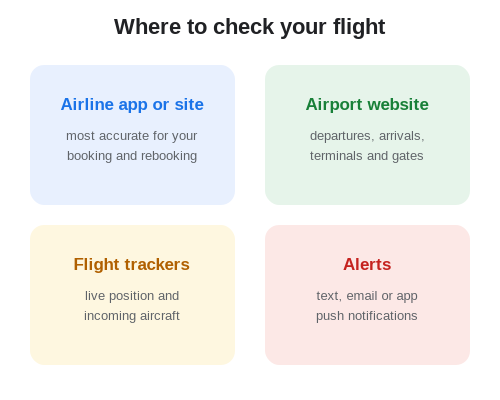
Use the airline as your main source
Many flight tracking apps also let you follow a flight and get notified of gate changes, delays, or landing, which is handy when meeting someone.
Step 3: Understand What Each Status Means
- Scheduled or on time: currently expected to depart as planned.
- Check-in open or check-in closed: whether you can still drop bags. Closing times are often 45 to 60 minutes before departure, or earlier for international flights.
- Boarding or go to gate: head to the gate now; boarding can close 15 to 30 minutes before departure.
- Delayed: a new estimated time is usually shown. It can change again, so keep checking.
- Gate change: the departure gate has moved, sometimes to another part of the terminal.
- Diverted: the flight is landing at a different airport than planned.
- Cancelled: the flight won't operate. Check the airline app or website for rebooking options straight away.
Don't relax too much after a delay
If a delay is announced, stay near the gate or keep checking. Airlines sometimes recover time and board earlier than the latest estimate, and passengers who wander off can miss the flight.
Step 4: Check at the Right Times
- A few days before: look for schedule changes, which airlines sometimes make weeks or days ahead.
- Before leaving home: confirm the departure time and terminal.
- At the airport: check the departures screens for your gate, as it may not be shown in the app yet.
- Before collecting someone: check the arrival time and allow time for baggage and passport control.
What to Do If Your Flight Is Delayed or Cancelled
- Rebook quickly using the airline app or website; it's often faster than queueing at the desk. You can join the queue and call the airline at the same time.
- Ask what you're entitled to, such as meal vouchers, a hotel for overnight delays, a refund, or compensation, depending on the airline's policy and local passenger rights laws.
- Keep receipts for meals, transport, or accommodation you have to pay for.
- Tell people who are affected, such as whoever is collecting you, your hotel, or your car rental company.
Use official contact details only
During disruptions, fake airline accounts on social media and fake helpline numbers in search adverts target stressed passengers. Use only the contact details in the airline's official app or website. Our guide on cancelling flight tickets explains refunds in more detail.
Managing Connections and Pick-Ups
Flight status becomes even more important when you have a connecting flight or someone is collecting you from the airport. A small delay on the first leg can affect the whole journey.
- Know your connection time: check the minimum connection time for your airport. Short connections leave little room if the first flight is late.
- Single booking vs separate tickets: if both flights are on one booking, the airline is usually responsible for rebooking you if you miss the connection. On separate tickets, you may have to buy a new ticket yourself.
- Check terminal and gate changes: large airports may require a train or bus between terminals. Look at the airport map in advance.
- Speak to staff early: if your first flight is delayed, tell the cabin crew or a transfer desk as soon as possible. They may arrange rebooking or fast-track transfer.
If you're collecting someone, track the flight by its number using the airline or airport website rather than the scheduled time. Arrival boards show "landed" when the plane touches down, but passengers can take another 30 to 60 minutes to leave, depending on immigration queues and baggage. Many airports have short-stay waiting areas or mobile phone car parks where drivers can wait free until the passenger calls.
For the traveller, share your flight number with the person collecting you and send a message when you land. Keep your phone charged, note the meeting point in advance, and agree what to do if your phone loses signal or the flight is badly delayed. A simple plan avoids stress on both sides.
Finally, if you have an important appointment or event after landing, such as a wedding, interview, or cruise departure, consider arriving a day early. Flight schedules are reliable most of the time, but building in a buffer is the best protection against unavoidable delays.
Final Thoughts
Checking your flight status takes seconds and can prevent a stressful day. Use the airline's app as your main source, turn on alerts, understand what each status means, and check again before you leave and at the airport. If things go wrong, act quickly and keep records of extra costs.