Close-up image of keys and scrabble tiles spelling 'safety' on a marble surface
Spending an hour on your renewal each year can save a meaningful amount and make sure your cover still fits your needs. Rules on minimum cover differ by country, but the process below works almost everywhere.
Step 1: Read Your Renewal Notice Carefully
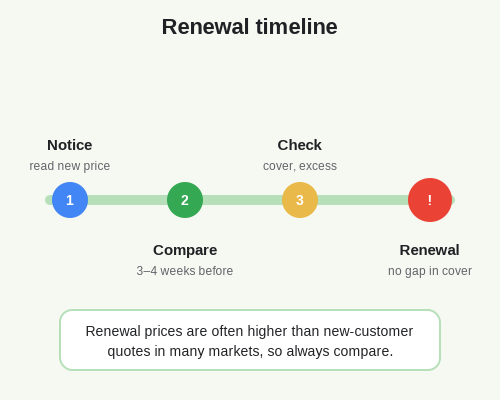
Start comparing a few weeks before renewal
Insurers usually send a renewal notice a few weeks before your policy ends. Check:
- The new price, and how it compares with last year
- The renewal date and whether the policy will renew automatically
- The level of cover and the excess (the amount you pay towards a claim)
- Named drivers, your address, annual mileage, and how the car is used
- Any changes to terms, such as new exclusions
If anything about you or the car has changed, such as moving home, a new job, modifications, or penalty points, tell your insurer. Wrong information can make a policy invalid or a claim be refused.
Step 2: Decide What Cover You Need
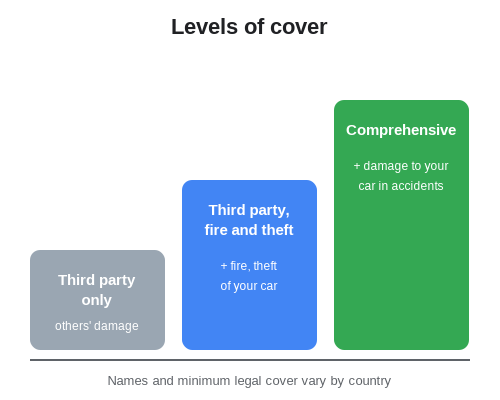
More cover means more protection, not always more cost
- Optional extras: breakdown cover, a courtesy car, legal expenses, or windscreen cover. Only pay for what you'll use, and check you don't already have them elsewhere.
- Excess: a higher voluntary excess lowers the premium, but make sure you could afford to pay it if you claim.
- No-claims discount: check how it's protected and whether protection is worth the extra cost.
Step 3: Compare Quotes Early
- Start about three to four weeks before renewal. In some markets, quotes are cheaper when taken out a few weeks ahead rather than at the last minute.
- Use comparison sites and check insurers that don't appear on them.
- Compare like with like: same cover level, excess, drivers, and extras.
- Check reviews and claims service, not just price. The cheapest policy isn't good value if claims are difficult.
- Use your best quote to ask your current insurer whether it can match or beat it.
Ways to lower your premium honestly
Paying annually instead of monthly often costs less. Accurate, realistic mileage, secure parking, a telematics or "black box" policy for some drivers, and adding an experienced named driver can also help. Never give false information to get a lower price; it can invalidate your cover.
Step 4: Renew or Switch Without a Gap
- If you switch, set the new policy to start on the day your current one ends.
- Stop automatic renewal with your old insurer if you've switched, and get written confirmation.
- Check proof of no claims from your old insurer if your new one needs it.
- Keep your new documents in a safe place, and a digital copy on your phone.
Never drive uninsured
Driving without valid insurance is illegal in most countries and can lead to fines, licence penalties, or the vehicle being seized. It also leaves you personally liable for damage and injury. Make sure there's no gap between policies.
Avoid Insurance Scams
Be wary of "ghost brokers" who sell cheap policies on social media or through messaging apps. They may sell fake policies or give false details to insurers, leaving you uninsured. Buy only from insurers and brokers regulated in your country, and check the policy with the insurer directly if you're unsure.
If you're buying a car, our guide on buying a used car explains why getting insurance quotes first is important.
Legitimate Ways to Lower Your Premium
Insurance prices depend on risk. You can't change everything, but several honest steps can reduce what you pay without leaving you underinsured.
- Adjust the voluntary excess carefully: agreeing to pay a larger share of any claim usually lowers the premium. Only choose an amount you could genuinely afford to pay at short notice.
- Pay annually if you can: paying monthly often includes interest or extra fees. Compare the total yearly cost of both options.
- Build and protect your no-claims record: years without claims usually earn a discount. Some insurers let you protect it for a fee; check whether it's worth it for you.
- Estimate mileage accurately: lower mileage can reduce premiums, but under-estimating can invalidate cover. Be realistic.
- Improve security: approved alarms, immobilisers, trackers, and off-street or garage parking may lower your price.
- Consider telematics: "black box" or app-based policies price cover on how you actually drive, which can help careful and new drivers.
- Add an experienced named driver honestly: sometimes this lowers costs, but never list someone as the main driver when they are not. This is called "fronting" and is a form of insurance fraud.
Always give accurate information on your application. Incorrect details about your address, job, modifications, convictions, or who drives the car can allow an insurer to cancel your policy or refuse a claim, leaving you to pay costs yourself. If your circumstances change during the year, such as moving home or adding a driver, tell your insurer straight away.
After you renew, save your policy documents, certificate, and the insurer's claims phone number in your phone and in the car. If you're ever in an accident, you'll want that information immediately, along with photos of the scene and the other driver's details.
Set a reminder in your calendar a month before your next renewal date so you have time to compare quotes calmly every year.
Final Thoughts
Renewing car insurance well means reading the renewal notice, deciding what cover you actually need, comparing quotes a few weeks early, and switching without leaving a gap. Make it a yearly habit and you'll keep both your premium and your protection where they should be.