A stunning view from an airplane window
There's no secret trick that guarantees the lowest price. What works is a set of habits: searching flexibly, comparing widely, understanding what's included, and booking at a sensible time. Here's how to do it.
Step 1: Be Flexible With Dates and Airports
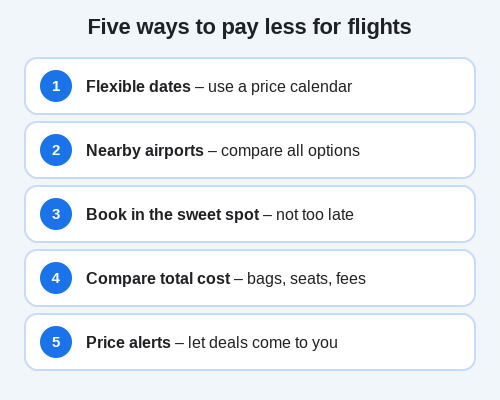
Small changes in how you search add up
Flexibility is the single biggest money-saver. Even moving your trip by a day or two can change the price noticeably.
- Use price calendars on flight search tools to see fares across a whole month.
- Fly midweek if you can; Tuesday, Wednesday, and Saturday flights are often cheaper than Fridays and Sundays on many routes.
- Avoid peak periods like school holidays and major festivals, when prices rise sharply.
- Check nearby airports at both ends. A secondary airport may be much cheaper, but add the cost and time of getting there.
- Consider early or late flights, which are often cheaper, as long as you can get to the airport safely.
Step 2: Compare Widely, Then Check the Airline
- Start with a flight comparison site to see which airlines fly your route and roughly what they charge.
- Check the airline's own website before booking. Prices are often the same or lower, and changes and refunds are usually easier when you book direct.
- Include budget airlines, which some comparison sites don't fully cover.
- Try one-way combinations, such as outbound on one airline and return on another.
- Be careful with unknown online agents. A slightly lower price isn't worth it if customer service is poor when something goes wrong.
About clearing cookies
Many people believe prices rise because a site tracks your searches. Evidence for this is weak; prices more often change because seats sell or fares are updated. Searching in a private window does no harm, but don't wait for a "reset" while real fares rise.
Step 3: Book at the Right Time
There's no magic day of the week to book, but there are sensible windows. For short-haul trips, booking roughly one to three months ahead often works well. For long-haul flights, two to six months ahead is a common sweet spot. For peak holidays, book earlier.
- Set price alerts for your route and dates so you're notified when fares drop.
- Watch for sales from airlines you like by joining their newsletters.
- Don't wait too long. Last-minute deals exist, but on popular routes prices usually rise in the final weeks.
Step 4: Compare the Total Cost, Not the Headline Price
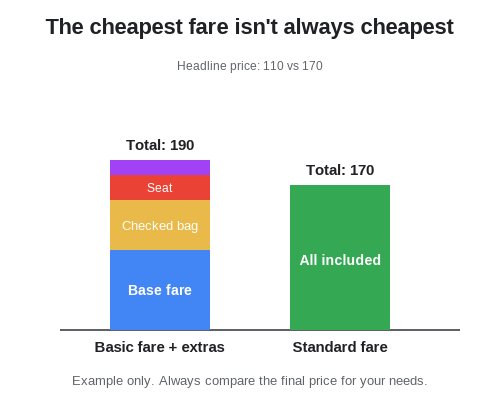
Extras can turn a bargain into the pricier option
- Checked baggage and cabin bag size limits
- Seat selection, especially if you're travelling with children
- Payment card fees, where they're allowed
- Change and cancellation fees
- Transport to and from the airport
- Meals on long flights
Pack light if you can. Travelling with only a small cabin bag is one of the most reliable ways to keep budget fares cheap. Check your bag's size and weight against the airline's rules, as charges at the gate can be steep.
Step 5: Book Safely and Check Details
- Enter your name exactly as on your passport or ID. Name changes can be expensive or impossible.
- Check dates, times, and airports again before paying; it's easy to pick the wrong month or a similarly named airport.
- Check connection times on itineraries with changes, especially if they're on separate tickets, as missed connections may not be protected.
- Pay by credit card where possible, as it may give extra protection if the airline or agent fails.
- Check entry requirements such as passport validity and visas before booking international flights.
Avoid fake flight deals
Be wary of social media posts or websites offering flights at prices far below everyone else, especially if they ask for bank transfer payments. Book through airlines and well-known agents, and check reviews of any agent you haven't used before.
Once you've booked, keep an eye on your booking. Our guide on checking flight status explains how to stay updated, and our guide on cancelling flight tickets helps if plans change.
Save on Baggage, Seats, and Extras
Budget airlines often advertise very low fares and make their money on extras. Planning ahead for these costs is one of the easiest ways to keep a cheap flight cheap.
- Pack light: if you can travel with only a small under-seat bag, you avoid cabin and checked baggage fees entirely. Check the exact size and weight limits for your airline and fare.
- Add bags when booking: bags bought during booking or online before the flight are usually much cheaper than at the airport.
- Skip seat selection if you don't need it: random seats are free on many airlines. Families with young children may be seated together without charge on some routes; check the airline's policy.
- Check in online: some airlines charge large fees for airport check-in or printing boarding passes.
- Bring your own snacks and an empty water bottle: fill the bottle after security to avoid paying high prices on board.
- Look at airport transport costs: a cheap flight to a distant secondary airport may cost more overall once the bus or taxi to the city is included.
Loyalty programmes and credit card rewards can also add value if you fly regularly with the same airline or alliance. Collect points on every trip, but don't choose a more expensive flight only to earn them. Points rarely make up for a large price difference.
Final Thoughts
Cheap flights come from flexibility and careful comparison rather than tricks. Search across dates and airports, check the airline's own site, book within a sensible window, set alerts, and always compare the full price including bags and seats. Do that consistently and you'll pay less on most trips.