Airport departure board listing international flights
This guide explains how to cancel properly so you don't lose money you could have recovered.
Step 1: Check Your Fare Rules
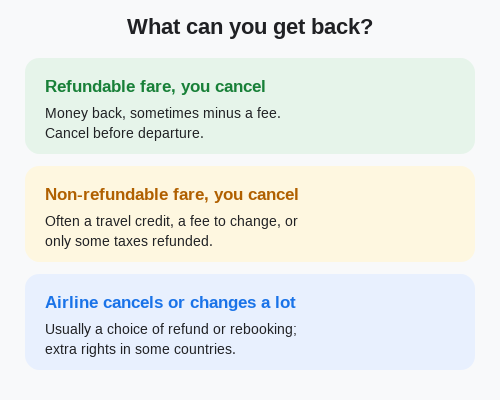
Who cancels and your fare type decide the outcome
Find your booking confirmation and look for the fare conditions, sometimes called fare rules or ticket terms. They tell you:
- Whether the ticket is refundable, partly refundable, or non-refundable
- Cancellation and change fees
- Deadlines, such as cancelling before departure to keep any value
- Whether you can get a travel credit instead of a refund, and how long it's valid
Even on non-refundable tickets, you can often claim back some government taxes and airport charges that only apply if you fly. Ask the airline or agent about this.
Recently booked?
Some airlines and countries allow free cancellation within a short period after booking, often 24 hours, as long as the flight isn't very soon. Check your airline's policy straight away if you've just made a mistake.
Step 2: Cancel Through the Right Channel
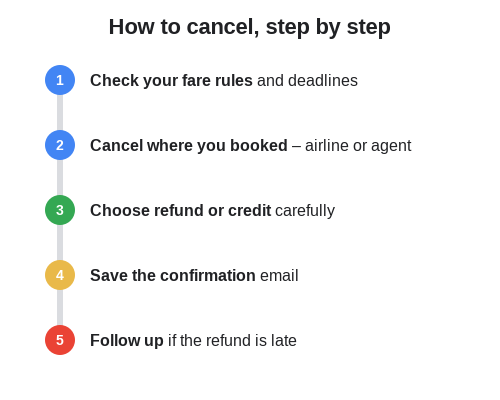
Cancel in writing and keep the proof
- Have your booking reference and the passenger's surname ready.
- Cancel online where possible, so you get an instant written confirmation.
- If you call, note the date, time, the agent's name, and any reference number.
- Cancel as early as possible; fees and options often get worse closer to departure.
- Don't simply not turn up. A "no-show" usually loses all value and may cancel your return flight too.
Step 3: Choose Refund, Credit, or a Change
- Refund: money back to your original payment method. Usually the best option if you're entitled to it.
- Travel credit or voucher: useful only if you'll fly with that airline again before it expires. Check the expiry date and whether it covers taxes and other passengers.
- Changing instead of cancelling: if you still want to travel later, changing dates may cost less than cancelling and rebooking.
If you're offered a voucher when you're entitled to a cash refund, for example because the airline cancelled, you can usually insist on the refund.
When the Airline Cancels or Changes Your Flight
If the airline cancels your flight or makes a significant schedule change, your position is usually much stronger. In most cases you can choose a refund or an alternative flight. In some regions, such as the EU, UK, and several other countries, passenger rights laws may also give you meals, accommodation, or compensation, depending on the circumstances and notice given.
- Check the official passenger rights information for the country or region of your flight.
- Keep receipts for reasonable costs caused by the cancellation.
- Make claims in writing and keep copies of all messages.
Watch out for refund scams
Scammers sometimes pose as airline staff on social media or through fake helpline numbers found in search adverts. Only contact the airline through the details on its official website or app, and never share card details or one-time codes with someone who contacts you.
Step 4: Follow Up and Use Your Insurance
- Note the expected refund time, which can range from days to several weeks.
- Follow up in writing if the refund doesn't arrive on time.
- Escalate if needed to the airline's complaints team, then to an official aviation authority or approved dispute body where available.
- Contact your card provider if you paid by card and the company doesn't refund money you're owed; chargeback or card protection may help.
- Claim on travel insurance if you cancelled for a covered reason, such as illness. You'll usually need proof, like a doctor's note.
Know Your Passenger Rights
Your rights after a cancellation depend on where you are flying, which airline you use, and who cancelled. Many regions have passenger protection rules, and it's worth looking up the official guidance for your route before you accept any offer.
- When the airline cancels: in many countries you are entitled to choose between a full refund and an alternative flight, even on non-refundable tickets.
- Compensation: some regions require airlines to pay compensation for late cancellations or long delays unless caused by extraordinary circumstances such as severe weather.
- Care while you wait: airlines may have to provide meals, refreshments, and hotel accommodation if you're stranded overnight.
- Vouchers are optional: airlines often offer travel credit first. You can usually ask for a cash refund instead if the airline cancelled.
- Package holidays: if your flight was part of a package, contact the tour operator, who is often responsible for refunds or alternatives.
Keep records of everything: booking confirmations, cancellation emails, screenshots of the flight status, receipts for meals or hotels, and the names of any staff you speak to. Submit claims in writing through the airline's official website. If the airline doesn't respond within its stated time, many countries have a national aviation authority or approved dispute resolution scheme that can review your case free of charge.
Be cautious with paid "claims companies". They can be helpful, but they take a significant share of any compensation, and you can usually make the same claim yourself directly with the airline.
Finally, always cancel unused flights formally, even if you cannot get a refund, as taxes may be refundable.
Final Thoughts
To cancel a flight without losing more than necessary, read your fare rules, cancel early through the place you booked, choose between refund and credit carefully, and keep written proof. If the airline cancels, know your rights and ask for what you're owed. When booking future trips, our guide on booking cheap flights explains how to weigh cheaper fares against flexibility.