
A close-up view of a hotel reception counter with a classic bell and warm lighting
Here are the methods that work most reliably, along with a few that are often overrated.
Step 1: Compare, Then Check Booking Direct
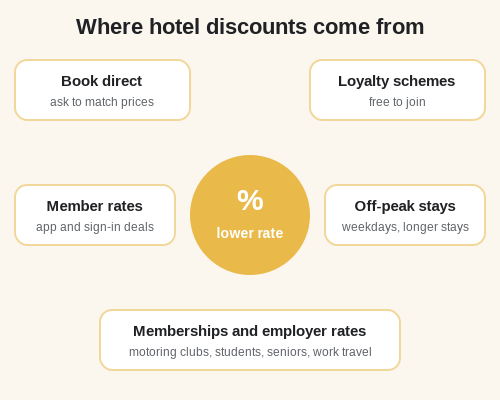
Discounts come from several places
Start on a booking or comparison site to see the going rate, then check the hotel's own website. Many hotels offer the same or a lower price directly, sometimes with extras such as breakfast, free cancellation, or loyalty points.
- Some hotels and chains offer a best-rate guarantee and will match a lower price found elsewhere. Read the conditions first.
- For small independent hotels, a polite email or call asking for their best direct rate can work, especially for longer stays.
- Compare like with like: the same room type, dates, cancellation terms, and whether breakfast and taxes are included.
Step 2: Join Loyalty Programmes and Use Member Rates
- Hotel loyalty programmes are usually free to join and often give members a small discount straight away, plus points for free nights over time.
- Booking site member levels sometimes unlock lower prices after a few stays.
- App-only or mobile rates are sometimes cheaper than desktop prices.
- Stick to one or two chains if you travel often, so your points and status build up faster.
Check memberships you already have
Motoring clubs, student and youth cards, senior memberships, professional associations, credit cards, and some employers have hotel partnerships. Check before you book, and be ready to show proof of membership at check-in.
Step 3: Choose Dates and Length of Stay Wisely
- Avoid peak dates such as holidays, major events, and conferences, when prices rise sharply.
- Think about the type of destination. Business districts are often cheaper at weekends; leisure destinations are often cheaper midweek.
- Ask about longer-stay rates. Many hotels discount stays of a week or more.
- Check prices again after booking. If you have free cancellation and the price drops, you can rebook at the lower rate.
Step 4: Pick the Right Rate Type
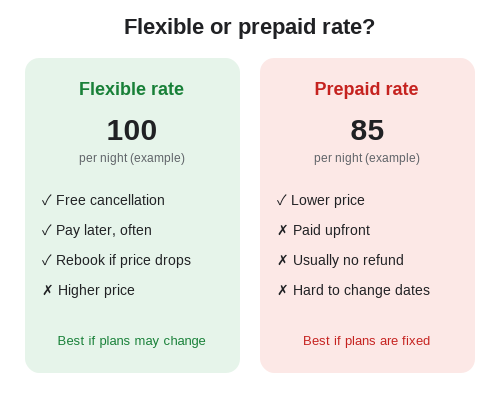
Cheaper prepaid rates come with less flexibility
Packages that combine flights and hotels can also be cheaper than booking separately, and may give extra protection in some countries. Compare the total cost both ways.
Step 5: Ask Politely and Avoid False Savings
- Ask at check-in about room upgrades or included extras, especially on quiet nights. Polite, friendly requests work far better than demands.
- Mention special occasions like anniversaries; some hotels add small touches.
- Watch for extra fees such as resort fees, parking, Wi-Fi, and city taxes, which can wipe out a discount.
- Be cautious of "secret" deals from unfamiliar websites, especially those asking for bank transfers.
Don't fall for fake discount offers
Messages offering huge hotel discounts in return for paying upfront through unusual methods are a common scam. Book through hotels and well-known booking sites only, and pay by card where possible.
If you're travelling on a tight budget, our guide on finding budget hotels shows how to find good-value stays.
Look for Special and Group Discounts
Many hotels offer reduced rates to specific groups that aren't shown in the standard search results. It's worth asking about any that apply to you.
- Senior and student rates: some chains offer discounts for older guests or students with valid ID.
- Military, government, and corporate rates: if your employer has an agreement with a hotel group, you may qualify for a lower rate even on personal trips. Check your employer's rules first.
- Membership organisations: motoring clubs, professional associations, and some credit cards offer hotel discounts to members.
- Group bookings: booking several rooms for a wedding, event, or family trip can earn a group rate. Contact the hotel's sales team directly.
- Long-stay discounts: weekly or monthly rates are often far cheaper per night than short stays.
- Package deals: booking a flight and hotel together can sometimes cost less than booking each separately. Compare both options.
Remember that you may be asked to show proof at check-in, such as a student card or membership card. If you can't, the hotel may charge the full rate. Read the conditions before you book.
Be realistic about what counts as a saving. A discount on a hotel far from where you need to be can cost more in time and transport. Similarly, a lower rate that doesn't include breakfast or Wi-Fi may end up costing more than a slightly higher rate that does. Compare the total value of your stay, not just the nightly price.
Finally, after your stay, leave an honest review. Many hotels respond to guest feedback, and returning guests who have booked directly are often offered loyalty rewards or exclusive rates next time. Signing up for a hotel's newsletter can also bring occasional member-only sales, as long as you unsubscribe if the emails become too many.
Keep a simple note of the hotels you liked, the rates you paid, and the dates you stayed. Next time you travel to the same city, you'll have a useful benchmark for judging whether a price is genuinely good.
Always read the cancellation and payment terms carefully before booking any discounted rate.
Final Thoughts
The most reliable hotel discounts come from comparing prices, booking direct, joining free loyalty programmes, using memberships you already have, choosing off-peak dates, and picking the right rate for how certain your plans are. Combine a few of these and you'll regularly pay less for the same room.