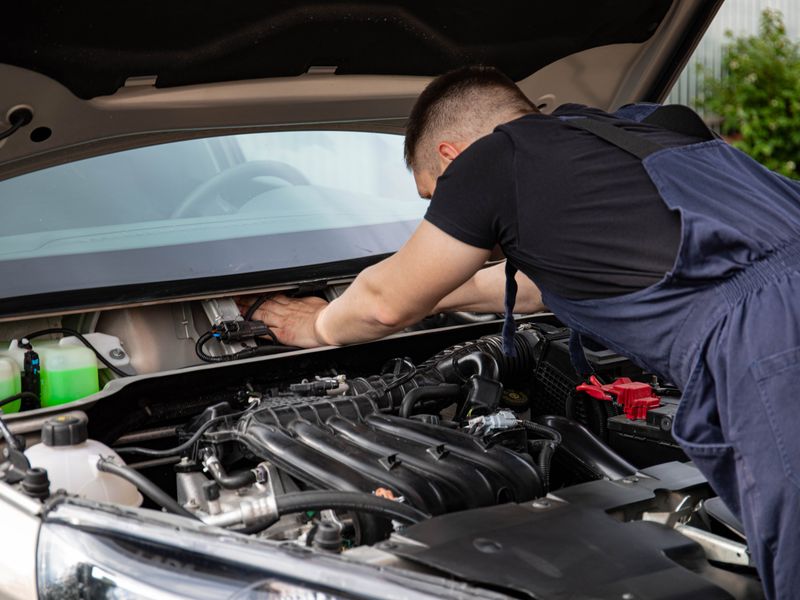
Auto mechanic performs engine maintenance on a car
Modern engines are complex, and many repairs need diagnostic tools and training. But there's a lot you can safely do yourself: understand what the car is telling you, carry out basic checks, fix simple causes, and give a mechanic useful information.
Step 1: Understand Warning Lights
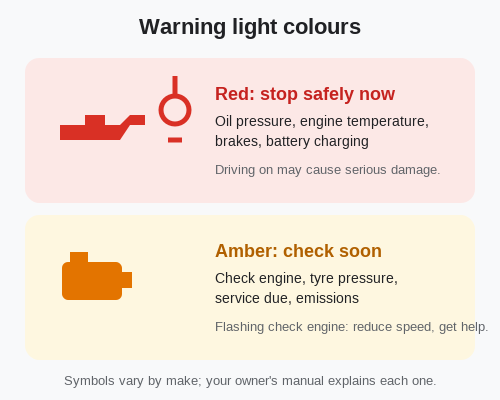
Red means stop; amber means get it checked
- Red lights, such as oil pressure, engine temperature, brake, or battery charging, usually mean stop as soon as it's safe and switch off the engine.
- Amber lights, such as the check engine or engine management light, mean a fault has been detected. You can usually continue carefully, but get it checked soon.
- A flashing check engine light often means a serious misfire that can damage the exhaust system. Reduce speed and get it checked promptly.
Symbols differ between makes, so keep your owner's manual (or its digital version) handy and check what each light means for your car.
Step 2: Recognise Common Symptoms
- Won't start, clicking sound: often a weak or flat battery, or loose battery terminals.
- Turns over but won't start: may be a fuel, ignition, or sensor problem.
- Overheating (temperature gauge high, steam): often low coolant, a leak, or a faulty fan or thermostat.
- Rough idle, shaking, or loss of power: commonly worn spark plugs, ignition coils, or air and fuel problems.
- Knocking or ticking noises: can mean low oil or internal wear. Check the oil level immediately.
- Blue, white, or black exhaust smoke: may point to burning oil, coolant entering the engine, or a rich fuel mixture.
- Burning or sweet smells: possible oil or coolant leaks onto hot parts.
Step 3: Do Simple, Safe Checks
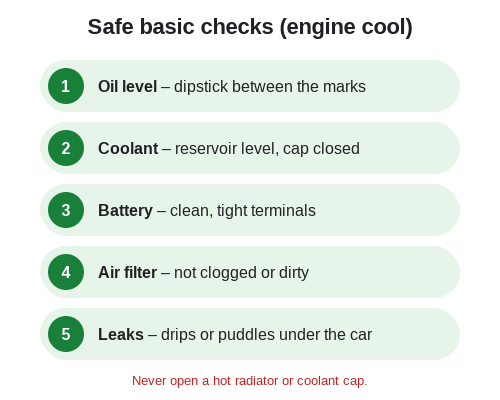
Only check with the engine off and cool
- Engine oil: pull out the dipstick, wipe it, reinsert, and check the level is between the marks. Top up with the oil grade in your manual if it's low.
- Coolant: check the level in the reservoir against the marks. Never open the cap while the engine is hot.
- Battery: look for corrosion or loose terminals. Many battery problems are solved by a jump start or replacement.
- Air filter: a very dirty filter can reduce performance and is usually easy to replace.
- Leaks: look for fresh drips or puddles under the car, and note their colour.
Step 4: Read Fault Codes
Most cars made in recent decades have a diagnostic port, often under the dashboard. An inexpensive OBD-II code reader or Bluetooth scanner can show the fault code behind a check engine light. Many parts shops will also read codes for free.
- Write down the code and look up what it means for your make and model.
- A code points to an area, not always the exact part; don't replace parts based on the code alone.
- Clearing a code without fixing the cause only hides the problem, and it will usually return.
Help your mechanic help you
Note when the problem happens (cold start, motorway speed, braking), any noises or smells, warning lights, and fault codes. Clear information can shorten diagnosis time and lower the bill.
Step 5: Know When to Call a Mechanic
Stop driving and get professional help if you see a red warning light, the engine overheats, there's smoke, a strong fuel smell, heavy knocking, or a sudden loss of power. Call your breakdown service rather than driving to a garage.
- Choose a reputable garage with good reviews or recommendations.
- Ask for a written estimate before work starts, and ask to see replaced parts.
- Check whether repairs are covered by a warranty or recall.
Regular servicing is the best prevention. Follow the service schedule in your manual for oil, filters, spark plugs, and belts. If you're buying a car, our guide on buying a used car explains how to spot engine problems before you pay.
Prevent Engine Problems With Regular Maintenance
Most engine problems develop slowly and can be prevented with simple routine care. Following the maintenance schedule in your owner's manual is the single best way to avoid expensive breakdowns.
- Change oil and filters on time: old oil loses its ability to protect moving parts. Follow the recommended interval and use the oil grade the manufacturer specifies.
- Check fluid levels monthly: engine oil, coolant, brake fluid, and windscreen washer fluid take only a few minutes to check on a cool engine parked on level ground.
- Replace the air filter: a clogged filter reduces performance and fuel economy, especially in dusty areas.
- Look after the battery: clean any corrosion from terminals and have the battery tested before winter, as cold weather exposes weak batteries.
- Follow belt replacement schedules: on many engines a failed timing belt causes severe damage. Replacing it at the recommended mileage costs far less than an engine repair.
- Use the right fuel: use the grade recommended for your car and buy from reputable stations.
Keep a simple log of services, repairs, and any warning signs you notice, including the date and mileage. This helps a mechanic diagnose problems faster and shows future buyers that the car has been cared for. If you notice a new noise, smell, or vibration, write down when it happens: on start-up, when accelerating, when braking, or only when the engine is warm. Clear details save diagnostic time and money.
Final Thoughts
Fixing car engine issues starts with paying attention: understand warning lights, recognise symptoms, carry out safe basic checks, and read fault codes. Handle simple causes like low oil, coolant, or a weak battery yourself, and leave serious faults to a qualified mechanic. Acting early almost always costs less.
Safety Notice
This guide is for general information only. Vehicles can be dangerous to work on: never work under a car supported only by a jack, let the engine cool before touching it, and follow your vehicle's owner's manual. If a warning light, smell, smoke, or noise suggests a serious fault, stop driving and have the car checked by a qualified mechanic.