
Everyday conversations build strong family bonds
Good family communication doesn't require long, serious talks every day. It's built from small habits: paying attention, listening without jumping to judgement, expressing feelings honestly, and making time to connect. This guide shares practical ways to improve communication in your home, whatever the size or shape of your family.
Step 1: Make Time to Talk
Conversations need time and space. In many families, the biggest barrier is simply that everyone is busy or distracted. Build regular moments for connection into your routine:
- Shared meals: eat together as often as you can, with phones and TV off. Even a few meals a week make a difference.
- Car journeys and walks: side-by-side activities often make it easier for children and teenagers to open up than face-to-face talks.
- Bedtime chats: younger children often share worries at the end of the day; a few relaxed minutes can reveal a lot.
- One-to-one time: spend a little time alone with each child or family member, doing something they enjoy.
- Check-ins with distant family: regular video calls help grandparents and relatives stay part of everyday life.
Step 2: Listen Without Judging

A father and son sharing a quiet conversation
- Give full attention: stop what you're doing, look at the person, and show you're interested.
- Let them finish: avoid interrupting with advice or corrections.
- Reflect feelings: "You sound really disappointed about the match" helps people feel understood.
- Ask open questions: "What was the best part of your day?" invites more than "Was school okay?"
- Stay calm when hearing bad news: if a teenager admits a mistake, reacting with anger can stop them coming to you next time. Thank them for telling you, then talk it through.
Ask before advising
Try asking "Do you want my advice, or do you just need me to listen?" Often people simply want to be heard, and asking shows respect.
Step 3: Express Feelings Clearly and Kindly
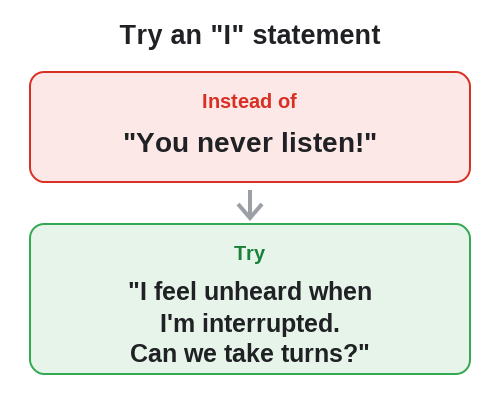
"I" statements invite listening instead of defence
- Describe the situation: "When the dishes are left in the sink overnight..."
- Share your feeling: "...I feel frustrated..."
- Explain why: "...because I start the morning with extra work..."
- Make a request: "...could we wash up before bed?"
Positive feelings deserve words too. Saying "I really appreciated you helping your brother today" or "I'm proud of how hard you worked" builds warmth and makes difficult conversations easier when they come.
Step 4: Hold Regular Family Meetings
A short, regular family meeting gives everyone a voice and stops small problems from building up. It works with young children and teenagers alike, as long as it's kept positive and brief.
- Keep it short: 15 to 30 minutes, once a week or fortnight, at a regular time.
- Start with appreciation: each person says something they appreciated about someone else that week.
- Plan together: discuss the coming week's schedule, chores, outings, and meals.
- Solve problems as a team: invite everyone, including children, to suggest solutions to issues such as screen time or morning chaos.
- End with something fun: a game, dessert, or choosing a family activity.
Write down agreements and stick them on the fridge. Children are more likely to follow rules they helped create.
Step 5: Adapt to Each Age and Personality

One-to-one time between a mother and daughter
- Young children: get down to their eye level, use simple words, and help them name feelings such as "angry", "sad", or "worried".
- School-age children: show interest in their friendships and hobbies, and let them make small decisions to build confidence.
- Teenagers: respect their growing need for privacy, avoid lecturing, and stay available. Short, frequent chats work better than big talks.
- Adult children and parents: treat each other as adults, respect different choices, and keep in regular contact.
- Different personalities: quieter family members may prefer writing a note or talking one-to-one rather than in a group.
Screens, Busy Schedules, and Repair
Phones and tablets can quietly crowd out conversation. Agree some screen-free times and places as a family, such as meals and bedrooms at night, and make sure parents follow the same rules. Children notice when adults are distracted by their phones.
When schedules are packed, use shared calendars or a whiteboard in the kitchen to keep track of plans, and leave notes or send kind messages during the day. A quick "Good luck with your test!" text shows you're thinking of each other.
Every family has misunderstandings and arguments. What matters is repair: apologising sincerely, listening to how the other person felt, and trying again. When parents model saying sorry, children learn that mistakes can be fixed. If disagreements are frequent, our guide on resolving conflicts at home offers a step-by-step approach.
If communication problems feel stuck, family counselling or parenting courses can help. Seeking support is a sign of commitment, not failure.
Remember that improving communication is a gradual process. Pick one or two habits to start with, such as phone-free dinners or a weekly family meeting, and keep them going for a month before adding more. Notice and praise progress, even small steps, such as a teenager sharing a worry or siblings solving a disagreement without shouting. Over time, these moments add up to a home where everyone feels heard, respected, and comfortable speaking honestly about what matters to them.
Final Thoughts
To improve family communication, make regular time to talk, listen with full attention and without judgement, and express feelings with kind "I" statements. Hold short family meetings, adapt your approach to each person's age and personality, set screen-free times, and repair quickly after arguments. These everyday habits build trust, so that when bigger issues arise, your family already knows how to talk them through together.