
Change is easier when we learn from each other
Feeling unsettled by change is completely normal. Our brains are wired to prefer what's familiar and predictable. The good news is that adaptability is a skill, not a fixed trait. With a few practical strategies, you can handle change with less stress, keep what matters to you, and even find new opportunities along the way.
Step 1: Understand What Is Changing
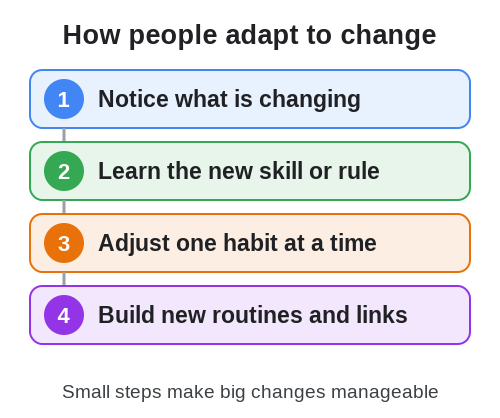
Adapting usually happens in stages
- Technological: services moving online, new apps for banking and health, automation at work, and new ways of communicating.
- Economic: rising living costs, new types of jobs, remote and flexible work, and changes to benefits or pensions.
- Cultural: changing attitudes, new vocabulary, more diverse communities, and different expectations between generations.
- Personal and local: moving home, children leaving, retirement, new neighbours, or a local service closing.
Get information from reliable sources such as official government websites, established news outlets, and local services rather than rumours or social media posts. Understanding the facts often makes a change seem smaller and more manageable.
Step 2: Manage Your Feelings About Change
It's natural to feel loss, frustration, anxiety, or resistance when familiar ways of life change. These feelings don't mean you're failing to adapt; they're part of the process.
- Acknowledge your feelings: it's fine to miss the way things were. Talking about it with someone you trust helps.
- Focus on what you can control: you may not control the economy or technology, but you can control your next step, your routines, and how you respond.
- Look for continuity: remind yourself what hasn't changed, such as your values, relationships, and skills.
- Limit doom-scrolling: constant news about change can increase anxiety. Check updates at set times instead.
- Be curious: ask "What might be good about this?" Many changes bring benefits alongside challenges.
Step 3: Keep Learning New Skills

Learning a new digital skill with a little help
- Digital skills: libraries, community centres, and adult education services often run free classes on smartphones, email, online banking, and staying safe online.
- Work skills: short courses, online learning platforms, and employer training help you keep up with changes in your field.
- Ask for help: younger relatives and friends are often happy to show you a new app; in return, you can share your own experience and skills.
- Learn in small steps: master one new thing at a time, such as video calling, before moving on to the next.
Keep a "how-to" notebook
When you learn a new process, such as booking a doctor's appointment online, write the steps in a notebook. It builds confidence and saves you from having to ask again.
Our guide on registering for workshops explains how to find and sign up for local classes.
Step 4: Adjust Your Routines Gradually
Trying to change everything at once is exhausting. Adapt one habit at a time and give yourself a few weeks to settle into each change.
- Keep some familiar routines, such as a morning walk or a weekly call with family, as anchors while other things shift.
- Break big changes into small steps. Moving to a new area might start with finding the nearest shop, then a doctor, then a club.
- Review how things are going after a month and adjust what isn't working.
- Celebrate small wins, such as your first successful online form or a new friend in a new town.
Step 5: Stay Connected to Others

A community garden brings neighbours together
- Reach out regularly: a quick message, call, or visit keeps relationships strong when life is busy or unsettled.
- Join local groups: community events, faith groups, sports clubs, and hobby groups help you meet people who share your interests. See our guide on finding community events.
- Talk across generations: older people bring perspective and experience; younger people bring new ideas and skills. Both benefit from listening.
- Welcome newcomers: if your community is changing, introduce yourself to new neighbours. Small acts of welcome build trust on all sides.
When change feels overwhelming
If worry or low mood lasts for weeks, affects sleep, or makes daily life difficult, speak to a doctor or a qualified counsellor. Many communities also have free helplines and support services.
Help Others Adapt Too
Adapting is easier when communities do it together. You might help an older neighbour set up online grocery deliveries, explain a new local recycling scheme to a family who has just arrived, or mentor a younger colleague through a change at work. Patience is key: everyone learns at their own speed, and people may feel embarrassed to ask for help.
Respect different views about change. Some people welcome new ideas quickly; others need more time or have good reasons for caution. Open, respectful conversation, without mocking or dismissing anyone, helps communities find a way forward together. Our guide on developing effective communication skills has practical tips for these discussions.
Finally, remember that you're part of social change, not just someone it happens to. Taking part in local consultations, voting, volunteering, and community projects gives you a voice in shaping what changes next.
Final Thoughts
To adapt to social changes, name exactly what's shifting, get facts from reliable sources, and accept that mixed feelings are normal. Focus on what you can control, keep learning new skills in small steps, adjust routines gradually, and stay closely connected to the people around you. Help others along the way and take part in shaping your community. Change will keep coming, but with these habits you can meet it with confidence.