
Good communication is a skill anyone can practise
In reality, effective communication is a set of skills you can learn and improve at any age. It's less about clever words and more about listening carefully, speaking clearly, staying calm, and paying attention to the other person. This guide breaks those skills into practical steps you can start using in your next conversation.
Step 1: Listen Actively
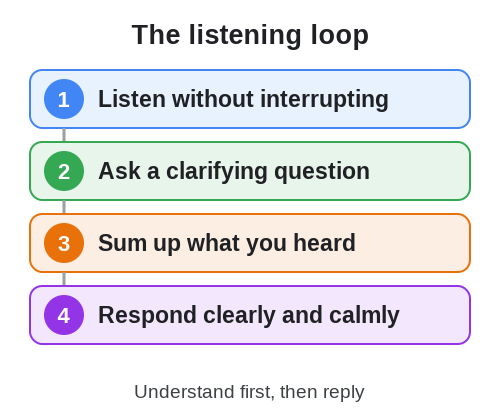
Understand first, then reply
- Remove distractions: put your phone face down, turn away from the screen, and look at the person speaking.
- Let them finish: resist the urge to interrupt, even when you think you know what they'll say.
- Ask clarifying questions: "What do you mean by...?" or "Can you give me an example?"
- Summarise what you heard: "So you're saying the deadline is the main worry?" This shows you were listening and catches misunderstandings early.
- Notice feelings as well as facts: "That sounds frustrating" acknowledges emotion, which often matters more than the details.
Step 2: Speak Clearly and Simply
Clear speakers make life easy for their listeners. They know what they want to say, say it in plain words, and check that it landed.
- Know your main point: before an important conversation, try to sum up your message in one sentence.
- Lead with it: start with the key point, then add detail. "I need the report by Friday because the client meeting moved" is clearer than a long build-up.
- Use everyday words: avoid jargon, acronyms, and long sentences unless you're sure your listener shares them.
- Be specific: "Can you call me before 5 pm today?" works better than "Get back to me soon."
- Check understanding: ask "Does that make sense?" or "What questions do you have?" rather than assuming.
Slow down
Nervous speakers often talk too fast. Pausing between points gives listeners time to absorb what you've said and makes you sound more confident. A two-second pause feels long to you but natural to others.
Step 3: Pay Attention to Body Language and Tone

Open posture and eye contact help conversations flow
- Open posture: uncrossed arms, relaxed shoulders, and facing the person signal that you're engaged.
- Eye contact: comfortable, natural eye contact shows attention; norms vary between cultures, so follow the other person's lead.
- Tone: a calm, warm tone helps difficult messages land; sarcasm or raised voices make people defensive.
- Read others: folded arms, looking away, or short answers may signal discomfort. Ask gently: "Is this a good time to talk?"
In written messages, tone is easily misread. Re-read emails and texts before sending, add a friendly greeting, and pick up the phone when a topic is sensitive or complicated.
Step 4: Handle Difficult Conversations
Disagreements, complaints, and bad news are where communication skills really count. A few principles help keep tough conversations productive:
- Choose the right time and place: private, calm, and when neither of you is rushed or tired.
- Focus on the issue, not the person: "The deadline was missed" rather than "You're unreliable."
- Use "I" statements: "I felt left out when I wasn't invited to the meeting" invites discussion instead of defence.
- Stay curious: ask for their side and listen properly; there's often information you didn't have.
- Look for solutions together: end with a clear agreement about what happens next.
- Take a break if emotions rise: "Let's pause and come back to this in an hour" is a sign of maturity, not weakness.
If pressure from others is part of the challenge, our guide on handling social pressure positively shows how to stay true to yourself in the moment.
Step 5: Practise Every Day

Speaking to a group is a skill that improves with practice
- Pick one skill a week: for example, summarising what others say, or pausing before answering.
- Ask for feedback: a trusted friend or colleague can tell you whether you interrupt, speak too fast, or use filler words.
- Speak up in small groups: share one comment in meetings, classes, or community gatherings to build confidence.
- Read widely: books, articles, and good journalism expand your vocabulary and show how clear writers structure ideas.
- Join a group: public speaking clubs, debate societies, drama groups, and community workshops offer friendly, structured practice. See our guide on registering for workshops.
Communication at Work, at Home, and Online
At work, clear communication saves time and builds trust. Confirm tasks, deadlines, and responsibilities in writing after important meetings, and keep messages short and well organised. When giving feedback, be specific, balanced, and focused on what can improve.
At home, communication is more about connection than efficiency. Make time to talk without screens, listen to how family members feel, and avoid bringing up sensitive topics when everyone is tired or hungry. Our guide on improving family communication has more ideas.
Online, remember that real people read what you write. Pause before replying to anything that makes you angry, avoid all-capital letters, and move heated discussions to a private message or call. A good rule is never to write anything you wouldn't say to someone's face.
Final Thoughts
Effective communication starts with listening: give full attention, ask questions, and summarise before you reply. Speak clearly with your main point first, use simple and specific words, and watch your tone and body language. Handle difficult conversations calmly with "I" statements and a focus on solutions, and practise one small skill at a time. Over weeks and months, these habits make conversations easier, relationships stronger, and you more confident in every part of life.