
NGOs rely on supporters for almost everything they do
Joining NGO activities can mean volunteering at events, campaigning for change, offering professional skills, becoming a member, or eventually working for an NGO as a career. This guide explains how to choose an organisation that matches your values, the different ways to get involved, how to apply, and how to grow from occasional helper to trusted contributor.
Step 1: Choose an NGO That Fits Your Values

Volunteers at a tree planting event
- Read the mission and annual report to understand what the organisation actually does and where.
- Check registration with your country's official charity or non-profit register.
- Look at transparency: trustworthy NGOs publish accounts, name their leadership, and report results honestly, including challenges.
- Consider scale: small local NGOs often give volunteers more responsibility quickly, while large ones offer structured training and international experience.
Speaking to current volunteers or staff, at an open evening or event, is one of the best ways to understand the culture of an organisation before committing.
Step 2: Pick a Way to Get Involved
There is a role for every schedule
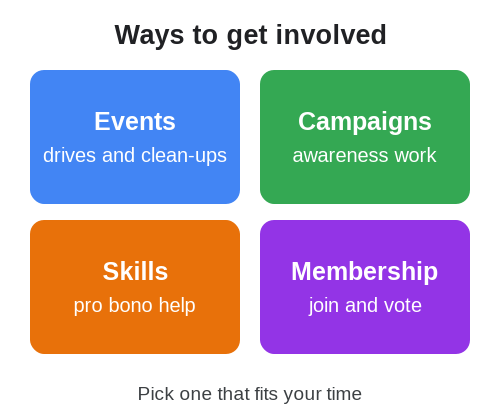
- Events and field activities: food drives, tree planting, beach clean-ups, health camps, fundraising runs, and distribution days need many hands for a few hours.
- Campaigns and advocacy: signing and sharing petitions, writing to elected representatives, joining peaceful demonstrations, and spreading awareness online.
- Skills-based volunteering: lawyers, accountants, designers, translators, teachers, IT specialists, and doctors can offer pro bono help that would otherwise cost NGOs a lot.
- Membership: many NGOs are membership organisations, where paying a small fee gives you a vote in decisions, newsletters, and invitations to meetings.
- Remote volunteering: research, translation, social media, mentoring, and data entry can often be done from home.
- Internships and fellowships: structured placements, often for students and graduates, offer training and experience for a future NGO career.
Step 3: Apply and Prepare
Many NGOs list opportunities on a "Get involved", "Volunteer", or "Careers" page. Others recruit through volunteer platforms, university career services, and social media. If you can't see an opening, a polite email explaining who you are, what you can offer, and how much time you have often works, especially with smaller groups.
- Tailor your application: explain why this particular cause and organisation matters to you, and give examples of relevant experience, paid or unpaid.
- Be clear about availability: NGOs plan around reliable volunteers, so honesty about your time helps them place you well.
- Expect checks: roles with children, vulnerable adults, or money usually require references, background checks, and safeguarding training.
- Attend induction: learn the organisation's code of conduct, safety rules, and how to represent it in public.
Start with a short commitment
Offer to help at one event or a three-month project first. It lets you and the NGO find out whether the fit is right before either side makes a bigger commitment.
Step 4: Think Carefully About Volunteering Abroad
International volunteering can be life-changing, but it needs careful research. Some programmes charge high fees and offer little real benefit to local communities, and short-term placements in orphanages are widely discouraged by child protection experts.
- Choose programmes run by established NGOs that work alongside local organisations and staff.
- Ask exactly what your fees pay for, and what skills the community has requested.
- Prefer roles that match your qualifications, such as teaching, healthcare, or engineering, over unskilled tasks local people could be paid to do.
- Check travel advice, visas, insurance, and vaccinations well before you go.
Often, the most helpful thing you can do for an international cause is to support it from home with skills, campaigning, or donations. Our guide on donating to charity explains how to give safely.
Step 5: Grow Your Role Over Time

A team meeting to plan the next project
- Keep a record of projects, results, and skills you've developed.
- Ask for feedback and training, such as first aid, project management, or fundraising courses.
- Network with staff and partner organisations; many NGO jobs are filled by people already known to the sector.
- Share your experience with friends and recruit others; growing the supporter base is a valuable contribution.
If you'd like to work in the sector professionally, volunteering, internships, and relevant study are the usual routes in. Roles include programme officer, fundraiser, communications officer, researcher, and field coordinator. Our guide on writing a good resume can help you present your experience.
Represent the Cause Responsibly
When you join an NGO's activities, you become part of its public face. Follow its guidance on speaking to media and posting on social media, respect the privacy and dignity of the people it serves, and never share photos of beneficiaries, especially children, without proper consent. Stay respectful during campaigns, even with people who disagree. Credibility is an NGO's most valuable asset, and every supporter helps protect it.
Finally, look after yourself. Working on difficult issues such as poverty, conflict, or abuse can be emotionally demanding. Take breaks, talk to your coordinator, and use any support the organisation offers.
Final Thoughts
To join NGO activities, choose an organisation whose mission and methods match your values, check that it's registered and transparent, and pick a way to help that fits your time, from one-off events to skills-based or remote volunteering. Apply with a clear, honest message, complete the training, start with a short commitment, and grow your role as you gain experience. Steady, reliable support is what helps NGOs turn good intentions into lasting change.