
The people around us shape our choices more than we notice
Pressure itself isn't always bad. Friends who encourage you to exercise or study can push you in a healthy direction. The goal is not to ignore other people, but to notice when pressure is steering you away from your own values, and to respond calmly and confidently. This guide explains how.
Step 1: Recognise the Different Kinds of Pressure
Pressure is easier to handle once you can name it. It usually comes in one of these forms:
- Direct pressure: someone openly asks or pushes you to do something, such as "Come on, just one more drink" or "Everyone's skipping class, come with us."
- Indirect pressure: nobody says anything, but you sense what's expected, such as everyone wearing a certain brand or staying late at the office.
- Teasing and exclusion: jokes, eye-rolls, or being left out when you don't go along with the group.
- Online pressure: comparing yourself to edited photos, chasing likes, or joining in with unkind comments to fit in.
- Family and cultural expectations: pressure about careers, marriage, money, or traditions from people who care about you.
Notice how pressure feels in your body: a tight stomach, a rush to answer, or a sense of dread. These signals are useful early warnings that it's time to slow down.
Step 2: Know Your Values and Limits
It's much easier to resist pressure when you've already decided what matters to you. Take some quiet time to write down your answers to a few questions:
- What three or four values matter most to me? For example, honesty, health, family, kindness, or financial security.
- What will I definitely not do, whoever asks? Think about alcohol and drugs, driving, money, cheating, and how you treat others.
- What goals am I working towards that certain choices could put at risk?
- Who do I want to be, and who do I admire, and why?
Decisions made in advance, when you're calm, are much stronger than decisions made in the moment with friends watching. If you know you won't get into a car with a driver who's been drinking, for example, you won't have to argue with yourself when it happens.
Step 3: Respond With Confidence
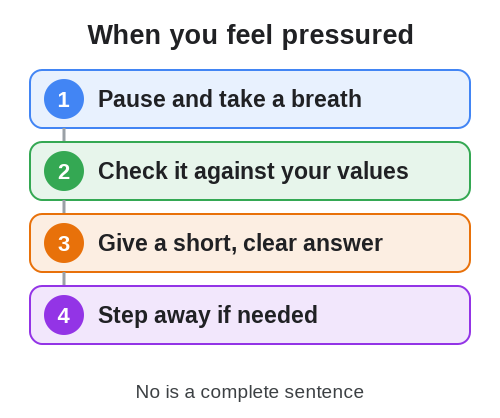
A short pause helps you respond rather than react
- Pause: take a breath and give yourself a moment. "Let me think about it" is a perfectly good answer.
- Say no clearly: "No thanks, I'm good." You don't owe anyone a detailed explanation.
- Repeat if needed: calmly repeat the same short answer, sometimes called the "broken record" technique.
- Offer an alternative: "I'm not up for that, but I'd love to get food after."
- Use humour: a light joke can ease tension while keeping your answer firm.
- Leave: if pressure keeps building, it's fine to walk away, call someone, or go home.
Plan an exit line
Agree a code word with a parent, sibling, or friend that means "call me with a reason to leave." Young people especially find this takes the pressure off in difficult situations.
Body language helps too: stand tall, make eye contact, and speak in a steady voice. Confidence often comes after you act confidently, not before.
Step 4: Choose Supportive People

Good friends respect your choices
- Look for at least one friend who shares your values, so you can support each other.
- Join clubs, teams, volunteer groups, or classes built around positive interests. Our guide on volunteering locally is a great place to start.
- Stay in touch with family members or mentors you can talk to honestly.
- Be that supportive friend for others: speak up when someone is being pressured or teased.
Step 5: Manage Online and Comparison Pressure

Phones can bring comparison pressure into every moment
- Curate your feed: unfollow or mute accounts that make you feel bad, and follow ones that inspire or teach you.
- Set time limits: use your phone's screen time tools, and keep phones out of the bedroom at night.
- Pause before posting: ask whether you're sharing for yourself or for approval.
- Don't join pile-ons: unkind group comments can hurt real people. Scroll on, or report abuse.
- Spend money mindfully: trends and influencer promotions are designed to create urgency. Wait a few days before buying.
When pressure becomes bullying
If pressure involves threats, repeated harassment, pressure for intimate images, or anything that makes you feel unsafe, tell a trusted adult, teacher, employer, or the platform, keep evidence, and contact the police or local emergency services if you are in danger.
Turn Pressure Into a Positive Force
The same social forces that push us towards bad choices can help us make good ones. People are more likely to exercise, save money, study, or quit smoking when friends are doing it too. You can use this deliberately:
- Find a workout, study, or savings buddy and check in with each other.
- Share your goals with people who'll encourage you.
- Join groups where healthy behaviour is normal, such as running clubs or community gardens.
- Model the behaviour you'd like to see; others often follow quietly.
Handling pressure well also strengthens your communication skills more broadly. Our guide on developing effective communication skills covers assertive speaking and listening in more depth.
Be patient with yourself. Everyone gives in to pressure sometimes. When it happens, reflect on what made it difficult, decide what you'd do differently, and move on without harsh self-criticism.
Final Thoughts
To handle social pressure positively, learn to recognise it, decide your values and limits in advance, and respond with a pause and a short, clear answer. Surround yourself with people who respect your choices, manage comparison and online pressure, and ask for help if pressure becomes bullying. Used wisely, the influence of others can even help you reach your goals. Staying true to yourself gets easier every time you practise it.