
Strong marriages are built from small, daily choices
The encouraging news is that strong marriages aren't usually the result of grand gestures or perfect compatibility. They're built from small habits repeated over time: noticing each other, saying thank you, talking honestly, sharing responsibilities, and handling disagreements with respect. This guide explains practical ways to strengthen your marriage, whether things are going well or you feel you've drifted.
Step 1: Show Appreciation Every Day
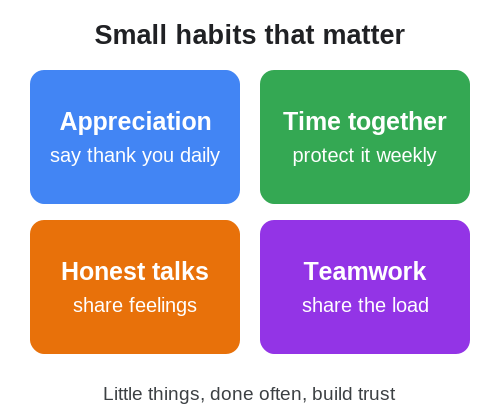
Little things, done often, build trust
- Say thank you for everyday things: cooking, picking up the children, filling the car, or listening after a hard day.
- Be specific: "Thank you for calling the plumber, I know you were busy" means more than a general "thanks".
- Notice the positives: make a habit of pointing out something you admire about your partner, in private and in front of others.
- Small gestures: a cup of tea, a note in a bag, or a message during the day shows you're thinking of them.
Couples who keep a warm, positive atmosphere most of the time find it much easier to get through difficult moments together.
Step 2: Protect Time Together

A couple taking a walk together
- Daily check-in: spend ten or fifteen minutes each day talking without phones or TV, about more than logistics.
- Regular dates: plan time together weekly or fortnightly. It doesn't need to cost money: a walk, cooking together, or a film at home all count.
- Try new things: shared new experiences, such as a class, a day trip, or a new hobby, bring fresh energy to a relationship.
- Physical affection: hugs, holding hands, and sitting close help partners feel connected.
- Plan ahead: if you have children, arrange babysitting with family or friends, or swap childcare with other parents.
Ask better questions
Instead of "How was your day?", try "What made you laugh today?" or "What's on your mind this week?" Curious questions keep you learning about each other, even after many years.
Step 3: Talk Openly and Listen Well
Honest communication keeps small issues from becoming big ones. Share your feelings, hopes, and worries, and make it safe for your partner to do the same.
- Listen fully without interrupting, and summarise what you heard to show you understood.
- Use "I" statements to raise concerns, such as "I feel lonely when we don't talk in the evenings."
- Discuss important topics before they become urgent: finances, children, careers, family expectations, and future plans.
- Keep each other's confidences, and avoid complaining about your partner to friends or family.
Our guide on developing effective communication skills has more techniques for listening and speaking clearly.
Step 4: Work as a Team

Cooking together turns a chore into time together
- Divide household tasks openly: list everything that needs doing, including invisible jobs such as planning meals or remembering birthdays, and share them fairly.
- Make money decisions together: agree a budget, savings goals, and how big purchases are decided.
- Back each other up: present a united front with children and extended family, and discuss disagreements in private.
- Support each other's goals: careers, studies, health, and hobbies all matter. Help each other make time for them.
- Review regularly: life changes with new jobs, babies, or ageing parents; adjust arrangements as needed.
Step 5: Disagree Respectfully
All couples disagree. What matters is how. Respectful disagreements focus on the problem, not on attacking each other.
- Avoid criticism of your partner's character, contempt such as eye-rolling or mockery, and stonewalling, where one person shuts down completely.
- Take a break if things get heated, and agree when you'll return to the discussion.
- Look for compromise. Some issues won't fully go away, and that's normal; aim to understand each other and find a workable arrangement.
- Repair quickly: a sincere apology, a touch, or a bit of humour helps you reconnect after an argument.
Our step-by-step guide on resolving conflicts at home explains how to turn arguments into solutions.
Safety comes first
The advice here is for relationships where both partners feel safe. If you experience violence, threats, intimidation, or controlling behaviour, contact a domestic abuse helpline or local emergency services. Abuse is never caused by poor communication, and you deserve support.
Keep Growing Together
People change over the years, and strong marriages make room for that. Keep showing interest in who your partner is becoming, not only who they were when you met. Share new interests, celebrate each other's achievements, and talk about your dreams for the future.
Look after your own wellbeing too. Getting enough sleep, exercising, maintaining friendships, and managing stress make you a better partner. A marriage is stronger when both people feel healthy and supported as individuals.
Seeking help early is a sign of commitment. Couples counselling, marriage enrichment courses, and relationship workshops can give you tools to handle challenges before they grow. Many couples find that a few sessions with a qualified counsellor transform how they communicate.
Finally, celebrate your relationship. Mark anniversaries, remember how you met, look through old photos, and create new traditions. Shared stories and rituals remind you both that you're a team with a history and a future.
Final Thoughts
To strengthen your marriage, show specific appreciation every day, protect regular time together, and talk openly while listening well. Share responsibilities fairly, make decisions as a team, disagree without criticism or contempt, and repair quickly after arguments. Keep growing together, look after your own wellbeing, and seek support early when you need it. Small, consistent efforts from both partners build a marriage that stays close for years to come.