
Workshops offer practical, hands-on learning
Popular workshops often fill up quickly, and small details, such as missing a confirmation email or bringing the wrong materials, can spoil the experience. This guide explains how to find good workshops, check the details before you register, complete the sign-up correctly, and prepare so you get real value from every session.
Step 1: Find Workshops Worth Your Time
Start by deciding what you want to learn and why: a hobby, a job skill, personal development, or meeting people. Then look in the right places:
- Libraries and community centres: often run free or low-cost workshops on digital skills, job hunting, crafts, and wellbeing.
- Colleges and universities: many offer short courses, evening classes, and public workshops.
- Council and adult education services: publish termly programmes of classes for residents.
- Local businesses and studios: art studios, cooking schools, garden centres, and craft shops run hands-on sessions.
- Professional bodies and employers: offer training and continuing professional development workshops.
- Event and learning platforms: online listings let you search by topic, location, date, and price, including virtual workshops.
Our guide on finding community events lists more places to discover local learning opportunities.
Step 2: Check the Details Before You Register
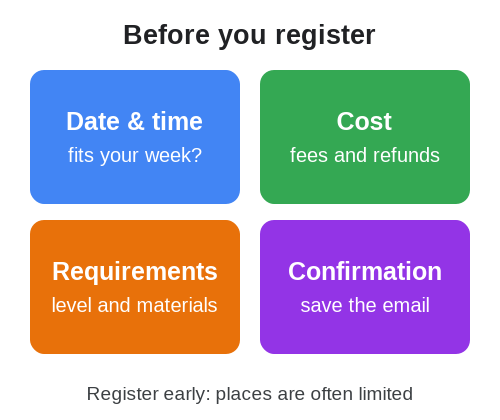
A quick check avoids disappointment later
- Date, time, and length: make sure it fits your schedule, including travel time. For online sessions, check the time zone.
- Location and access: the exact venue, parking, public transport, and accessibility for wheelchair users or people with other needs.
- Cost and refunds: the full price, what it includes, deposit rules, and whether you can get a refund or transfer if you can't attend.
- Level: beginner, intermediate, or advanced. Joining the wrong level can be frustrating for everyone.
- Requirements: age limits, prior experience, equipment, or materials you need to bring.
- Who runs it: the tutor's background and the organisation's reputation, including reviews from past participants.
Step 3: Complete the Registration Correctly
Registration processes vary, from a simple email to an online form with payment. Follow these tips:
- Register early: many workshops have limited places, and early-bird prices are often cheaper.
- Use the official booking page: book through the organiser's website or a well-known platform, typing the address yourself rather than following unexpected links.
- Enter details carefully: double-check your name, email address, and phone number so confirmations reach you.
- Mention any needs: use the form to tell organisers about accessibility requirements, dietary needs for catered sessions, or language support.
- Pay securely: use a card or trusted payment service rather than bank transfers to unknown accounts.
- Join the waiting list if a session is full; places often open up as others cancel.
Save your confirmation
Once you register, look for a confirmation email or ticket. Check your spam folder if it doesn't arrive, save it somewhere easy to find, and add the workshop to your calendar with a reminder. For online workshops, keep the joining link handy.
Step 4: Prepare Before the Day

A hands-on cooking workshop
- Read pre-workshop information: organisers may send instructions, reading, or software to install.
- Gather materials: notebook, pen, laptop, charger, apron, or any specific equipment listed.
- Plan your journey: check routes and parking, and aim to arrive ten to fifteen minutes early.
- Test your technology: for online sessions, check your camera, microphone, internet connection, and the meeting app in advance.
- Think about your goals: write down two or three things you hope to learn or questions you'd like to ask.
- Dress appropriately: wear comfortable clothes, and old clothes for messy activities such as painting, gardening, or cooking.
Watch out for fake workshop offers
Be wary of workshops advertised with unrealistic promises, such as guaranteed jobs or huge earnings, high-pressure sales, or requests to pay into personal accounts. Check the organiser's identity and reviews before paying.
Step 5: Get the Most From the Session

Learning to throw a pot on the wheel at a pottery workshop
- Participate actively: try every exercise, even if you feel unsure. Mistakes are part of learning.
- Ask questions: tutors welcome them, and others in the room often have the same question.
- Take notes: write down key steps, tips, and resources mentioned during the session.
- Connect with others: introduce yourself to fellow participants; they may become study partners or friends.
- Respect the group: arrive on time, silence your phone, and give others space to speak.
After the Workshop: Keep Learning
The real value of a workshop comes from what you do next. Within a day or two, review your notes and practise the new skill while it's fresh. Try to use it in real life, whether that's cooking the recipe, updating your CV, or practising first-aid steps.
Give feedback if the organiser asks for it; it helps them improve future sessions. Save any certificate of attendance, which can be useful for your CV or professional development records. Our guide on writing a good resume shows how to list training and courses effectively.
If you enjoyed the workshop, look for a follow-up or more advanced session, join the organiser's mailing list, or find a local club where you can keep practising. Workshops can also be a great step towards developing confidence and people skills; see our guide on developing effective communication skills.
Final Thoughts
To register for workshops successfully, decide what you want to learn, search libraries, colleges, community centres, and trusted platforms, and read the details carefully: date, location, cost, refunds, level, and requirements. Book early through the official page, enter your details accurately, save your confirmation, and prepare materials and technology in advance. Take part fully on the day, and practise afterwards. A few hours of focused learning can open the door to new skills, new friends, and new opportunities.