
A thoughtful donation goes further than a rushed one
You don't need to be wealthy or an expert to give well. With a few simple checks, you can be confident that your donation reaches a genuine organisation, is spent on the work you care about, and, in many countries, earns extra value through tax relief. This guide explains how to choose a cause, check a charity, decide how to give, and protect yourself from fraud.
Step 1: Decide What You Want to Support
Start with the problem you want to help solve, not the charity with the loudest advert. Ask yourself a few questions:
- Which issue matters most to you? Hunger, education, medical research, animal welfare, the environment, disaster relief, or local community projects.
- Local, national, or international? Local giving lets you see the results in your own area; international giving can stretch money further in places where costs are lower.
- Immediate relief or long-term change? Emergency appeals provide food, shelter, and medicine now; other charities work on prevention, research, or policy that pays off over years.
- How much can you afford? Set a yearly giving budget so you can say yes to the causes you've chosen and politely no to the rest without guilt.
Focusing on a few causes rather than many makes your giving easier to manage and more meaningful. Many people pick one main charity for regular support and keep a small amount aside for emergency appeals.
Step 2: Check the Charity Is Genuine
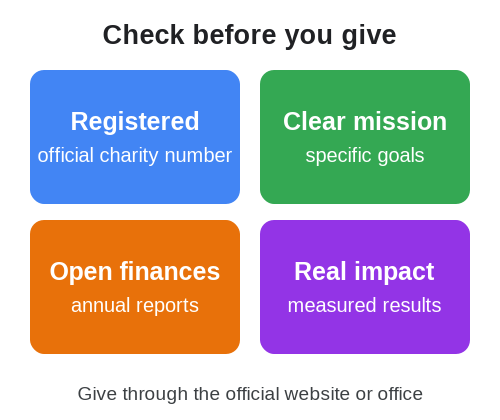
Four quick checks protect your donation
- Registration: look up the exact name and number on the official register. Scam charities often use names very similar to well-known ones.
- Clear purpose: a good charity explains exactly what it does, where, and for whom, rather than using vague emotional language.
- Open finances: annual reports and accounts show how much is spent on programmes, fundraising, and administration.
- Evidence of impact: look for concrete results, such as the number of people helped, independent evaluations, or case studies with real detail.
Don't judge a charity only by how little it spends on administration. Some overhead is essential: staff training, accounting, and good systems make programmes work better. What matters most is whether the money achieves real results.
Step 3: Choose the Best Way to Give

A box of donated clothes ready for a charity shop
- Regular monthly donations: charities value predictable income because it lets them plan staff, projects, and services. Even a small monthly gift adds up over a year.
- One-off gifts: ideal for emergency appeals or when you have a little extra to give, such as after a bonus.
- Unrestricted giving: letting the charity use your money where it's most needed usually helps more than restricting it to one project.
- Workplace giving: some employers offer payroll giving schemes or match employee donations, doubling the impact.
- Donating goods: charity shops and food banks welcome clean, good-quality items. Check what they need first, as unwanted items cost them money to dispose of.
- Gifts in wills: leaving a legacy is a lasting way to support a cause; talk to a qualified adviser about how to arrange it.
Give directly
Whenever possible, donate through the charity's own official website, by typing its address yourself, or by phoning a number from the official register. This avoids middlemen, fake links, and unnecessary fees.
Step 4: Avoid Charity Scams
Scammers know that people want to help, especially after disasters and during holidays. Watch for these warning signs:
- Pressure to give immediately, or claims that a family will suffer unless you pay right now.
- Requests to pay by gift card, wire transfer, cryptocurrency, or cash sent by post.
- Unsolicited messages with links, or social media pages created only days ago.
- Vague answers about how the money will be used, or no registration number when asked.
- Street or door collectors without proper identification, or who refuse to let you check later.
If you think you've been scammed
Contact your bank immediately if you've shared card or account details, and report the fake appeal to your country's fraud reporting service and the charity regulator. Acting quickly gives you the best chance of stopping payments.
Crowdfunding pages for individuals can be genuine and worthwhile, but they aren't regulated like charities. Give only when you know the person or organiser, or when the platform verifies the campaign.
Step 5: Keep Records and Claim Tax Relief
In many countries, donations to registered charities qualify for tax benefits, either by reducing your taxable income or by letting the charity claim extra money from the government on top of your gift. Rules vary widely, so check your tax authority's official guidance.
- Keep receipts, emails, or bank statements for every donation.
- Tick any tax relief box on the donation form if you're eligible; it can add significant value at no cost to you.
- Make a simple spreadsheet of your yearly giving so filing is easy. Our guide on filing taxes online explains where donations usually appear.
- Review your regular donations once a year and cancel any you no longer want through the charity directly.
Giving Beyond Money

Volunteers preparing food and medicine boxes for charity
If you're able, ask the charity what they need most. Sometimes it's a monthly gift; sometimes it's a volunteer driver, or simply someone to tell others about their work. Charities are usually delighted when supporters ask how to help most effectively.
Finally, involve your family. Letting children choose a cause, put coins in a jar, or help pack a food donation teaches generosity early and makes giving a shared family value.
Final Thoughts
To donate to charity well, decide which causes matter most, set a giving budget, check the official charity register, and look for clear purpose, open finances, and real results. Give directly through official channels, consider regular unrestricted gifts, avoid pressure and unusual payment methods, and keep records for tax relief. Thoughtful giving protects your money and makes sure it does the most good.