
Local volunteering puts your time to work where you live
The hardest part for most people is getting started. There are so many organisations and causes that it's easy to feel unsure where you fit, or to sign up for something that doesn't suit you and quietly drop out. This guide walks you through a practical process: working out what you can offer, finding trustworthy opportunities, preparing for your first day, and turning a single shift into a habit you enjoy.
Step 1: Work Out What You Can Offer
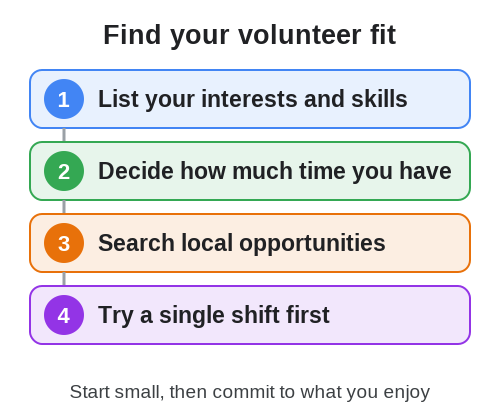
Start with your interests and your real schedule
- Causes you care about: children and young people, older people, animals, the environment, health, homelessness, arts, sport, or refugees and newcomers. Pick one or two to focus your search.
- Skills you already have: cooking, driving, accounting, languages, social media, teaching, DIY, gardening, or simply being a friendly face. Many organisations struggle to find people with everyday practical skills.
- Skills you want to build: volunteering is a low-pressure way to try event planning, leadership, customer service, or working with children before you commit to a career change.
- Your real availability: one evening a week, one Saturday a month, or occasional one-off events. Be realistic; reliability matters more than hours.
Also think about how you like to work. Some people prefer hands-on, physical tasks; others enjoy talking to people; and some would rather work quietly behind the scenes on admin, data, or design. There is a role for every personality.
Step 2: Find Local Opportunities

Volunteers packing donations at a food bank
- Volunteer centres and national platforms: many countries have a volunteer centre network or a national website where charities post roles you can filter by location, cause, and time commitment.
- Your local council or municipality: councils often list community groups, run park and library volunteer schemes, and support local events that need helpers.
- Places you already visit: libraries, schools, hospitals, places of worship, community centres, animal shelters, and sports clubs often rely on volunteers. Ask at the front desk.
- Local charities directly: food banks, shelters, hospices, and youth clubs usually have a "Get involved" page on their website.
- Neighbourhood groups: residents' associations and community social media groups regularly ask for help with clean-ups, street parties, and checking on vulnerable neighbours.
Ask the right questions
Before you agree to a role, ask what a typical shift looks like, how much time is expected, what training is provided, who you report to, and whether expenses such as travel are covered. A well-run organisation will be happy to answer.
Step 3: Check the Organisation
Most community groups are run by kind, well-meaning people, but it's still sensible to check who you're volunteering for, especially if you'll be working with children, vulnerable adults, or handling money.
- Look up the organisation's registration on your country's official charity or non-profit register, if it claims to be a charity.
- Read its website and recent social media posts to see that it's active and clear about its purpose.
- Expect a short application form, an informal chat, and, for some roles, references or a background check. This is a sign of good practice, not bureaucracy.
- Ask whether volunteers are covered by the organisation's insurance while working.
- Be wary of any "volunteer" role that asks you to pay large fees, hand over bank details, or work long hours that would normally be paid staff work.
If you're interested in the wider world of non-profits, our guide on joining NGO activities explains how larger organisations recruit and train supporters.
Step 4: Prepare for Your First Shift
Your first day sets the tone. A little preparation helps you feel confident and makes a good impression on the team.
- Confirm the details: start time, exact address, who to ask for, and where to park or which bus to take.
- Dress for the task: sturdy shoes and old clothes for outdoor or warehouse work; neat, comfortable clothes for office or reception roles.
- Bring the basics: water, a snack, any ID they asked for, and a phone with the coordinator's number saved.
- Arrive a little early so you have time for introductions and a safety briefing.
- Ask questions: nobody expects you to know everything. It's far better to check than to guess, particularly around safety or confidential information.
Treat any training seriously. Food banks may explain hygiene rules, conservation groups will show you how to use tools safely, and befriending schemes will cover boundaries and confidentiality. These rules protect you as well as the people you're helping.
Step 5: Stay Motivated and Make It Last

Volunteers collecting litter on a beach clean-up
- Put it in your calendar like any other commitment, and set a reminder the day before.
- Volunteer with a friend or family member so you encourage each other.
- Talk to your coordinator if a role isn't working for you. They would much rather move you to a better fit than lose you.
- Notice the impact: keep a simple note of what you've helped with, such as meals served or trees planted. It's motivating to look back on.
- Say no when you need to. Volunteers who overcommit burn out. Protect your own time and wellbeing.
If you can't give regular time, one-off opportunities are still valuable. Community fun runs, festivals, litter picks, and seasonal appeals all need extra hands for a single day. Our guide on finding community events shows where to spot them.
How Volunteering Helps You Too
Volunteering isn't only about giving. It can open doors in your own life. Students gain experience and references that strengthen university and job applications. People returning to work after a career break rebuild confidence and get recent experience to talk about in interviews. Retirees keep active, stay connected, and pass on decades of knowledge.
Add volunteer roles to your CV with the same detail as a paid job: the organisation, your role, the dates, and what you achieved. Skills such as teamwork, organising events, handling enquiries, or training new volunteers are valued by employers in every field.
Most of all, volunteering connects you to the place you live. You'll get to know neighbours you might never have met, understand local issues more deeply, and feel part of a community rather than just living in it.
Final Thoughts
To volunteer locally, start by matching your interests, skills, and real availability to a cause. Search volunteer centres, council listings, and places you already visit, check that the organisation is genuine, and prepare well for your first shift. Begin with something small, stay in touch with your coordinator, and build a routine you enjoy. A few hours of your time, given reliably, can make a real difference to your community and to you.