
Close-up of a woman working on a laptop with red nails, notebook, and pen
It's a legitimate business model used by many publishers, bloggers, and creators. But it's not quick or passive money at the start: it depends on building an audience that trusts your recommendations. This guide explains how to do it properly.
Step 1: Choose a Niche You Know
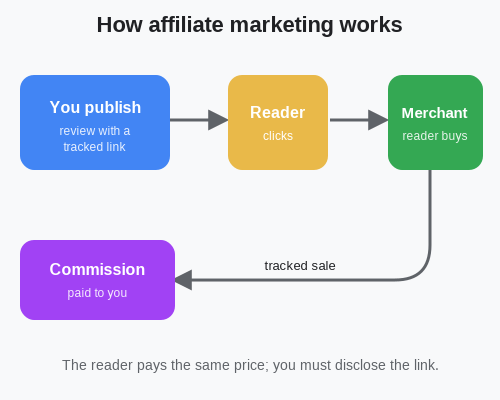
You earn when your recommendation leads to a sale
- Pick a focused topic you understand or genuinely use, such as home coffee brewing, budget travel, or small-business software.
- Check that people buy things in it, with products in a range of prices.
- Look for evergreen problems that people search for year after year.
- Think long term: you'll be creating a lot of content about this topic.
Step 2: Join Reputable Affiliate Programmes
- Retailer programmes: large retailers such as Amazon Associates cover many products, usually with lower commission rates.
- Affiliate networks: platforms that connect you with many brands in one place.
- Direct brand programmes: many software companies and online shops run their own, sometimes with higher or recurring commissions.
Before joining, read each programme's terms: commission rate, cookie duration (how long after a click a sale still counts), payment thresholds, and rules on where and how you can promote. Only promote products you'd recommend to a friend.
Step 3: Create Genuinely Helpful Content
Affiliate income follows trust, and trust comes from honest, useful content:
- In-depth reviews based on real use, including downsides.
- Comparisons that help readers choose between options for different needs.
- How-to guides that naturally mention tools that help.
- "Best for" lists with clear reasons, not just links.
Publish on a blog, YouTube channel, newsletter, or social account, depending on where your audience is. A website you own is the most stable long-term base. Our guide on increasing website traffic explains how to attract visitors from search.
Step 4: Disclose Affiliate Links Properly
Consumer protection rules in many countries, such as FTC guidance in the US and advertising rules in the UK and EU, require you to clearly tell people when you may earn from a link. Affiliate programmes usually require it too.
- Place a clear disclosure near the links, not hidden in a footer, for example: "I may earn a commission if you buy through links on this page, at no extra cost to you."
- Use plain language and make it visible on mobile.
- On social media, use the platform's paid partnership tools or clear labels.
- Never make false claims about products you haven't used.
Step 5: Track Results and Set Realistic Expectations
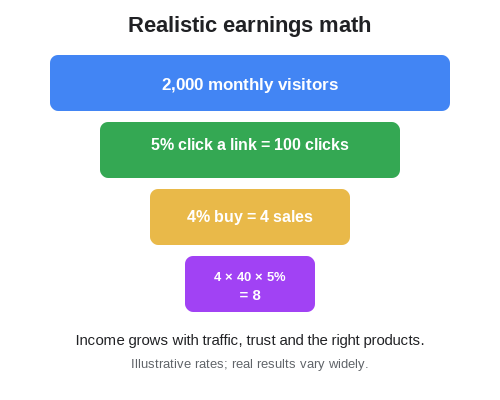
Small numbers early on are normal
- Track clicks and sales per page in your affiliate dashboards to see what works.
- Improve top pages with better comparisons and clearer recommendations.
- Build an email list so you can share recommendations with readers who trust you.
- Diversify: don't rely on a single programme; commission rates and rules can change.
Avoid shortcuts
Spamming links in comments or groups, copying others' content, or promising earnings can get you banned from programmes and platforms. Be wary of courses that guarantee affiliate income.
What Makes a Trustworthy Affiliate Review
- Clear evidence you have used or tested the product, such as your own photos or results
- Honest pros and cons, including who should not buy it
- Comparisons with realistic alternatives, including cheaper options
- Specific details like sizes, prices at the time of writing, and key features
- A clear verdict that helps readers make a decision
- A visible disclosure near the top of the page
Readers who feel helped come back and trust future recommendations. That long-term trust is what turns a small site into a sustainable affiliate business.
Build Traffic That Lasts
Affiliate income depends on visitors who trust you. The most sustainable traffic comes from sources you build over time, rather than short-term tricks.
- Search engines: write detailed answers to questions your audience is already searching for, such as "best budget running shoes for beginners" or "how to choose a home printer". Our guide on increasing website traffic covers the basics of SEO.
- Email list: invite readers to subscribe for useful tips. An email list is an audience you own, not one controlled by a platform's algorithm.
- Video and social media: short demonstrations, honest unboxings, and tutorials help people see products in use. Link to your detailed reviews.
- Community participation: answer questions helpfully in forums and groups where your audience gathers, following each community's rules about links and self-promotion.
Avoid shortcuts that damage trust or break rules: buying fake followers, spamming links in comments, copying other people's reviews, or using misleading headlines. Search engines and affiliate programmes regularly remove sites that use these tactics, and once readers feel misled they rarely return.
Keep your content up to date. Products change, prices move, and models are discontinued. Review your most popular articles every few months, update details, and remove links to products you no longer recommend. Readers notice when a site is cared for, and so do search engines.
Finally, treat affiliate marketing as a long-term project. Most successful affiliate sites took a year or more of steady work before earning a meaningful income. Focus on helping your readers make good decisions, and the earnings will follow from that trust.
Keep a simple spreadsheet of every programme you join, its commission rate, cookie duration, payment threshold, and payout dates. Review it every quarter. If a programme changes its terms, pays late, or no longer fits your audience, replace it with a better option rather than continuing out of habit. Organised affiliates spot problems early and protect their income.
Final Thoughts
Affiliate marketing works when it's built on trust: a focused niche, reputable programmes, honest and genuinely helpful content, clear disclosure, and patient growth. Treat your audience well, recommend only what you believe in, and earnings can grow steadily over time.