
Professional man packing belongings into a box at an office desk, preparing to leave the
This guide gives you a practical, step-by-step plan to make a career change with less risk and more confidence.
Step 1: Understand Why You Want to Change
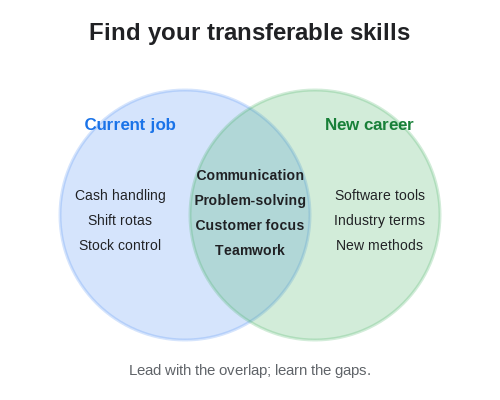
You're rarely starting from zero
Be clear about what isn't working. Is it the work itself, the industry, your manager, the pay, the hours, or the lack of growth? Sometimes a new role or employer in the same field solves the problem. If you truly want different work, list what you want more of, such as creativity, helping people, stability, or flexibility, and what you want less of.
Step 2: Explore Options Realistically
- Research roles: read job adverts to see the real day-to-day tasks, requirements, and salary ranges.
- Talk to people in the field: ask for 20-minute informational conversations about what they like and dislike.
- Check the job market: is demand growing in your area, or will you need to relocate or work remotely?
- Consider entry routes: some careers need formal qualifications or licences; others value skills and portfolios.
Step 3: Test Before You Leap
Before quitting your job, try the new field in a low-risk way:
- Take a short, inexpensive online course
- Do a small freelance or volunteer project
- Shadow someone for a day
- Start a side project that uses the new skills
If you still enjoy it after doing the real work, not just imagining it, that's a strong signal.
Step 4: Identify Your Transferable Skills
Many skills carry across industries: communication, problem-solving, customer service, project management, data handling, teamwork, and leadership. List concrete examples of each from your current work. A retail manager moving into HR, for example, already has experience with hiring, scheduling, training, and resolving conflicts.
Step 5: Fill the Gaps and Build Your Bridge
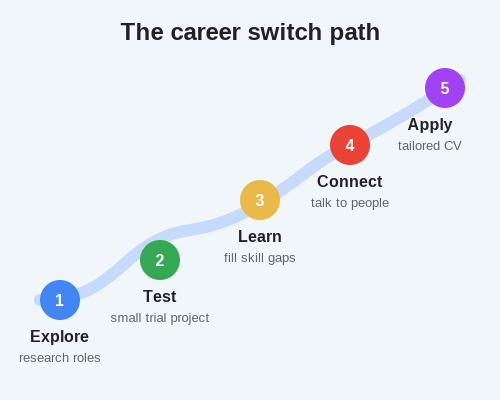
A step-by-step route into a new field
1
Learn the Key Skills
Use online courses, part-time study, or professional certificates. Focus on what employers in that field actually ask for. Our guide to free online certificates can help you start without big costs.
2
Build Evidence
Create a few projects that show your new skills and put them in a simple portfolio. Evidence of real work reassures employers who might otherwise worry about your lack of direct experience.
3
Look for Bridge Roles
A bridge role uses both your old and new skills, such as a nurse moving into health tech or an accountant moving into data analysis in finance. It's often easier to move sideways first than to start completely fresh.
Step 6: Build Connections and Apply Smartly
- Update your LinkedIn headline and summary to reflect your new direction
- Join industry groups, online communities, or local events
- Rewrite your CV to lead with transferable skills and new projects
- Prepare a short, positive story explaining why you're switching
- Ask contacts for referrals; many jobs are filled through recommendations
Step 7: Plan for the Financial Side
A career change may mean a temporary pay cut or a period of study. Build an emergency fund if you can, ideally covering several months of essential expenses. Our guide on creating a monthly budget can help you plan the transition.
Real-World Career Switch Examples
These common paths show how existing skills can carry over:
- Teacher → instructional designer or corporate trainer: lesson planning, explaining complex topics, and assessing learning transfer directly.
- Retail or hospitality manager → HR or operations: hiring, scheduling, training, and handling conflicts are core HR tasks.
- Customer service → user experience research or customer success: understanding customer frustrations is the foundation of both.
- Administrative assistant → project coordinator: organisation, deadlines, and stakeholder communication.
- Nurse → health informatics or medical sales: clinical knowledge is valuable in healthcare technology and industry roles.
How to Explain Your Career Change
Employers will ask "Why are you changing careers?" Prepare a short, positive answer that links your past to your future:
Example
"For six years I managed a busy restaurant, and the part I enjoyed most was building schedules and training new staff. I wanted to focus on that full-time, so I completed an HR certificate, volunteered to help a local charity with recruitment, and now I'm applying for HR coordinator roles where I can use both my people experience and my new training."
Notice it's positive (no complaints about the old job), shows action taken, and connects clearly to the role.
How Long Does a Career Change Take?
It varies widely. Moving into a related field using transferable skills can take a few months. Changing into a field that needs new qualifications, such as nursing, law, or teaching in many countries, can take one to several years. Plan for the realistic timeline and look for ways to earn or gain experience along the way, such as part-time roles, apprenticeships, or freelance work.
Common Mistakes to Avoid
- Quitting before testing the new field or having a financial cushion
- Spending heavily on courses before confirming employers value them
- Applying for senior roles in a new field without relevant evidence
- Hiding your previous career instead of using it as a strength
- Relying only on job boards instead of networking
Get Support Along the Way
Free careers advice services, mentors in your target field, and professional associations can all shorten your career change. Many offer guidance on training routes, CV reviews, and introductions to people already doing the work you want.
Final Thoughts
Successful career changes are usually gradual, not sudden. Get clear on why you want to change, test the new field, lead with your transferable skills, and build evidence step by step. It may take months rather than weeks, but each step brings the new career closer and makes the leap much smaller.